Nucleus chromosomes microscope
1344×768 · AVIF · CC BY 4.0
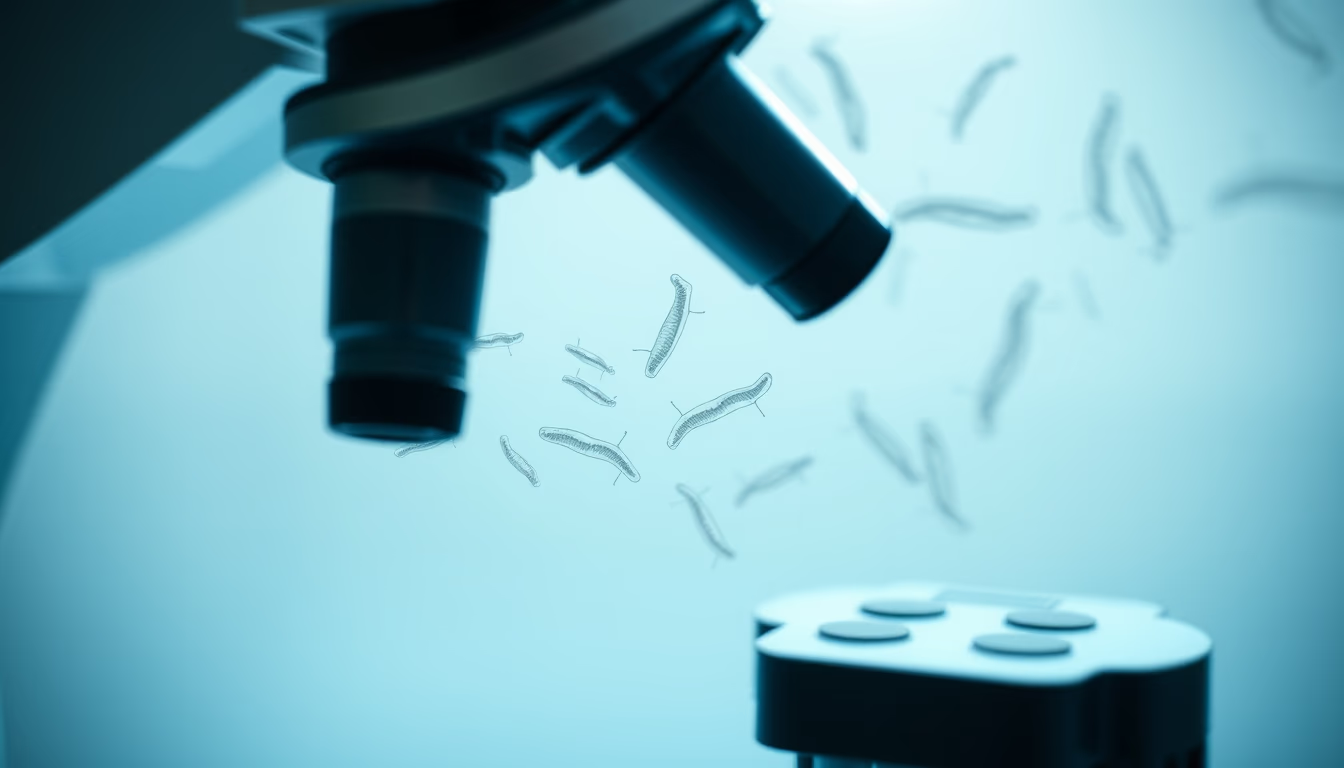
The cell nucleus houses chromosomes, DNA structures carrying genetic information. Discover details about their function and microscopic observation.
About this subject
The nucleus is a membrane-bound organelle found in eukaryotic cells, storing DNA in the form of chromatin. During cell division, chromatin condenses into chromosomes, visible under a light microscope. Each chromosome consists of a long DNA molecule wrapped around histone proteins, forming the chromatin complex. Humans have 46 chromosomes arranged in 23 pairs.
Microscopic observation of chromosomes requires specific techniques, such as arresting cells in metaphase and staining with dyes like Giemsa. This method, called karyotyping, helps detect chromosomal abnormalities like trisomies (e.g., Down syndrome) or deletions. Fluorescence microscopy with DNA probes can locate specific genes on chromosomes.
The nucleus not only stores genetic material but also regulates gene expression and DNA replication. Its double membrane, the nuclear envelope, contains pores that control molecular traffic between the nucleus and cytoplasm. Nuclear structure abnormalities are linked to diseases such as cancer and premature aging.
Chromosomes were first described in the 19th century by Walther Flemming, who detailed mitosis. Today, advanced techniques like cryo-electron microscopy reveal atomic details of chromatin, deepening our understanding of heredity and cellular regulation.
Frequently Asked Questions
What are chromosomes and where are they located?
Chromosomes are thread-like structures made of DNA and proteins, located in the nucleus of eukaryotic cells. They contain genes that determine hereditary traits.
How are chromosomes observed under a microscope?
To observe chromosomes, cells are cultured, treated with colchicine to arrest division at metaphase, and then stained with Giemsa or other dyes. Analysis is performed using a light microscope.
What is the importance of the cell nucleus?
The nucleus houses DNA, controlling gene expression, replication, and transcription. It is essential for cell division and maintaining genetic integrity.
Direct URL
https://pub-c7d6a6ea828543ac903a74a341ccb2e1.r2.dev/imagens/nucleus-chromosomes-microscope-minimalist-composition-p2.avifHow to credit
Include a visible link back to UtilizAí. Copy one of the snippets below:
<a href="https://xn--utiliza-eza.com/en/midia/imagens/nucleus-chromosomes-microscope-minimalist-composition-p2">Nucleus chromosomes microscope</a> by <a href="https://xn--utiliza-eza.com">UtilizAí</a>, licensed under <a href="https://creativecommons.org/licenses/by/4.0/">CC BY 4.0</a>.
[Nucleus chromosomes microscope](https://xn--utiliza-eza.com/en/midia/imagens/nucleus-chromosomes-microscope-minimalist-composition-p2) by [UtilizAí](https://xn--utiliza-eza.com), CC BY 4.0
License: CC-BY-4.0