Noise cancelling headphones desk
1344×768 · AVIF · CC BY 4.0
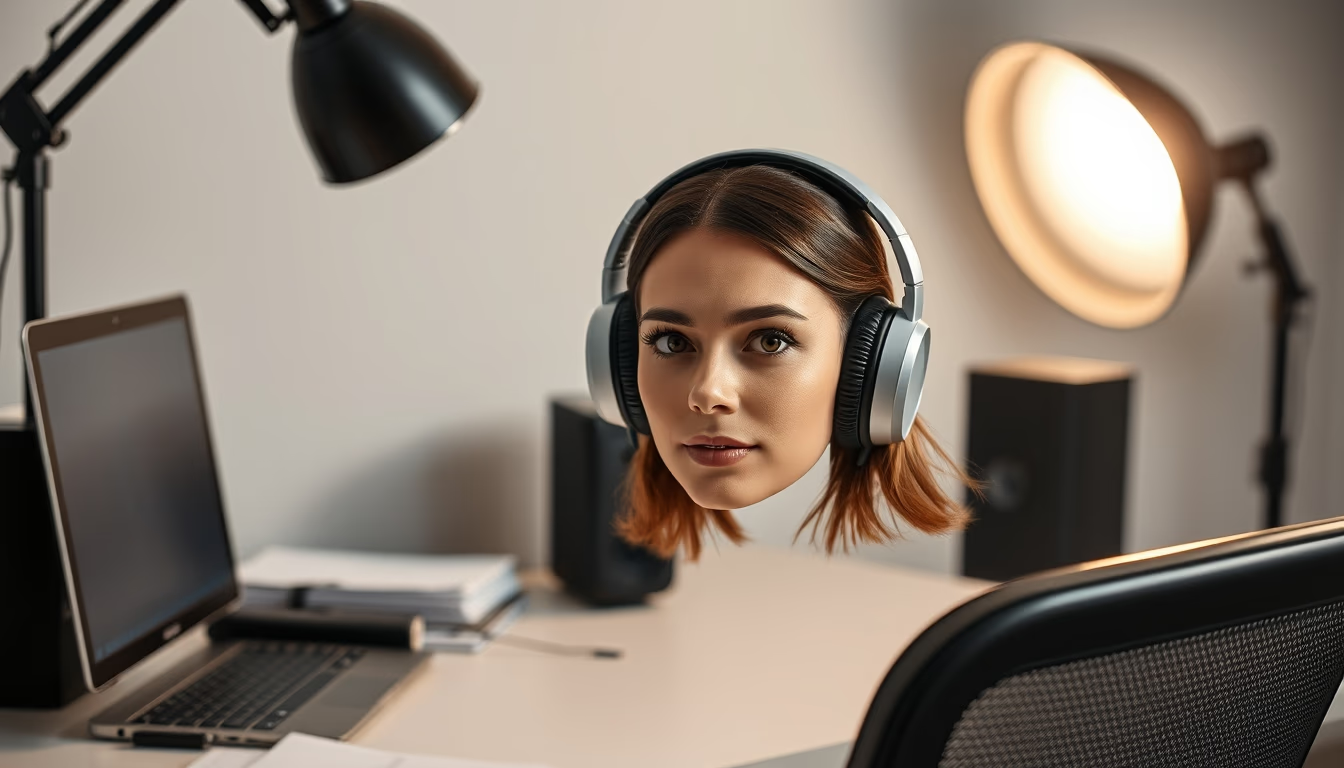
Noise cancelling headphones resting on a studio desk, representing an essential tool for focus and professional music production.
About this subject
Active noise cancelling (ANC) headphones use built-in microphones to capture external sounds and generate inverse sound waves, canceling ambient noise. This technology was first developed for aviation pilots in the 1950s, but only became popular with Bose models in the early 2000s. Today, they are essential in recording studios and home studios, allowing musicians and producers to hear sound details without external interference, ensuring more precise mixes.
In music production, ANC headphones are used for monitoring during recording, editing, and mixing, especially in acoustically imperfect environments. They also help reduce listening fatigue, as they don't require high volume to mask noise. With the rise of remote work and immersive audio consumption, the ANC headphone market has grown exponentially, and the 2026 trend points to models with low-latency Bluetooth connectivity, customizable sound profiles, and adaptive cancellation that adjusts to surroundings.
Interestingly, active cancellation is most effective for constant, low-frequency noises like engines or fans but has limitations with high-pitched, sudden sounds. Passive cancellation, achieved through circumaural design and insulating materials, complements noise reduction. Brands like Sony, Bose, and Sennheiser lead the segment, but Brazilian manufacturers are also gaining ground with cost-effective options. Comfort, battery life, and sound quality define the most desired models among musicians and audio professionals.
Frequently Asked Questions
How does active noise cancellation work?
Microphones capture external noise and a circuit generates an opposite sound wave (antiphase) that cancels the unwanted sound, significantly reducing ambient noise.
Are ANC headphones good for listening to music?
Yes, especially for monitoring and immersion, but some models may slightly alter the sound. Professional models offer a flat response for accurate mixing.
What is the difference between active and passive cancellation?
Passive isolation uses physical materials and design, while active uses electronics. Active is more effective for constant noises like engines, and passive complements for high-pitched sounds.
Direct URL
https://pub-c7d6a6ea828543ac903a74a341ccb2e1.r2.dev/imagens/noise-cancelling-headphones-desk-studio-editorial-portrait-p5.avifHow to credit
Include a visible link back to UtilizAí. Copy one of the snippets below:
<a href="https://xn--utiliza-eza.com/en/midia/imagens/noise-cancelling-headphones-desk-studio-editorial-portrait-p5">Noise cancelling headphones desk</a> by <a href="https://xn--utiliza-eza.com">UtilizAí</a>, licensed under <a href="https://creativecommons.org/licenses/by/4.0/">CC BY 4.0</a>.
[Noise cancelling headphones desk](https://xn--utiliza-eza.com/en/midia/imagens/noise-cancelling-headphones-desk-studio-editorial-portrait-p5) by [UtilizAí](https://xn--utiliza-eza.com), CC BY 4.0
License: CC-BY-4.0