Noise cancelling headphones desk
1344×768 · AVIF · CC BY 4.0
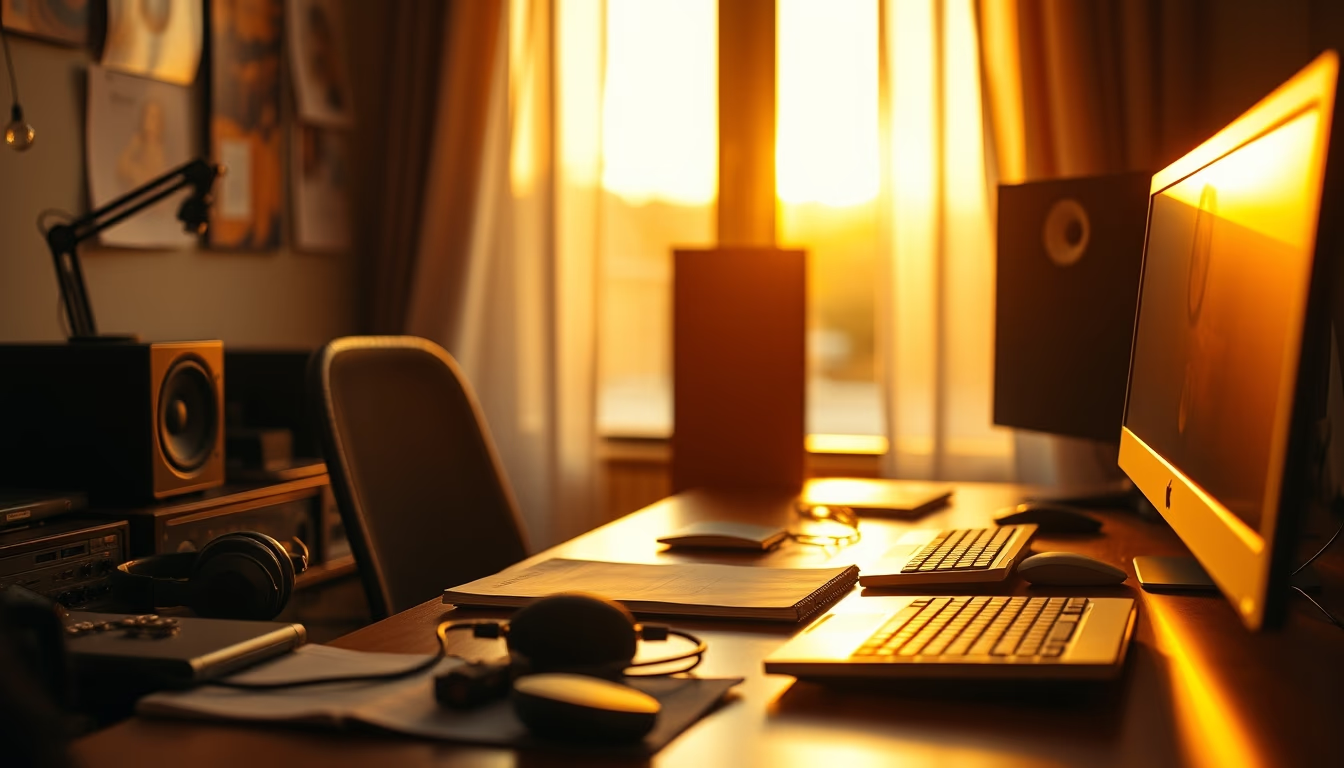
Noise cancelling headphones on a desk, essential for music production productivity and focus in noisy environments.
About this subject
Noise cancelling headphones with active noise cancellation (ANC) have revolutionized the way audio professionals and musicians work. Unlike passive models that only provide mechanical isolation, ANC headphones use microphones to capture ambient sound and generate inverse sound waves to cancel out external noise. This technology was initially developed for airplane pilots in the 1950s, but only became popular in the consumer market in the 2000s with brands like Bose and Sony.
In music studios and home offices, these headphones allow users to focus on mixing, recording, or editing without interference from background noise. Additionally, many models offer transparency modes that let you hear your surroundings when needed, an important safety feature in public places.
The global ANC headphone market has grown exponentially, driven by the rise of remote work and independent music production. By 2025, it is estimated that over 40% of headphones sold include some form of active cancellation. Professional models often provide neutral sound for accurate monitoring, while consumer versions prioritize comfort and long battery life.
Fun fact: the first consumer ANC headphones weighed over 500 grams due to large batteries and analog circuits. Today, top-tier models weigh less than 250 grams and offer adaptive cancellation that automatically adjusts to the environment, such as those from Apple, Sony, and Bose. This technological evolution makes ANC an indispensable tool for musicians, podcasters, and any professional relying on high-quality audio.
Frequently Asked Questions
How do active noise cancelling headphones work?
They use microphones to capture ambient sound and generate sound waves in opposite phase, cancelling external noise through destructive interference.
What is the difference between active and passive cancellation?
Passive cancellation uses insulating materials to block sound, while active uses electronics to nullify sound waves. Active is more effective for constant noises like engines or fans.
Are noise cancelling headphones good for music mixing?
Yes, but they need a neutral frequency response. Professional models like the Sony MDR-7506 or Beyerdynamic DT 770 are preferred by many sound engineers.
Direct URL
https://pub-c7d6a6ea828543ac903a74a341ccb2e1.r2.dev/imagens/noise-cancelling-headphones-desk-cinematic-wide-shot-p4.avifHow to credit
Include a visible link back to UtilizAí. Copy one of the snippets below:
<a href="https://xn--utiliza-eza.com/en/midia/imagens/noise-cancelling-headphones-desk-cinematic-wide-shot-p4">Noise cancelling headphones desk</a> by <a href="https://xn--utiliza-eza.com">UtilizAí</a>, licensed under <a href="https://creativecommons.org/licenses/by/4.0/">CC BY 4.0</a>.
[Noise cancelling headphones desk](https://xn--utiliza-eza.com/en/midia/imagens/noise-cancelling-headphones-desk-cinematic-wide-shot-p4) by [UtilizAí](https://xn--utiliza-eza.com), CC BY 4.0
License: CC-BY-4.0