Niagara falls horseshoe
1344×768 · AVIF · CC BY 4.0
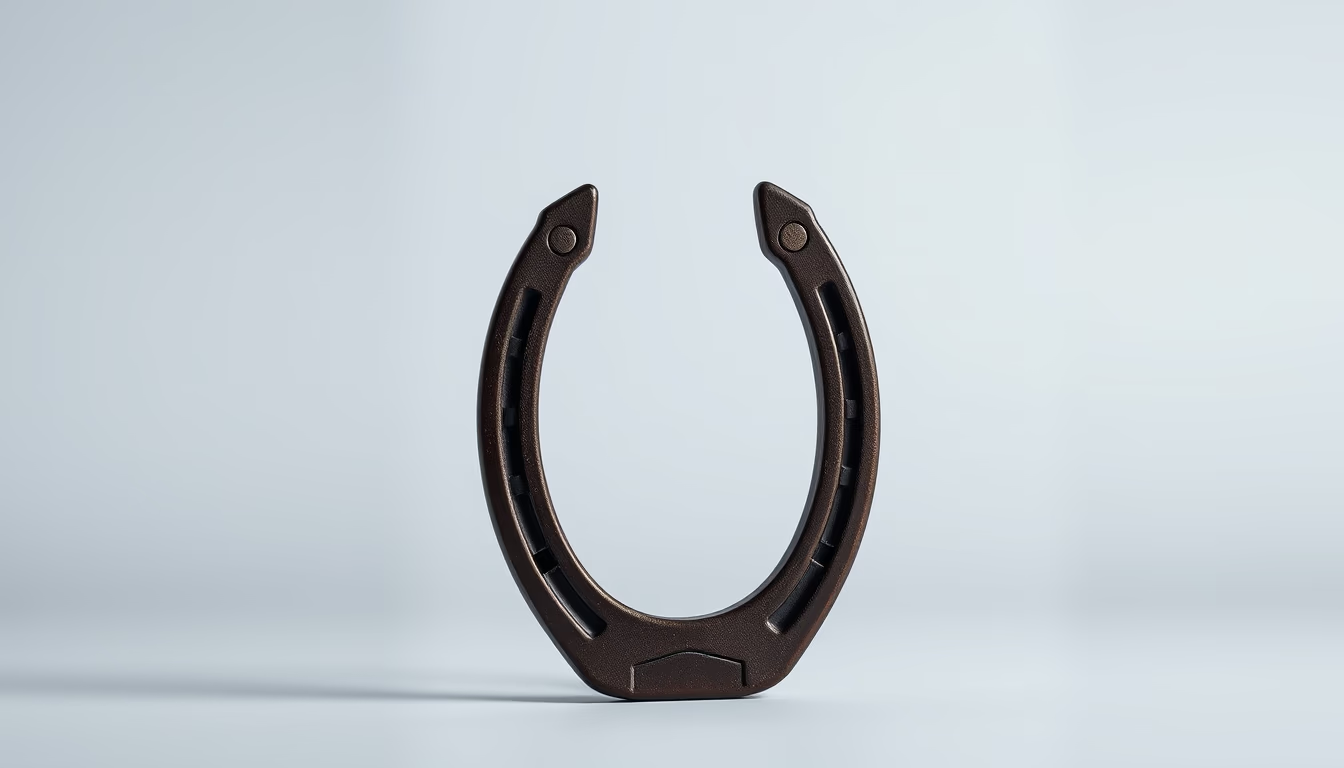
The Horseshoe Falls, part of Niagara Falls, is one of the world's most iconic waterfalls, straddling the border between Canada and the United States.
About this subject
Niagara Falls is a group of three waterfalls at the southern end of the Niagara Gorge, spanning the border between the US state of New York and the Canadian province of Ontario. The largest is Horseshoe Falls, named for its curved shape. It stands about 57 meters (187 feet) tall and spans 790 meters (2,590 feet) in width. The water flow averages 2,400 cubic meters per second during daylight hours, though it is reduced at night for hydroelectric power generation.
The geological formation began about 12,000 years ago at the end of the last Ice Age, as glacial retreat exposed the bedrock. Continuous erosion shapes the landscape, but engineering projects slow this process to preserve the falls. Horseshoe Falls carries approximately 90% of the total water volume of the Niagara system.
Tourism is a major draw, with millions of visitors each year. Highlights include the "Maid of the Mist" boat tour that comes close to the base, and viewing from both the American and Canadian sides. At night, the falls are illuminated with colored lights, and fireworks displays occur on special occasions. The area includes Niagara Falls Park (Canada) and Niagara Falls State Park (USA).
Beyond tourism, the falls are a vital source of hydroelectric power. The Robert Moses and Sir Adam Beck plants generate electricity for millions. The history of power exploitation began in the late 19th century, with Nikola Tesla and George Westinghouse developing systems that boosted AC power adoption.
Frequently Asked Questions
What is the exact height of Horseshoe Falls?
Horseshoe Falls is approximately 57 meters (187 feet) tall, with slight variations due to water levels and erosion.
Can you visit Niagara Falls from both sides?
Yes, both the Canadian and American sides have viewpoints and attractions. The Canadian side offers the best panoramic view of the Horseshoe Falls.
Are Niagara Falls used for power generation?
Yes, they are a major source of hydroelectric power, with plants that divert part of the flow, especially at night and during winter.
Direct URL
https://pub-c7d6a6ea828543ac903a74a341ccb2e1.r2.dev/imagens/niagara-falls-horseshoe-studio-still-life-p9.avifHow to credit
Include a visible link back to UtilizAí. Copy one of the snippets below:
<a href="https://xn--utiliza-eza.com/en/midia/imagens/niagara-falls-horseshoe-studio-still-life-p9">Niagara falls horseshoe</a> by <a href="https://xn--utiliza-eza.com">UtilizAí</a>, licensed under <a href="https://creativecommons.org/licenses/by/4.0/">CC BY 4.0</a>.
[Niagara falls horseshoe](https://xn--utiliza-eza.com/en/midia/imagens/niagara-falls-horseshoe-studio-still-life-p9) by [UtilizAí](https://xn--utiliza-eza.com), CC BY 4.0
License: CC-BY-4.0