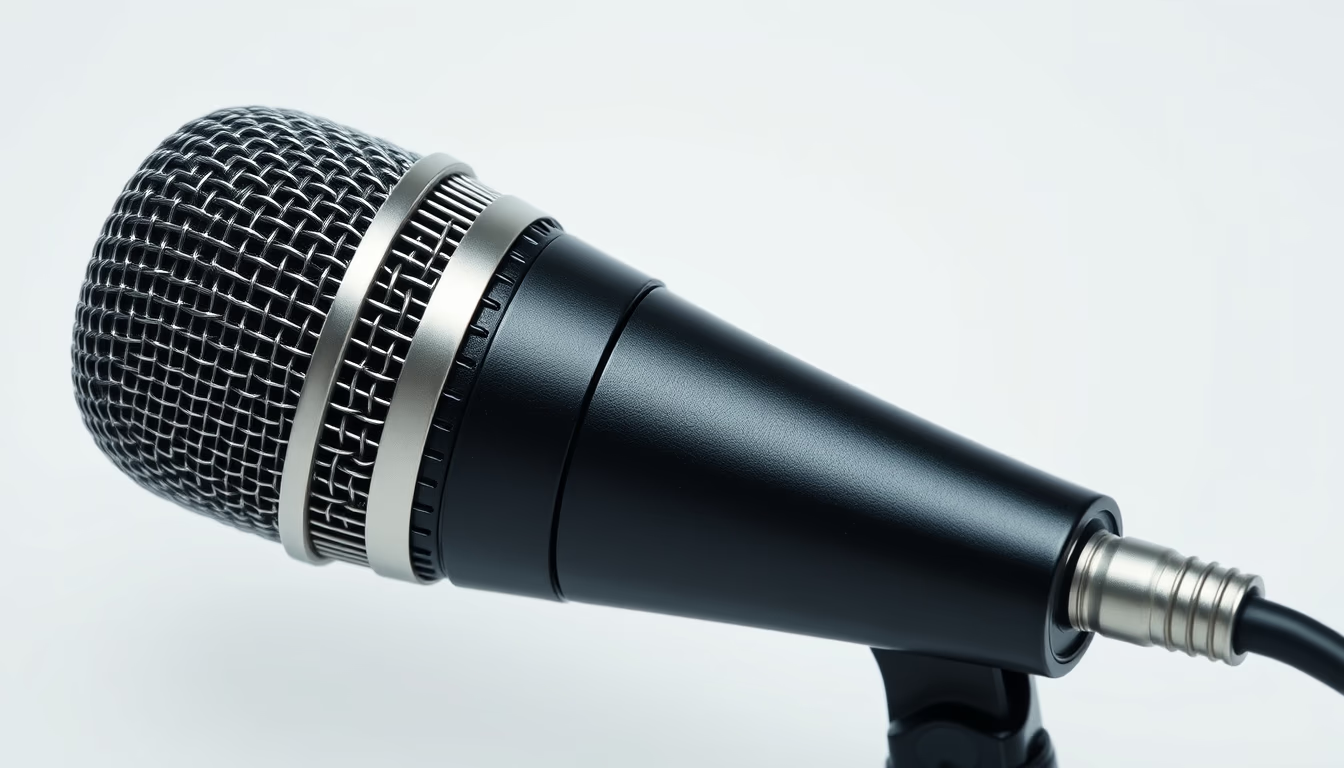
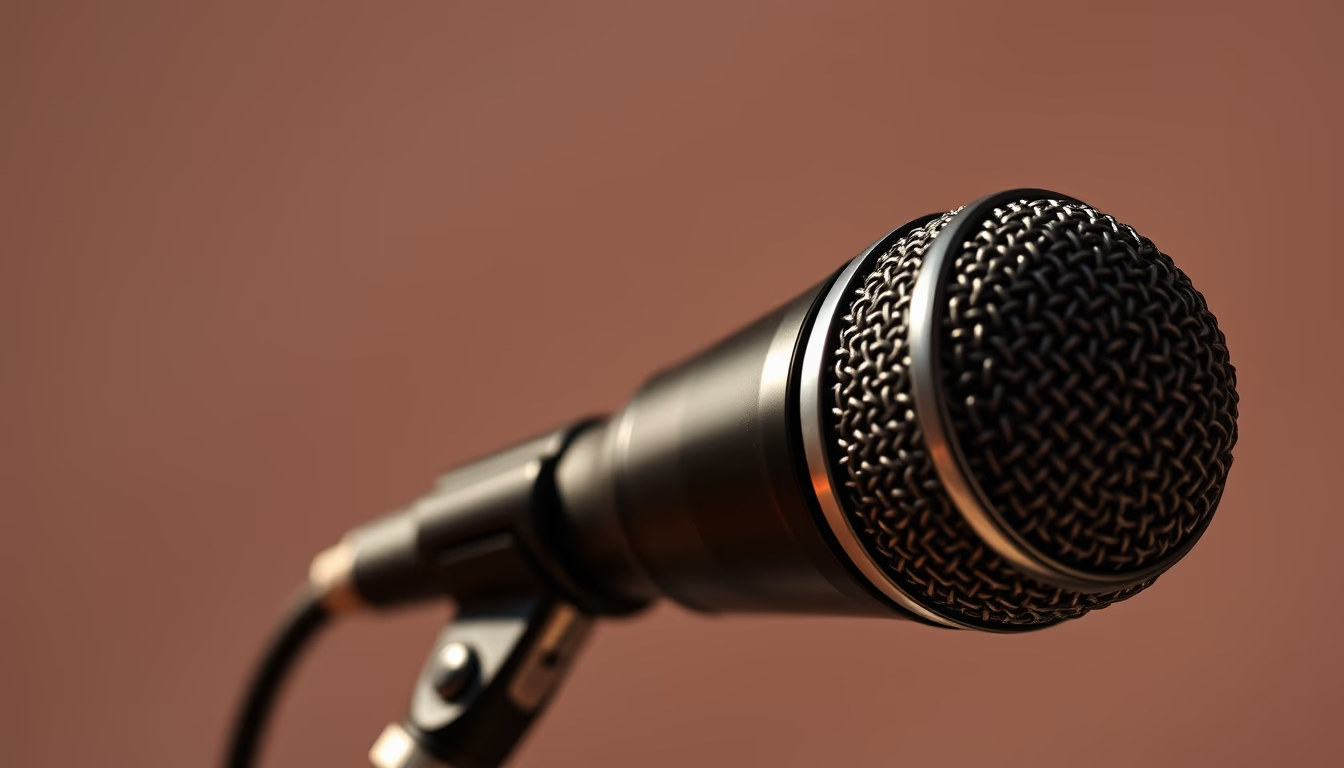
Neumann u87 mic
1344×768 · AVIF · CC BY 4.0
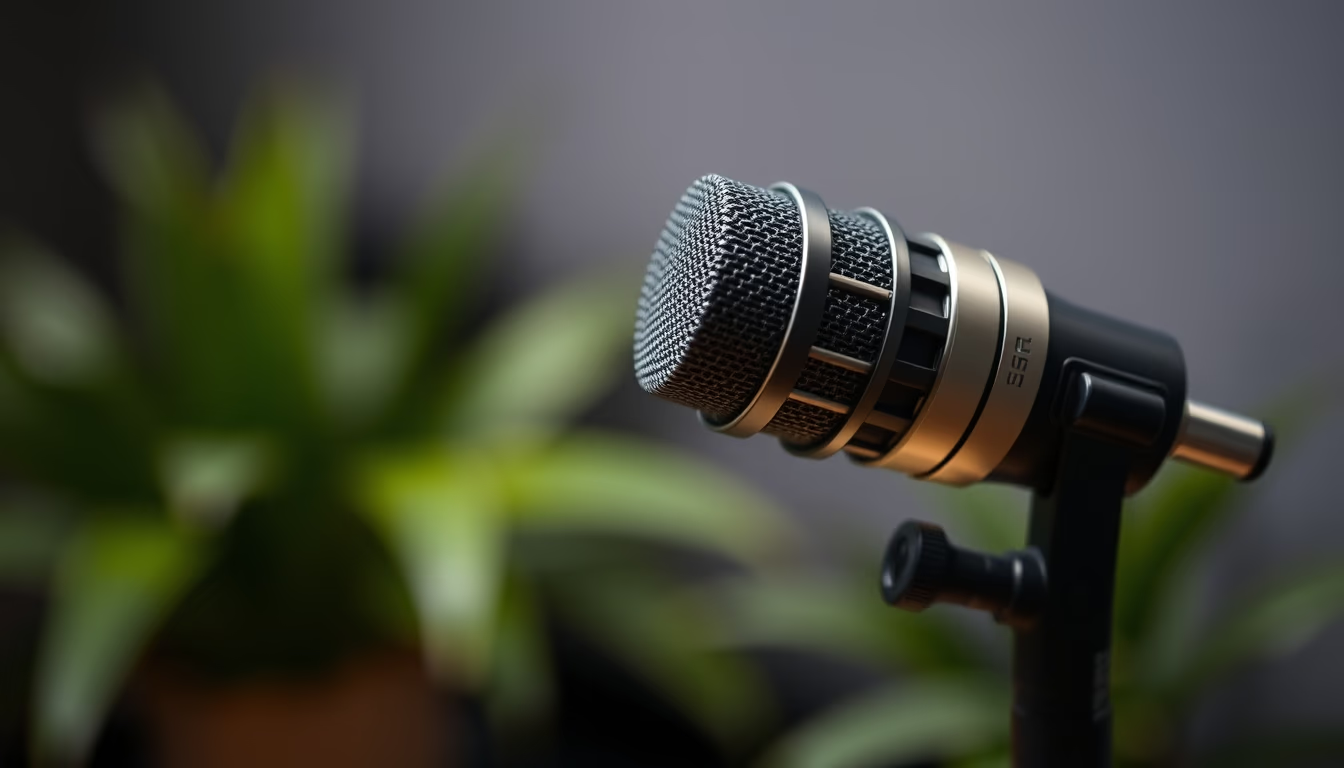
The Neumann U87 is a legendary condenser microphone, a studio standard since 1967, renowned for its sound quality and versatility.
About this subject
The Neumann U87 was introduced in 1967 by the German company Georg Neumann GmbH, revolutionizing professional audio capture. It is a dual-diaphragm condenser microphone with three selectable polar patterns: omnidirectional, cardioid, and figure-eight. This flexibility allows the U87 to adapt to various sound sources, from vocals and acoustic instruments to ambient recordings.
Technically, the original U87 uses a discrete output transformer and a K67 capsule, known for its smooth and rich frequency response. The later U87 Ai model replaced the transformer with a FET-balanced circuit, reducing noise and improving consistency. Both models feature a -10 dB pad and a high-pass filter with cutoffs at 80 Hz or 160 Hz to control handling noise and proximity effect.
Culturally, the U87 is one of the most recognized microphones in history. It has been used by artists such as Frank Sinatra, Adele, and David Bowie, and is a staple in studios like BBC and Hollywood. Its sound is described as “warm” and “articulate,” especially for vocals, but it is also common for piano, acoustic guitar, and broadcast applications.
The microphone remains in continuous production, with a legacy of over 50 years. While modern alternatives exist, the U87 retains its reference status due to its reliability and unique sonic signature. An interesting fact: the original version (without “Ai”) is highly sought after in the used market for its characteristic analog sound.
Frequently Asked Questions
What is the difference between the Neumann U87 and U87 Ai?
The main difference is the circuit. The original U87 uses a discrete output transformer, while the U87 Ai uses a FET-balanced circuit. The Ai offers lower noise, greater consistency, and a slightly flatter frequency response, but many engineers prefer the 'analog' sound of the original.
Why is the Neumann U87 so expensive?
The high cost is due to handcrafted manufacturing in Germany, high-quality components, precision capsule, and long lifespan. Moreover, its reputation as a studio standard justifies the investment for professionals who demand the best.
What polar patterns does the U87 offer and when should each be used?
The U87 offers three patterns: omnidirectional (captures sound from all directions, ideal for ambience or choirs), cardioid (front focus, most common for vocals and solo instruments), and figure-eight (captures front and back, useful for duets or MS recordings).
Direct URL
https://pub-c7d6a6ea828543ac903a74a341ccb2e1.r2.dev/imagens/neumann-u87-mic-tilt-shift-miniature-fresh9.avifHow to credit
Include a visible link back to UtilizAí. Copy one of the snippets below:
<a href="https://xn--utiliza-eza.com/en/midia/imagens/neumann-u87-mic-tilt-shift-miniature-fresh9">Neumann u87 mic</a> by <a href="https://xn--utiliza-eza.com">UtilizAí</a>, licensed under <a href="https://creativecommons.org/licenses/by/4.0/">CC BY 4.0</a>.
[Neumann u87 mic](https://xn--utiliza-eza.com/en/midia/imagens/neumann-u87-mic-tilt-shift-miniature-fresh9) by [UtilizAí](https://xn--utiliza-eza.com), CC BY 4.0
License: CC-BY-4.0