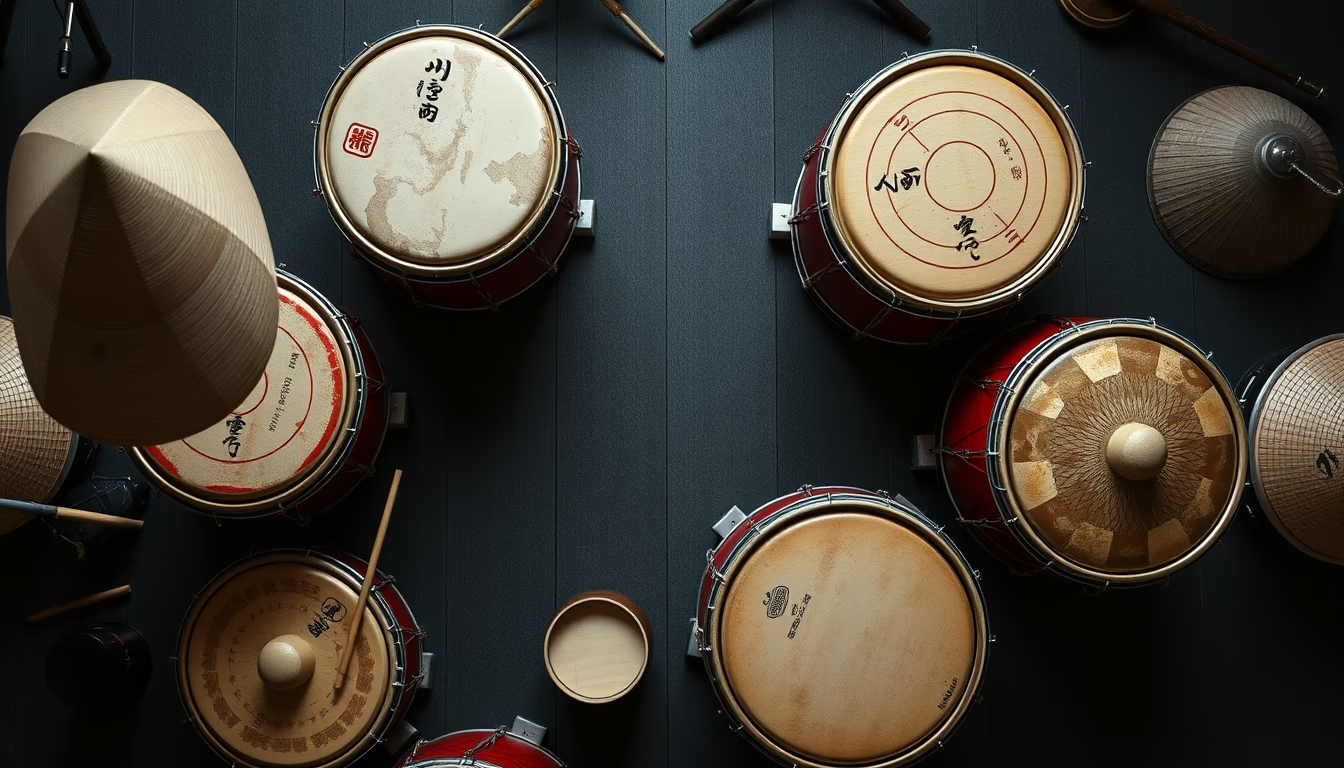
Music notes flowing visualization
1344×768 · AVIF · CC BY 4.0

Flowing music note visualizations blend art and science to represent the abstract beauty of music.
About this subject
Flowing music note visualizations are an art form that translates sonic language into dynamic images. This practice, combining traditional music notation with graphic design and computational techniques, gained prominence with the rise of electronic music and streaming platforms. The idea of "seeing" music dates back to early notation systems like medieval neumes, but fluid, continuous representations emerged with experiments by artists such as John Whitney and Norman McLaren in the 20th century.
In fine art photography, flowing music note visualizations are often created using long exposures or digital manipulation to capture the movement of music. These images evoke sensations of rhythm, melody, and harmony, serving as a bridge between the auditory and the visual. The use of curves, lines, and vibrant colors helps convey the emotion within a musical composition, transforming static scores into immersive visual experiences.
In Brazilian culture, the connection to music is intense, from samba to bossa nova. Flowing note visualizations appear on album covers, music videos, and interactive installations. Contemporary artists like Brazilian Jarbas Agnelli explore translating sound data into images, creating works that dialogue with science and human perception. This fusion of disciplines makes music visualization a powerful tool for educators and therapists, helping hearing-impaired individuals feel music visually.
Interestingly, flowing note visualizations are also used in AI systems to generate music from visual inputs. Software like Google Magenta turns drawings into melodies, reversing the process. This demonstrates how the relationship between sound and image is bidirectional, full of creative possibilities.
Frequently Asked Questions
What is a flowing music note visualization?
It is a visual representation that translates the movement and structure of music into continuous, dynamic images, often using curves, colors, and shapes that mimic rhythm and melody.
Who was a pioneer in music visualization?
John Whitney, an American filmmaker and animator, is considered a pioneer in computer music visualization in the 1960s, creating abstract animations synchronized with soundtracks.
How can music visualization help deaf people?
It allows hearing-impaired individuals to perceive music through visual stimuli, aiding in understanding rhythm and emotion, and is used in therapies and special education.
Direct URL
https://pub-c7d6a6ea828543ac903a74a341ccb2e1.r2.dev/imagens/music-notes-flowing-visualization-fine-art-photography-p6.avifHow to credit
Include a visible link back to UtilizAí. Copy one of the snippets below:
<a href="https://xn--utiliza-eza.com/en/midia/imagens/music-notes-flowing-visualization-fine-art-photography-p6">Music notes flowing visualization</a> by <a href="https://xn--utiliza-eza.com">UtilizAí</a>, licensed under <a href="https://creativecommons.org/licenses/by/4.0/">CC BY 4.0</a>.
[Music notes flowing visualization](https://xn--utiliza-eza.com/en/midia/imagens/music-notes-flowing-visualization-fine-art-photography-p6) by [UtilizAí](https://xn--utiliza-eza.com), CC BY 4.0
License: CC-BY-4.0