Music notes flowing visualization
1344×768 · AVIF · CC BY 4.0

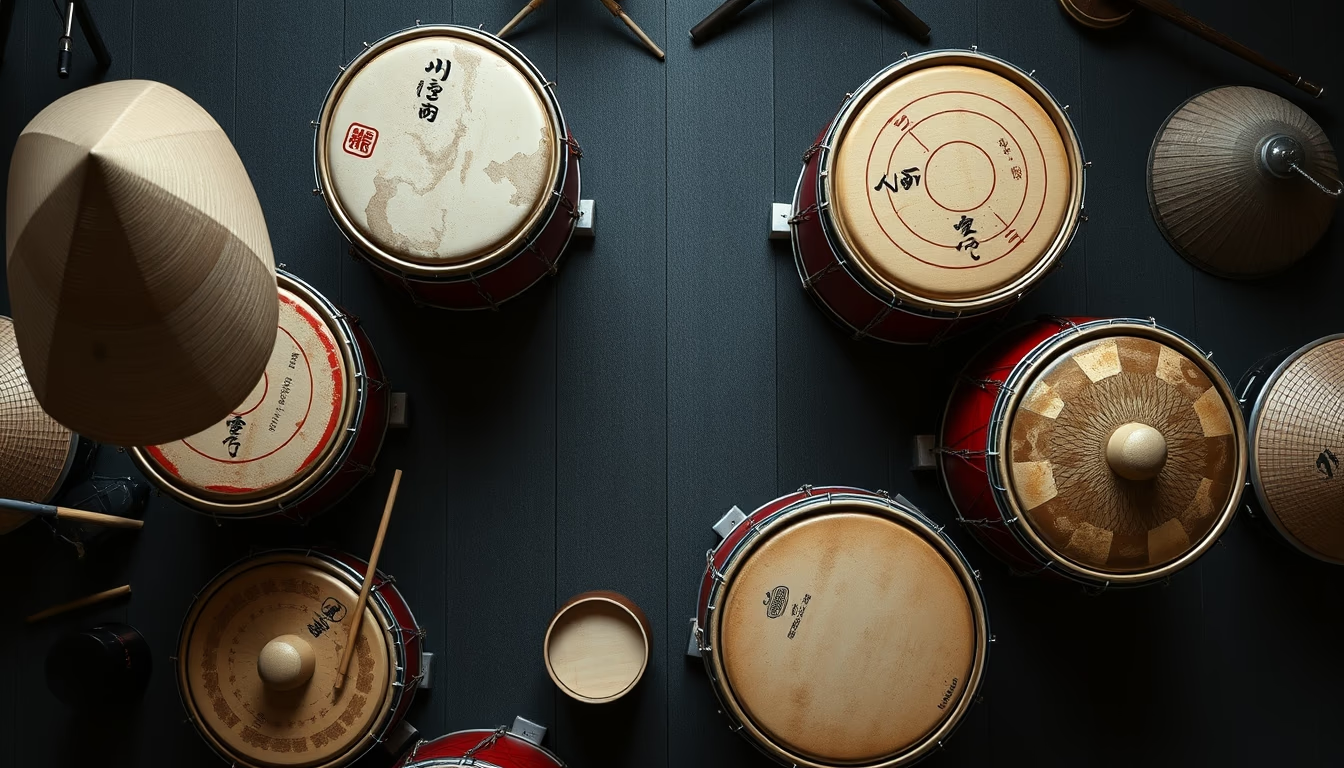
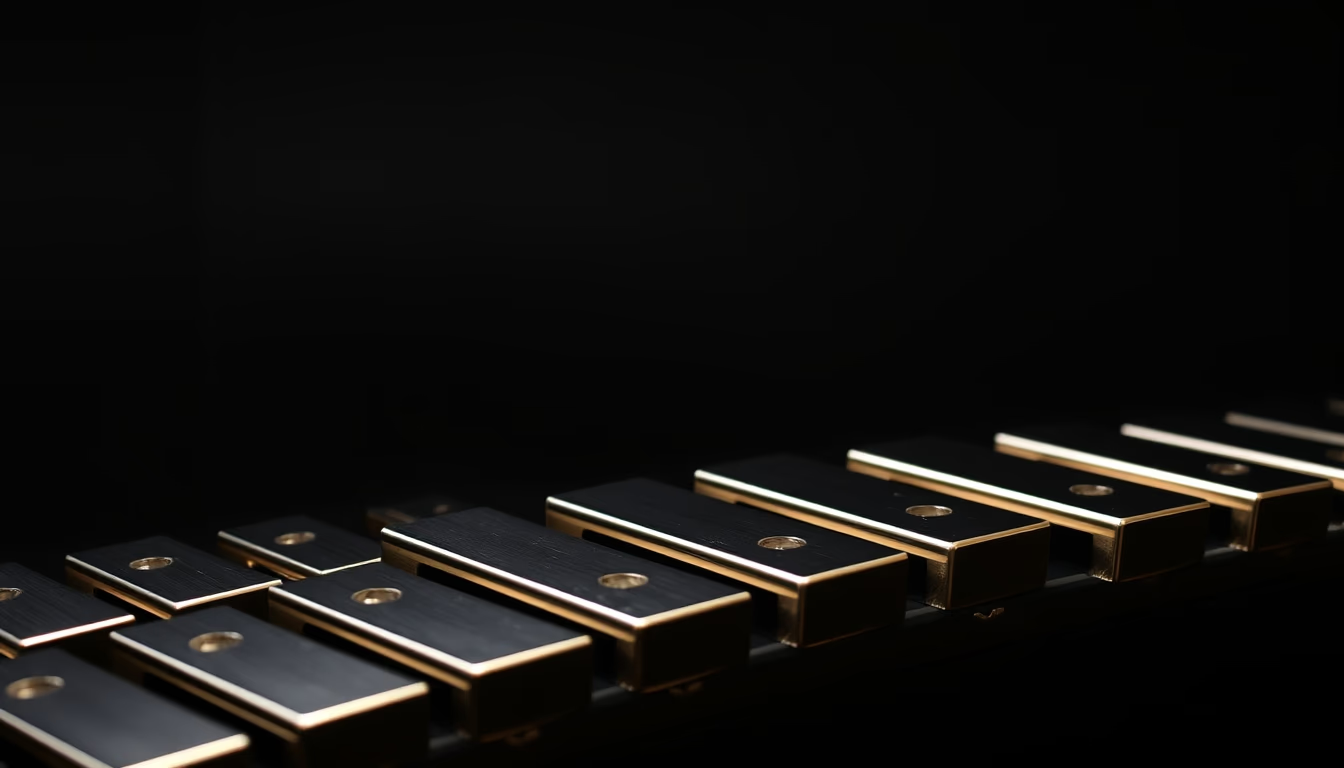
Flowing visualization of musical notes, exploring how music is visually represented through sheet music and other notation systems.
About this subject
The visual representation of music through notes is one of the cornerstones of Western music theory. The system of musical notation as we know it today emerged in the 9th century with Gregorian neumes, but it was Guido d'Arezzo in the 11th century who introduced the four-line staff and the names of notes (ut, re, mi, fa, sol, la, si). This system allowed melodies to be recorded accurately, independent of oral transmission.
The flow of notes on a score reflects the passage of time: each note has a specific duration indicated by the shape of the figure (quarter note, half note, etc.), and the time signature organizes rhythmic accents. This visualization is essential for ensemble performance, as musicians of different instruments can read the same work in a standardized way. Beyond the traditional staff, modern representations include the spectrogram, which displays frequency and intensity over time, and the piano roll, used in music production software.
Musical notation is not universal. While the West adopted the five-line staff, other cultures developed their own systems, such as Indian notation (sargam) or Chinese gongche. Even within Western music, there were variations: tablature for lute and guitar indicates fret positions, dispensing with the staff. Ottaviano Petrucci's invention of music printing in 1501 revolutionized the dissemination of scores.
Today, software like Musescore and Finale allow the creation of digital scores with playback. In studios, DAWs display notes in real time as colored blocks on the piano roll, facilitating editing. These tools make musical visualization more accessible for composers and educators, keeping alive the tradition of graphically representing sound.
Frequently Asked Questions
What is a musical score?
A musical score is the written representation of a musical composition, using a five-line staff, clefs, notes, and rhythmic symbols. It allows musicians to perform the piece in a standardized way.
How did modern musical notation originate?
Modern notation originated from Gregorian neumes (9th century) and was systematized by Guido d'Arezzo in the 11th century with the staff and note names. Petrucci's music printing (1501) spread the score.
What are the main elements of a score?
The main elements are: staff (set of five lines), clef (defines pitch), notes (represent sound and duration), time signature (organizes rhythm), and dynamics (indicate intensity).
Direct URL
https://pub-c7d6a6ea828543ac903a74a341ccb2e1.r2.dev/imagens/music-notes-flowing-visualization-documentary-photography-p0.avifHow to credit
Include a visible link back to UtilizAí. Copy one of the snippets below:
<a href="https://xn--utiliza-eza.com/en/midia/imagens/music-notes-flowing-visualization-documentary-photography-p0">Music notes flowing visualization</a> by <a href="https://xn--utiliza-eza.com">UtilizAí</a>, licensed under <a href="https://creativecommons.org/licenses/by/4.0/">CC BY 4.0</a>.
[Music notes flowing visualization](https://xn--utiliza-eza.com/en/midia/imagens/music-notes-flowing-visualization-documentary-photography-p0) by [UtilizAí](https://xn--utiliza-eza.com), CC BY 4.0
License: CC-BY-4.0