Mrna vaccine vial closeup
1344×768 · AVIF · CC BY 4.0
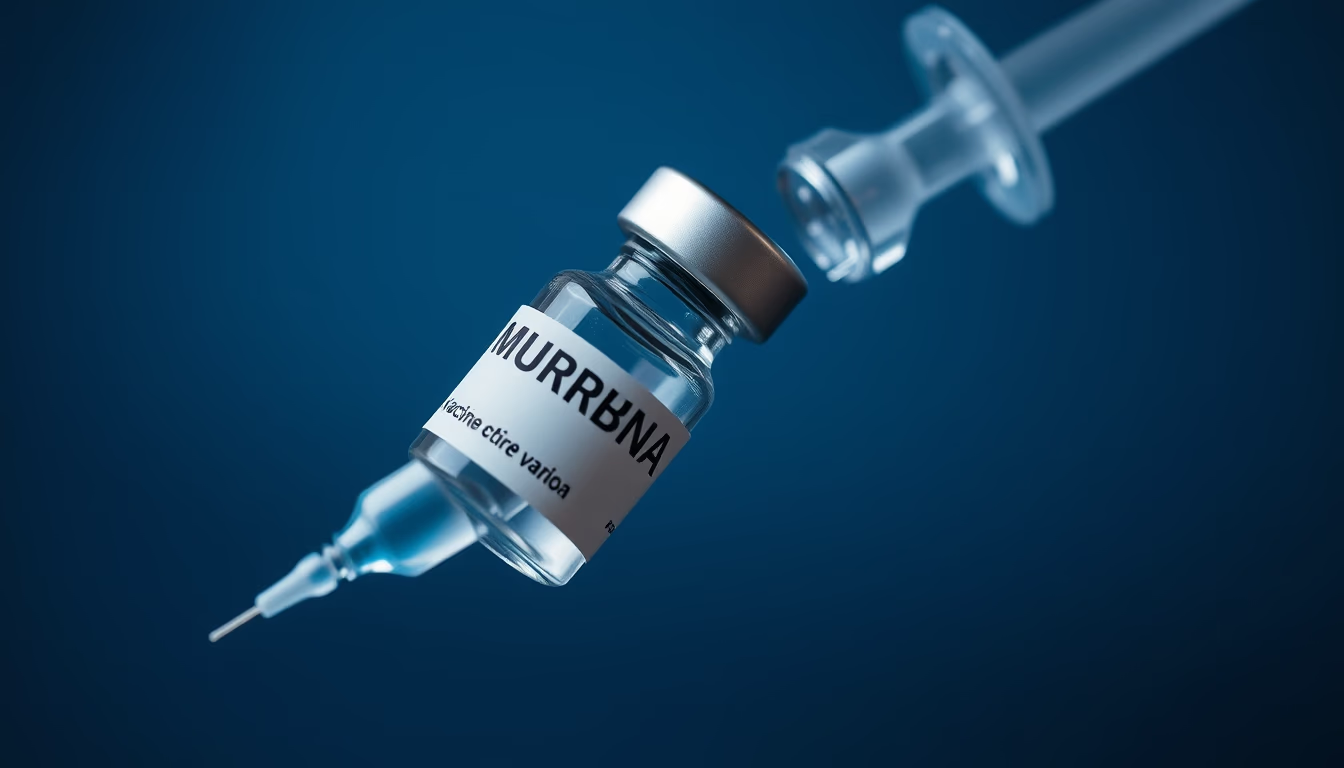
Close-up of an mRNA vaccine vial, highlighting the technological breakthrough that revolutionized immunization against COVID-19.
About this subject
The mRNA vaccine is one of the most innovative tools against infectious diseases. It uses a synthetic molecule called messenger RNA, which instructs cells to produce a harmless protein from the pathogen, triggering an immune response. For COVID-19, the Pfizer-BioNTech and Moderna vaccines encode the SARS-CoV-2 spike protein, the first mRNA-based vaccines to receive emergency use approval in 2020, showing over 90% efficacy in clinical trials.
Globally, mRNA vaccines played a crucial role in the pandemic response. Their rapid development was possible thanks to decades of research by scientists like Katalin Karikó and Drew Weissman, who won the 2023 Nobel Prize in Physiology or Medicine. Distribution required specialized cold chains, but the technology enabled unprecedented speed in vaccine rollout. In countries like Brazil, millions of doses were administered, significantly reducing severe illness and deaths.
The mRNA platform holds great promise beyond COVID-19. Clinical trials are underway for vaccines against influenza, HIV, and cancer. Advantages include faster production, flexibility to target new variants, and no use of live virus. A common misconception is that mRNA vaccines can alter human DNA. However, mRNA does not enter the cell nucleus; it remains in the cytoplasm and is naturally degraded after delivering instructions.
Frequently Asked Questions
How does an mRNA vaccine work?
An mRNA vaccine delivers genetic instructions for cells to produce a specific protein from the pathogen, such as the spike protein of the coronavirus. The immune system recognizes this protein as foreign and produces antibodies and memory cells, preparing the body for a real infection.
What are the advantages of mRNA vaccines over traditional vaccines?
mRNA vaccines can be developed and produced much faster than traditional vaccines. They do not use live or attenuated viruses, eliminating infection risks. Additionally, they are easily adaptable to new variants by simply changing the mRNA sequence.
Can mRNA vaccines alter human DNA?
No. The mRNA from the vaccine does not enter the cell nucleus where DNA is located. It operates in the cytoplasm and is naturally degraded after delivering instructions. Therefore, there is no integration or modification of human DNA.
Direct URL
https://pub-c7d6a6ea828543ac903a74a341ccb2e1.r2.dev/imagens/mrna-vaccine-vial-closeup-studio-still-life-p1.avifHow to credit
Include a visible link back to UtilizAí. Copy one of the snippets below:
<a href="https://xn--utiliza-eza.com/en/midia/imagens/mrna-vaccine-vial-closeup-studio-still-life-p1">Mrna vaccine vial closeup</a> by <a href="https://xn--utiliza-eza.com">UtilizAí</a>, licensed under <a href="https://creativecommons.org/licenses/by/4.0/">CC BY 4.0</a>.
[Mrna vaccine vial closeup](https://xn--utiliza-eza.com/en/midia/imagens/mrna-vaccine-vial-closeup-studio-still-life-p1) by [UtilizAí](https://xn--utiliza-eza.com), CC BY 4.0
License: CC-BY-4.0