Mrna vaccine vial closeup
1344×768 · AVIF · CC BY 4.0
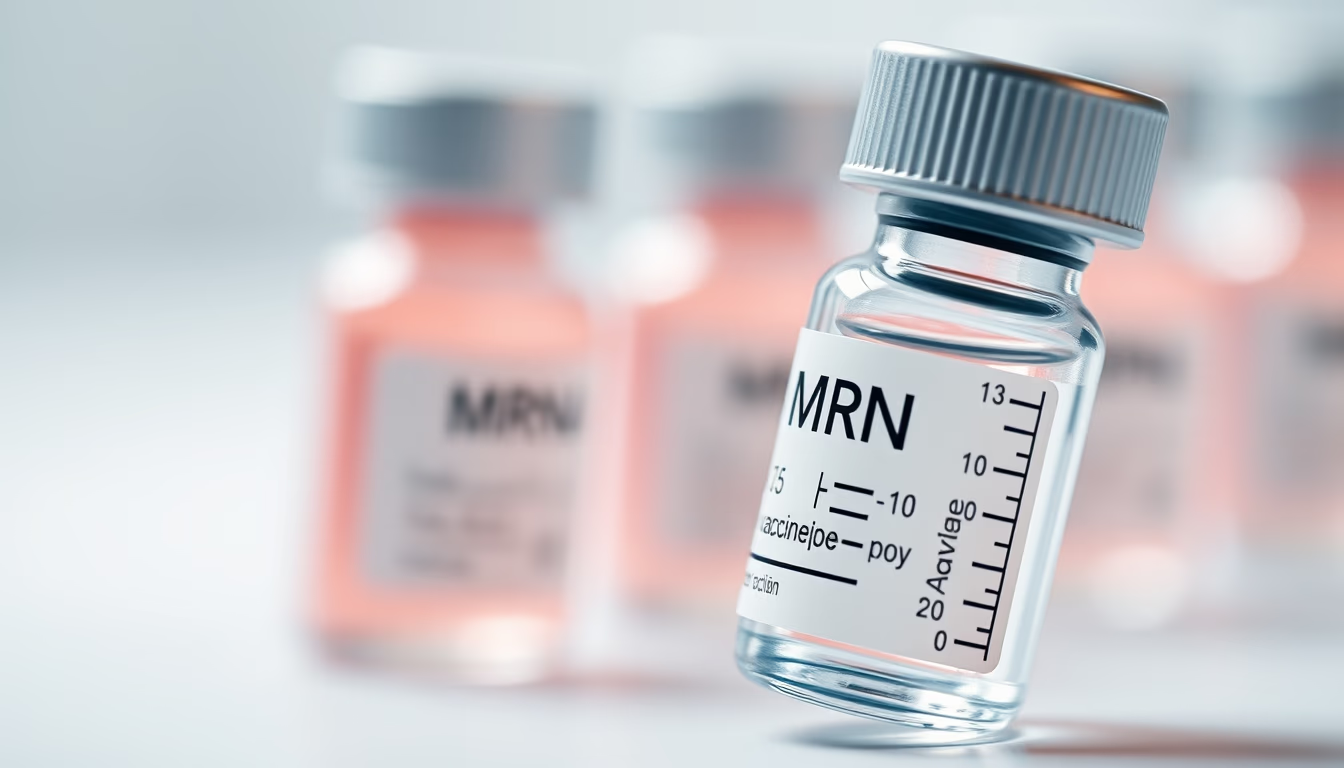
Closeup of an mRNA vaccine vial shows the container storing the groundbreaking technology against infectious diseases.
About this subject
mRNA vaccines represent a breakthrough in immunization. Unlike traditional vaccines that use weakened or inactivated viruses, mRNA vaccines employ a synthetic messenger RNA molecule. This molecule instructs cells to produce a specific pathogen protein, triggering an immune response without causing disease. The technology was enabled by decades of basic research, but it gained prominence during the COVID-19 pandemic when Pfizer BioNTech and Moderna vaccines were authorized for emergency use in less than a year.
The vials that contain these vaccines are designed to maintain mRNA stability, which is fragile. Early formulations required storage at ultra low temperatures, around 70°C below zero, due to mRNA degradation. Later, adapted versions allowed refrigeration for shorter periods. Each multidose vial holds several doses, optimizing mass vaccination logistics.
The importance of mRNA vaccines extends beyond COVID-19. They are modular platforms that can be rapidly adapted to new pathogens. Current research includes influenza, Zika, rabies, and even cancer therapies. The rapid development capability and demonstrated efficacy make this technology a crucial tool for future pandemics and neglected diseases.
A curiosity: the vials usually have a rubber stopper and a flip off cap. The content is extracted with a syringe and needle, and the vial should be gently swirled before use. The mRNA vaccine also marked the first time this technology was approved for widespread human use.
Frequently Asked Questions
How does an mRNA vaccine work?
The vaccine contains synthetic messenger RNA that codes for a pathogen protein. After injection, body cells produce that protein, activating the immune system to create antibodies and memory cells.
Why do mRNA vaccines need to be stored at very low temperatures?
mRNA is an unstable molecule and degrades quickly at room temperature. Ultra cold storage (around -70°C) preserves its integrity until use.
What diseases could mRNA vaccines target in the future?
Beyond COVID-19, advanced research includes mRNA vaccines for influenza, Zika, rabies, cytomegalovirus, and even cancer immunotherapies, leveraging the platform's flexibility.
Direct URL
https://pub-c7d6a6ea828543ac903a74a341ccb2e1.r2.dev/imagens/mrna-vaccine-vial-closeup-macro-closeup-p10.avifHow to credit
Include a visible link back to UtilizAí. Copy one of the snippets below:
<a href="https://xn--utiliza-eza.com/en/midia/imagens/mrna-vaccine-vial-closeup-macro-closeup-p10">Mrna vaccine vial closeup</a> by <a href="https://xn--utiliza-eza.com">UtilizAí</a>, licensed under <a href="https://creativecommons.org/licenses/by/4.0/">CC BY 4.0</a>.
[Mrna vaccine vial closeup](https://xn--utiliza-eza.com/en/midia/imagens/mrna-vaccine-vial-closeup-macro-closeup-p10) by [UtilizAí](https://xn--utiliza-eza.com), CC BY 4.0
License: CC-BY-4.0