Mrna vaccine vial closeup
1344×768 · AVIF · CC BY 4.0
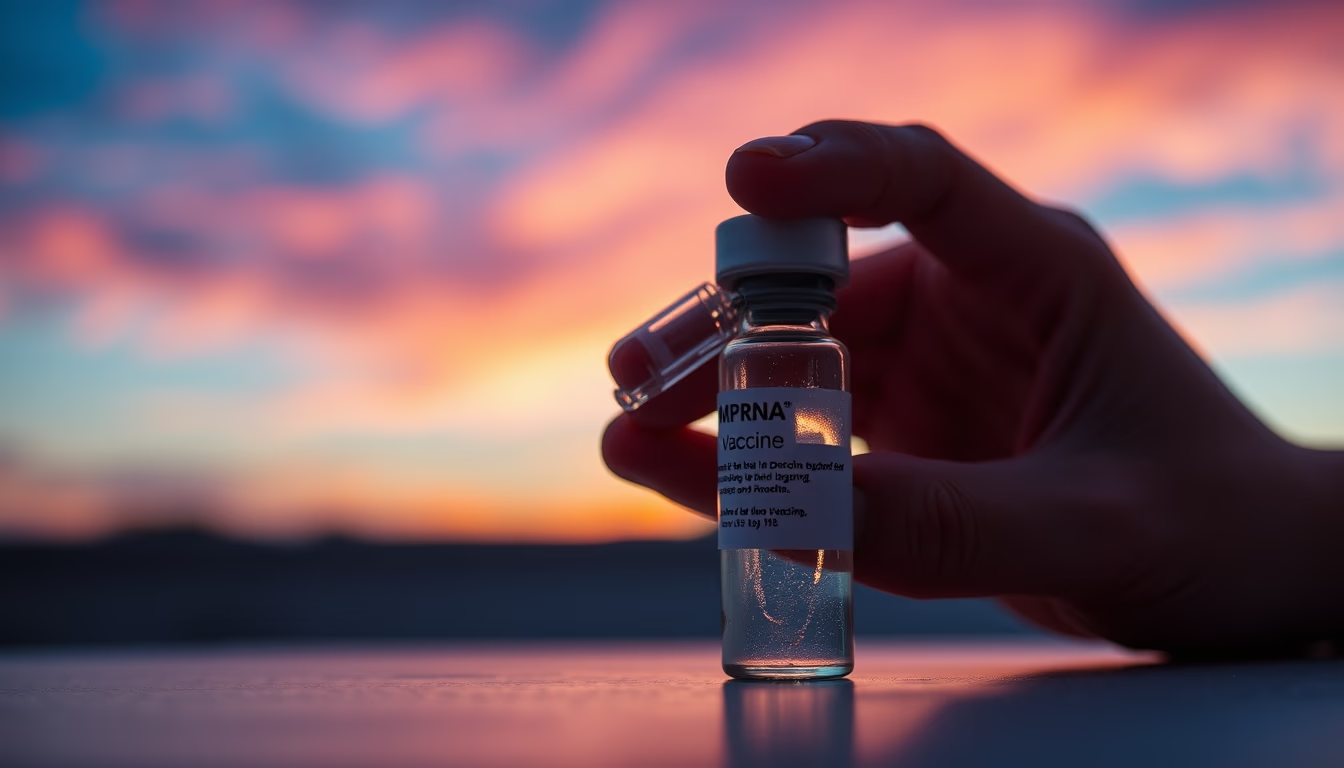
Close-up of an mRNA vaccine vial: understand how this revolutionary technology works and its impact on global health.
About this subject
mRNA vaccines represent a significant leap in immunization technology. Unlike traditional vaccines that use weakened or inactivated viruses, these vaccines employ a synthetic messenger RNA molecule to instruct cells to produce a specific protein from the pathogen, triggering an immune response. In the case of COVID-19, the Pfizer-BioNTech and Moderna vaccines encode the SARS-CoV-2 spike protein. Once administered, cells produce the protein, the immune system recognizes it as foreign, and generates antibodies and memory cells. This technology enabled development and approval in under a year, unprecedented in vaccine history, thanks to decades of prior research in cancer therapies.
Production of mRNA vaccines is faster and more flexible than conventional methods. While traditional vaccines can take months to manufacture in eggs or cell cultures, mRNA can be synthesized in the lab within weeks using enzymes and nucleotides. However, the fragility of the molecule requires strict storage and transport conditions. The Pfizer-BioNTech vaccine, for instance, must be kept at -70°C, while Moderna's is stable at -20°C, both requiring specialized cold chains. This posed logistical challenges, especially in regions with limited infrastructure, leading to the development of more stable formulations.
Clinical trials demonstrated high efficacy of mRNA vaccines. Pfizer-BioNTech showed 95% efficacy against symptomatic COVID-19, and Moderna 94.1%. Additionally, these vaccines were adapted to address variants like Omicron, with updated bivalent versions encoding multiple spike proteins. Safety was extensively monitored, with rare adverse events such as myocarditis in adolescent males, but the risk-benefit ratio remains favorable. Over 13 billion doses have been administered globally as of 2023.
The mRNA technology is also being explored for other diseases, including influenza, Zika, rabies, and even cancer. Companies like Moderna and BioNTech have ongoing trials for personalized cancer vaccines based on patients' genetic profiles. This therapeutic potential positions mRNA as a platform not only for pandemics but for future medicine, with rapid response capability to new threats and individualized treatments.
Frequently Asked Questions
How were mRNA vaccines developed so quickly?
Rapid development was possible thanks to decades of prior research on mRNA, especially for cancer therapies, and the immediate availability of the SARS-CoV-2 genetic sequence. Additionally, regulatory agencies like the FDA prioritized review, and clinical trials were conducted in parallel with large-scale production.
Can mRNA vaccines alter human DNA?
No. The mRNA in the vaccines never enters the cell nucleus, where DNA is located. It acts only in the cytoplasm, producing the spike protein, and then degrades. There is no mechanism for the mRNA to integrate into the human genome.
Why do mRNA vaccines require such cold storage?
mRNA is a fragile molecule that can be degraded by enzymes called RNAses present in the environment. Ultra-low temperatures slow this degradation, ensuring vaccine stability until administration. New formulations are being developed to allow storage at standard refrigerator temperatures.
Direct URL
https://pub-c7d6a6ea828543ac903a74a341ccb2e1.r2.dev/imagens/mrna-vaccine-vial-closeup-long-exposure-p2.avifHow to credit
Include a visible link back to UtilizAí. Copy one of the snippets below:
<a href="https://xn--utiliza-eza.com/en/midia/imagens/mrna-vaccine-vial-closeup-long-exposure-p2">Mrna vaccine vial closeup</a> by <a href="https://xn--utiliza-eza.com">UtilizAí</a>, licensed under <a href="https://creativecommons.org/licenses/by/4.0/">CC BY 4.0</a>.
[Mrna vaccine vial closeup](https://xn--utiliza-eza.com/en/midia/imagens/mrna-vaccine-vial-closeup-long-exposure-p2) by [UtilizAí](https://xn--utiliza-eza.com), CC BY 4.0
License: CC-BY-4.0