Mrna vaccine vial closeup
1344×768 · AVIF · CC BY 4.0
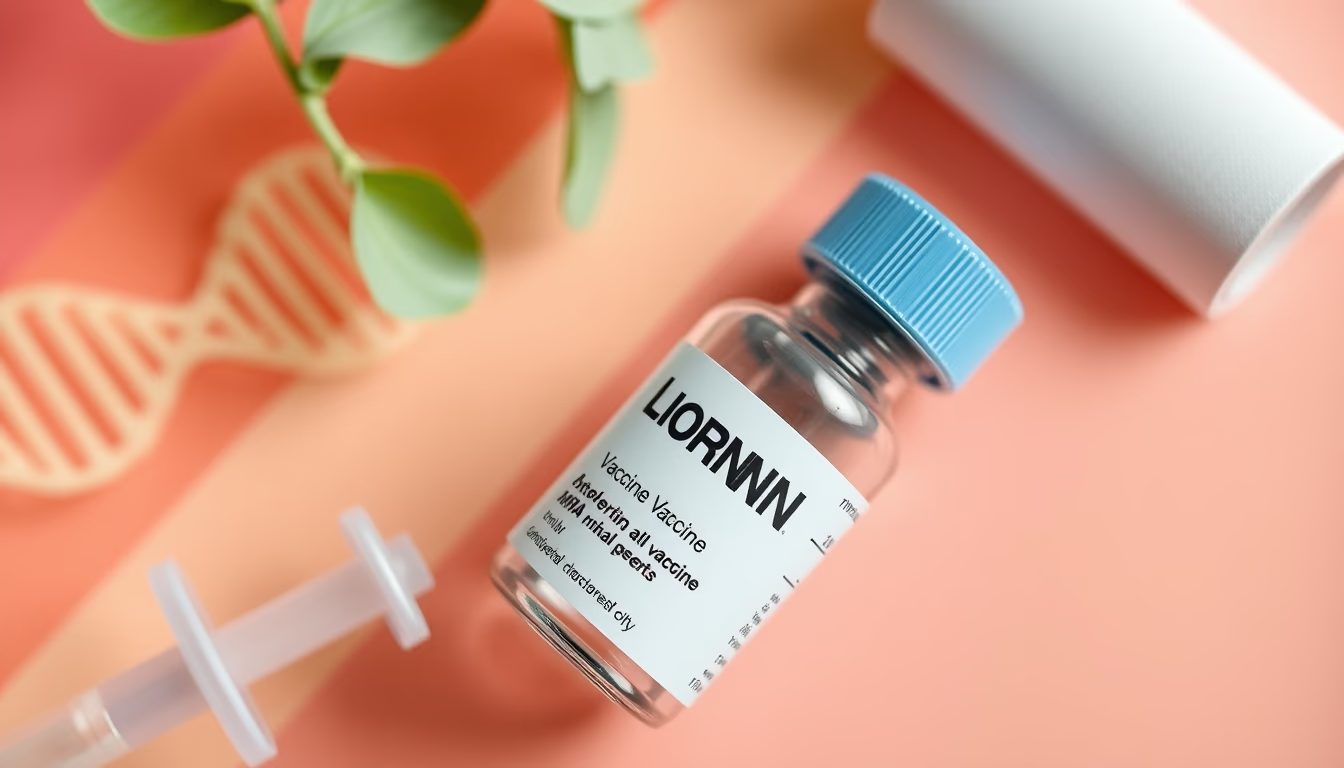
Close-up of an mRNA vaccine vial reveals details of the technology that revolutionized immunization against COVID-19.
About this subject
mRNA vaccines represent a milestone in medical history, being the first to use synthetic messenger RNA to induce immunity. Unlike traditional vaccines, which use attenuated viruses or proteins, they instruct the body's cells to produce a specific pathogen protein, triggering an immune response. For COVID-19, the Pfizer-BioNTech and Moderna vaccines encode the SARS-CoV-2 spike protein.
The vials for these vaccines are designed to maintain mRNA stability, which is extremely fragile. The Pfizer vaccine, for example, required storage at -70°C due to its lipid nanoparticle composition, while Moderna's could be kept at -20°C. This ultra-cold storage need posed a global logistical challenge, requiring special freezers and robust cold chains, especially in low-income regions.
The development of these vaccines was accelerated by the pandemic, but mRNA research had existed for decades. Scientists like Katalin Karikó and Drew Weissman, awarded the Nobel Prize, discovered nucleoside modifications that reduce inflammation and boost protein production. This breakthrough allowed vaccines to be created in less than a year, unprecedented in history.
The impact of mRNA vaccines was immense: they are estimated to have prevented millions of deaths and hospitalizations globally. Beyond COVID-19, the technology is being adapted for other diseases such as influenza, Zika, and even cancer. The vial in closeup symbolizes not just a public health tool but a platform that can transform preventive medicine.
Frequently Asked Questions
How does an mRNA vaccine work?
The mRNA vaccine contains genetic instructions (messenger RNA) that teach cells to produce a harmless viral protein. The immune system recognizes this protein as foreign and creates antibodies and memory cells to fight the actual virus.
Why do mRNA vaccines need to be stored at such low temperatures?
mRNA is an unstable molecule that degrades quickly. To preserve its integrity until administration, the vaccines are encapsulated in lipid nanoparticles that require ultra-cold temperatures, such as -70°C, to maintain structure and efficacy.
What was the impact of mRNA vaccines on the pandemic?
mRNA vaccines were crucial in controlling the COVID-19 pandemic. Studies estimate they prevented about 14 million deaths in 2021 alone. Additionally, they paved the way for new vaccines against other emerging diseases.
Direct URL
https://pub-c7d6a6ea828543ac903a74a341ccb2e1.r2.dev/imagens/mrna-vaccine-vial-closeup-isometric-flat-lay-p3.avifHow to credit
Include a visible link back to UtilizAí. Copy one of the snippets below:
<a href="https://xn--utiliza-eza.com/en/midia/imagens/mrna-vaccine-vial-closeup-isometric-flat-lay-p3">Mrna vaccine vial closeup</a> by <a href="https://xn--utiliza-eza.com">UtilizAí</a>, licensed under <a href="https://creativecommons.org/licenses/by/4.0/">CC BY 4.0</a>.
[Mrna vaccine vial closeup](https://xn--utiliza-eza.com/en/midia/imagens/mrna-vaccine-vial-closeup-isometric-flat-lay-p3) by [UtilizAí](https://xn--utiliza-eza.com), CC BY 4.0
License: CC-BY-4.0