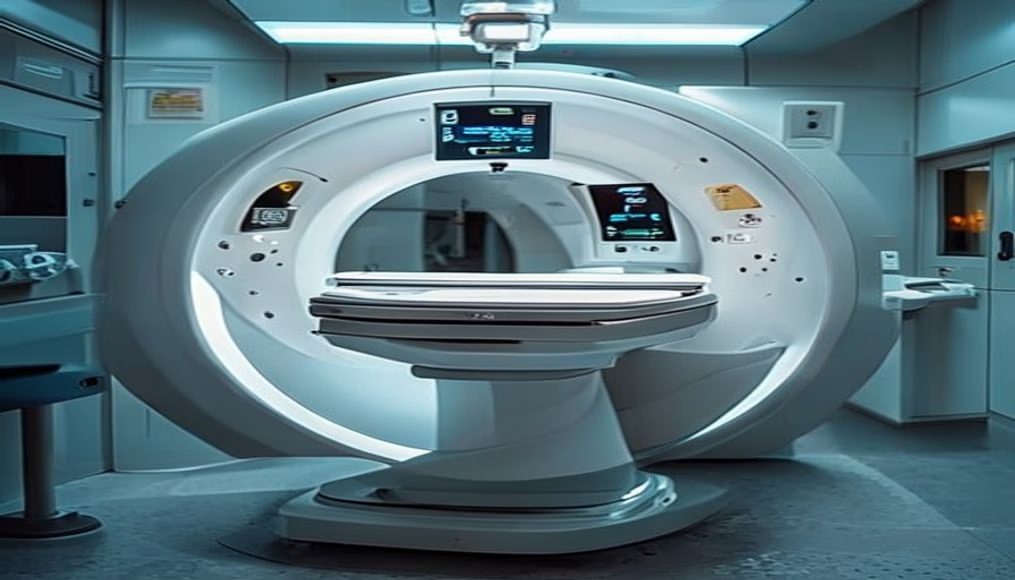
Mri scanner machine modern
1344×768 · AVIF · CC BY 4.0
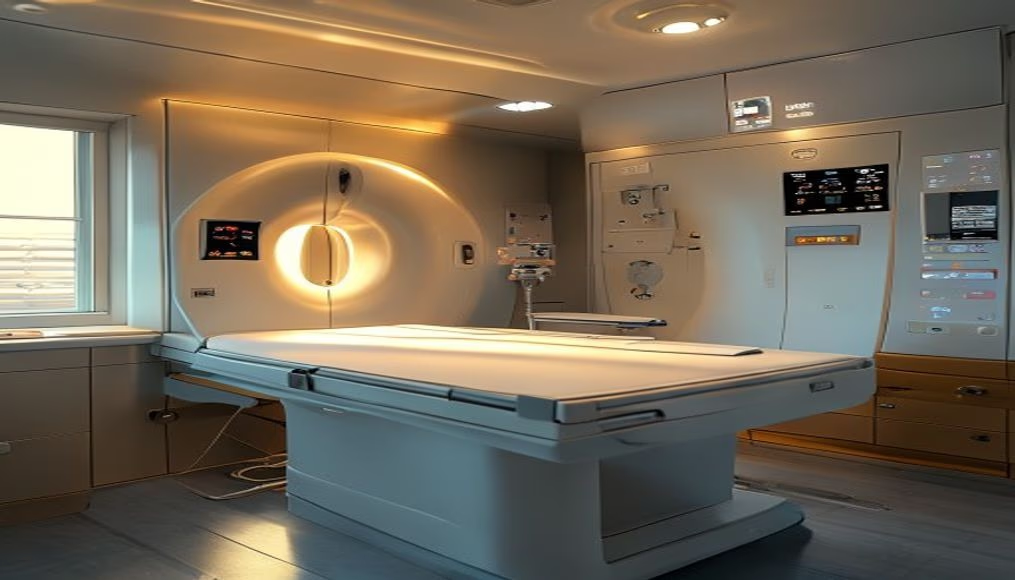
The magnetic resonance imaging (MRI) machine is a medical device that uses magnetic fields and radio waves to produce detailed images of the inside of the human body.
About this subject
Magnetic resonance imaging (MRI) is a non-invasive medical imaging technique that has revolutionized diagnostic radiology. Unlike X-rays or CT scans, MRI does not use ionizing radiation, making it safer for repeated examinations. The physical principle behind MRI is nuclear magnetic resonance: hydrogen protons in the body (mainly in water and fat) are aligned by a strong magnetic field and then disturbed by radiofrequency pulses. As they return to their original state, they emit signals that are captured and transformed into high-resolution images.
The first concepts of MRI were described in the 1940s, but the first medical image was obtained in 1977 by Raymond Damadian. Since then, the technology has evolved rapidly. Modern scanners have magnetic fields ranging from 1.5 Tesla (T) to 3 T for clinical use, reaching 7 T or more in research. The high resolution allows clear visualization of soft tissues, making it essential for diagnosing brain tumors, spinal cord injuries, joint and cardiac diseases.
An important aspect is safety. The magnetic field is permanent and extremely strong, attracting ferromagnetic objects with projectile risk. Therefore, patients with metallic implants (such as pacemakers or aneurysm clips) may be contraindicated. Additionally, the exam can be uncomfortable due to loud noise, the magnetic gradients produce loud tapping sounds, and the need to remain still for several minutes. Modern machines reduce scan time and offer quieter sequences.
Functional MRI (fMRI) allows mapping of brain activity, while MR angiography visualizes blood vessels without iodinated contrast. In the United States, MRI is widely available, but costs remain high. In many countries, access is limited to large hospitals. Despite its high cost, MRI is an indispensable tool in modern medicine for accurate diagnosis and treatment planning.
Frequently Asked Questions
Is an MRI scan painful?
No, the procedure is painless. Discomfort may arise from loud noises and the need to remain still, but there is no physical pain.
How long does an MRI scan take?
Depending on the area, it typically takes 30 to 60 minutes. Faster sequences in modern machines can reduce this time.
Who cannot have an MRI?
Patients with pacemakers, aneurysm clips, intraocular metallic fragments, or other non-compatible ferromagnetic implants. Pregnant women usually avoid it, but there is no absolute contraindication in the first trimester.
Direct URL
https://pub-c7d6a6ea828543ac903a74a341ccb2e1.r2.dev/imagens/mri-scanner-machine-modern-travel-photography-v10.avifHow to credit
Include a visible link back to UtilizAí. Copy one of the snippets below:
<a href="https://xn--utiliza-eza.com/en/midia/imagens/mri-scanner-machine-modern-travel-photography-v10">Mri scanner machine modern</a> by <a href="https://xn--utiliza-eza.com">UtilizAí</a>, licensed under <a href="https://creativecommons.org/licenses/by/4.0/">CC BY 4.0</a>.
[Mri scanner machine modern](https://xn--utiliza-eza.com/en/midia/imagens/mri-scanner-machine-modern-travel-photography-v10) by [UtilizAí](https://xn--utiliza-eza.com), CC BY 4.0
License: CC-BY-4.0