Mount fuji winter snow
1344×768 · AVIF · CC BY 4.0
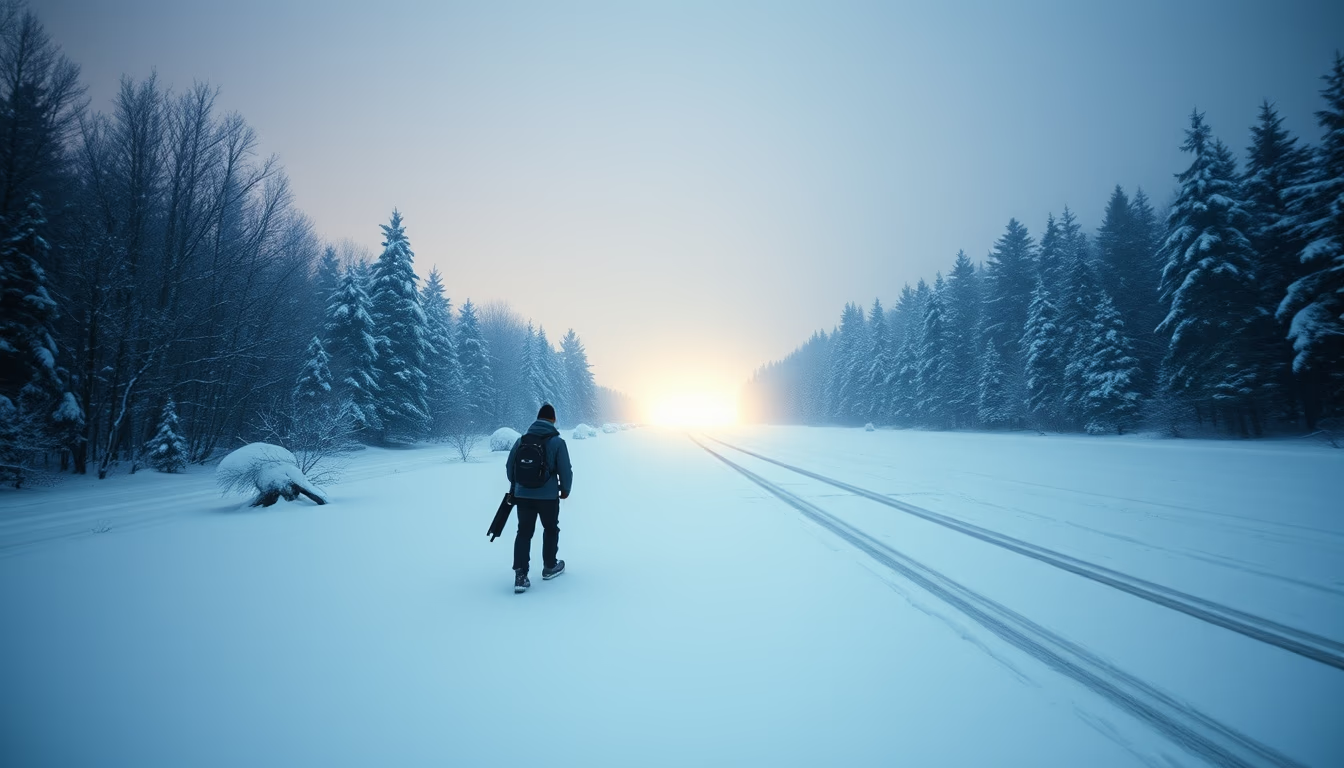
Mount Fuji covered in winter snow, one of Japan's most iconic symbols and a UNESCO World Heritage site.
About this subject
Mount Fuji, standing at 3,776 meters, is Japan's tallest mountain and an active stratovolcano, though its last eruption was in 1707. Located on Honshu Island about 100 km southwest of Tokyo, it spans Shizuoka and Yamanashi prefectures. In winter, its peak is covered in thick snow, forming the classic white cone shape that has inspired artists and photographers for centuries.
The snow on Mount Fuji is not just a visual phenomenon; it plays a crucial role in the region's water supply, melting in spring to feed rivers and lakes. The mountain is considered sacred in Japanese culture, revered as a dwelling place for Shinto gods. Pilgrims climb to the summit during summer, but in winter access is restricted due to extreme conditions. Despite this, the snowy landscape attracts tourists who admire the view from afar, especially from Lake Kawaguchi or the city of Fujiyoshida.
Interestingly, snow cover on Mount Fuji has been monitored as a climate change indicator. Studies show that the duration of snow cover has decreased in recent decades, reflecting global warming. Moreover, the mountain is often depicted in ukiyo-e art, notably in Katsushika Hokusai's famous woodblock prints, including the series "Thirty-six Views of Mount Fuji," which immortalized its different seasonal aspects.
Mount Fuji has been a UNESCO World Heritage site since 2013, recognized for both its natural beauty and cultural significance. In winter, the mountain offers a striking contrast with the surrounding snowfields, creating an atmosphere of tranquility and reverence. Although climbing is prohibited from November to April, viewpoints such as Chureito Pagoda and Miho Beach provide spectacular views of the snowy peak, especially at sunrise.
Frequently Asked Questions
Is it possible to climb Mount Fuji in winter?
No, climbing to the summit is officially prohibited from November to April due to dangerous conditions of snow, ice, and strong winds. The climbing season runs from July to September.
Why is Mount Fuji considered sacred?
In the Shinto religion, the mountain is seen as a dwelling place for gods (kami), especially the goddess Konohanasakuya-hime. It is also a site for pilgrimage and meditation.
What is the best time to see Mount Fuji with snow?
From December to February, when the snow cover is most intense. Clear winter days offer ideal visibility, especially in the early morning.
Direct URL
https://pub-c7d6a6ea828543ac903a74a341ccb2e1.r2.dev/imagens/mount-fuji-winter-snow-lo-fi-disposable-camera-p8.avifHow to credit
Include a visible link back to UtilizAí. Copy one of the snippets below:
<a href="https://xn--utiliza-eza.com/en/midia/imagens/mount-fuji-winter-snow-lo-fi-disposable-camera-p8">Mount fuji winter snow</a> by <a href="https://xn--utiliza-eza.com">UtilizAí</a>, licensed under <a href="https://creativecommons.org/licenses/by/4.0/">CC BY 4.0</a>.
[Mount fuji winter snow](https://xn--utiliza-eza.com/en/midia/imagens/mount-fuji-winter-snow-lo-fi-disposable-camera-p8) by [UtilizAí](https://xn--utiliza-eza.com), CC BY 4.0
License: CC-BY-4.0