Mount fuji japan reflection
1344×768 · AVIF · CC BY 4.0
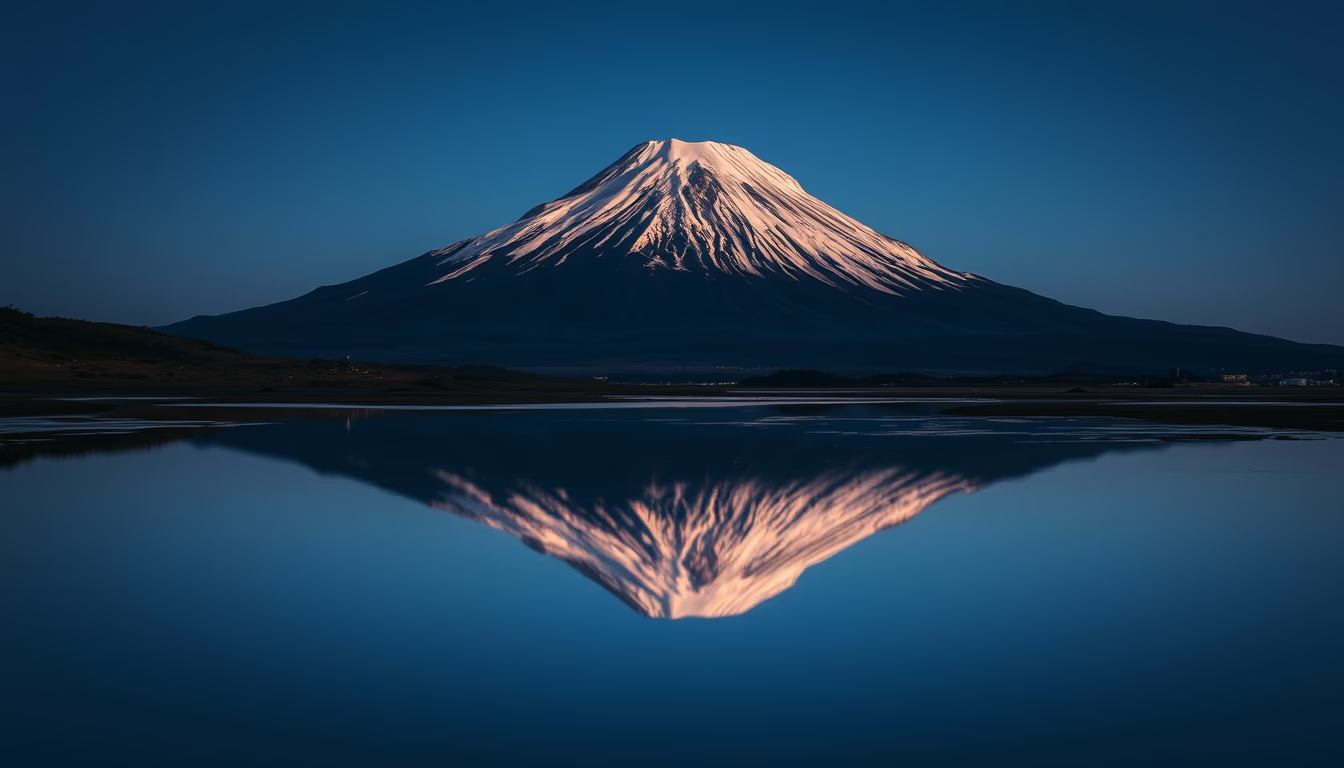
Mount Fuji, Japan's highest peak at 3,776 meters, is an active volcano and cultural icon, often photographed with its reflection in the waters of the Fuji Five Lakes.
About this subject
Mount Fuji (Fujisan) is an active stratovolcano on Honshu Island, about 100 km southwest of Tokyo. Its nearly perfect cone was shaped by multiple eruptions, the most recent being the Hōei eruption in 1707-1708. Along with Mount Tate and Mount Haku, Fuji is one of Japan's three sacred mountains and was designated a UNESCO World Heritage Site in 2013 for its cultural significance. The surrounding landscape includes the Fuji Five Lakes (Kawaguchi, Yamanaka, Sai, Motosu, and Shoji), formed by ancient lava flows. Lake Kawaguchi is particularly famous for its clear reflections of the mountain, making it a prime spot for photographers.
Fuji has inspired Japanese art for centuries. Katsushika Hokusai's series Thirty-six Views of Mount Fuji (c. 1830) depicts the volcano in various seasons and settings, including the iconic The Great Wave off Kanagawa. The inverted reflection of Fuji (sakasa Fuji) is a traditional motif symbolizing harmony and transience. During the Edo period, climbing Fuji was a popular pilgrimage; today, over 300,000 people ascend each year during the official season from July to early September.
Geologically, Fuji is a composite of three overlapping volcanoes: Komitake (oldest), Ko Fuji (forming the base), and Shin Fuji (the current cone). Snow typically caps the summit from October to May, though the snowline has been retreating due to climate change. The Fuji Five Lakes region offers boat tours and hiking trails that provide stunning reflective views, especially at sunrise. Aokigahara Forest, at the northwest base, is known for its dense tree cover and quiet atmosphere, contrasting with the serene lake scenery.
Frequently Asked Questions
Why is Mount Fuji's reflection so famous?
The reflection, known as sakasa Fuji (inverted Fuji), is prized for its symmetry and tranquil beauty, and is a classic theme in Japanese art. It is most commonly seen in the Fuji Five Lakes region, where calm waters create a perfect mirror.
What is the best time of year to see Mount Fuji's reflection?
The reflection is clearest in winter and early spring when the air is drier and skies are clearer. Early morning, especially just after sunrise, offers the best conditions on windless days. Autumn colors add to the scenery.
Is Mount Fuji an active volcano?
Yes, it is an active stratovolcano, though with low current risk. The last eruption occurred in 1707. The Japan Meteorological Agency monitors it constantly. Climbing is permitted only during the official season from July to September.
Direct URL
https://pub-c7d6a6ea828543ac903a74a341ccb2e1.r2.dev/imagens/mount-fuji-japan-reflection-fine-art-photography-p2.avifHow to credit
Include a visible link back to UtilizAí. Copy one of the snippets below:
<a href="https://xn--utiliza-eza.com/en/midia/imagens/mount-fuji-japan-reflection-fine-art-photography-p2">Mount fuji japan reflection</a> by <a href="https://xn--utiliza-eza.com">UtilizAí</a>, licensed under <a href="https://creativecommons.org/licenses/by/4.0/">CC BY 4.0</a>.
[Mount fuji japan reflection](https://xn--utiliza-eza.com/en/midia/imagens/mount-fuji-japan-reflection-fine-art-photography-p2) by [UtilizAí](https://xn--utiliza-eza.com), CC BY 4.0
License: CC-BY-4.0