Mother and child at vaccination clinic
1344×768 · AVIF · CC BY 4.0
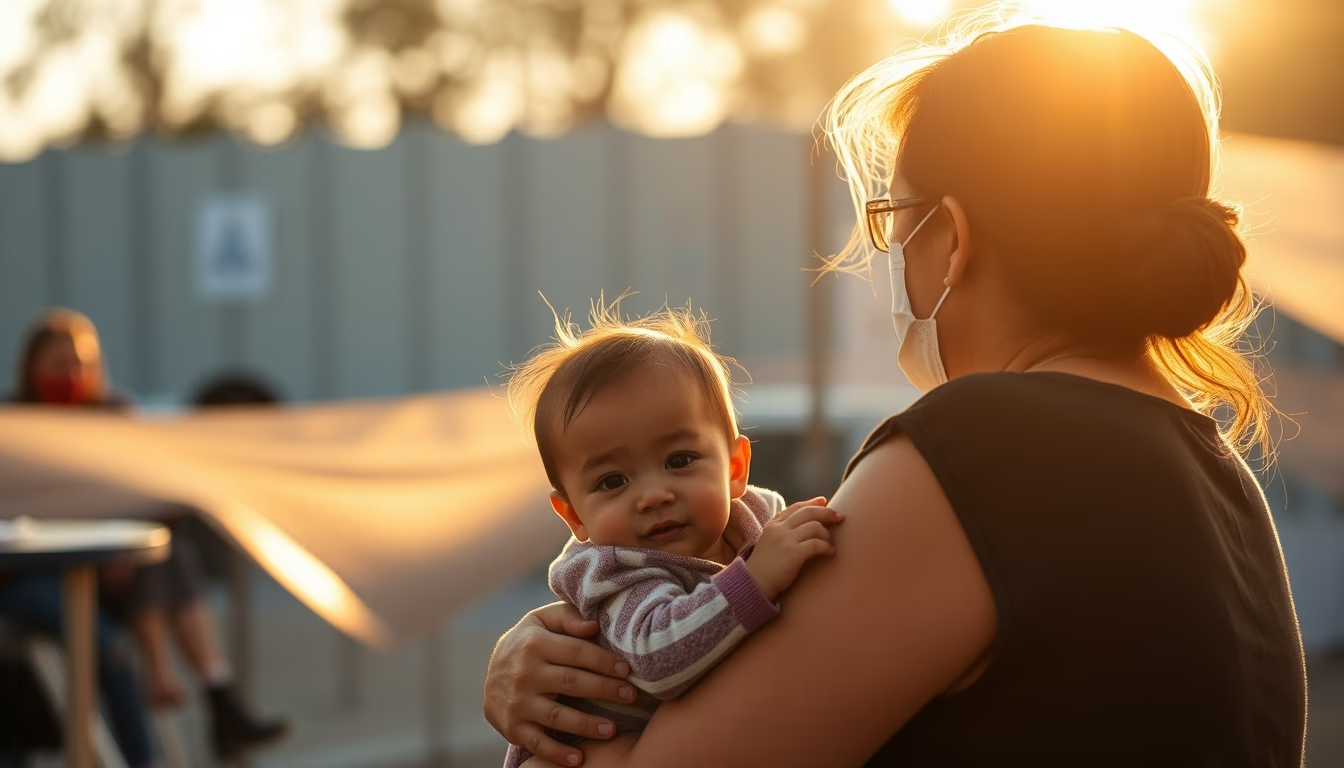
Mother and child at a vaccination clinic in the late afternoon, highlighting the importance of childhood immunization in Brazil.
About this subject
Childhood vaccination is one of the most cost-effective public health interventions, saving millions of lives annually. In Brazil, the National Immunization Program (PNI), established in 1973, is a global reference due to its comprehensive coverage and reach, offering over 20 vaccines free of charge for children, adolescents, and adults. The basic vaccination schedule includes immunizations against diseases such as polio, measles, rubella, mumps, tuberculosis, hepatitis B, diphtheria, tetanus, pertussis, yellow fever, and rotavirus, among others. The scene of a mother with her child at a vaccination clinic in the late afternoon is common in Brazilian urban and suburban areas, where vaccination rooms often operate until later hours to accommodate working parents. Vaccinating not only protects the child individually but also contributes to herd immunity, interrupting disease transmission chains. Despite advances, Brazil faces challenges such as declining vaccination coverage in recent years, driven by misinformation and vaccine hesitancy. Campaigns like Movimento Vacina Brasil and National Vaccination Day aim to reverse this trend. Parental presence at clinics is crucial to ensure adherence to the schedule and to clarify doubts about possible adverse reactions, which are usually mild and temporary.
Frequently Asked Questions
Which vaccines are mandatory for children in Brazil?
The basic PNI schedule in Brazil includes vaccines for BCG, hepatitis B, pentavalent, polio, rotavirus, pneumococcal, meningococcal, yellow fever, MMR (measles, mumps, rubella), DTP, and varicella. Mandatory vaccination is required by the Child and Adolescent Statute for school enrollment.
Why has vaccination coverage declined in Brazil?
The decline is linked to the spread of fake news about adverse effects, anti-vaccine movements, lack of information, and access barriers to health posts. In 2022, polio coverage fell below 80%, well short of the 95% target.
Can vaccination cause severe reactions?
Severe reactions are extremely rare. Vaccines undergo rigorous safety testing and are continuously monitored. The most common side effects are mild, such as low-grade fever and soreness at the injection site, which resolve within a few days.
Direct URL
https://pub-c7d6a6ea828543ac903a74a341ccb2e1.r2.dev/imagens/mother-and-child-at-vaccination-clinic-wide-late-afternoon-3.avifHow to credit
Include a visible link back to UtilizAí. Copy one of the snippets below:
<a href="https://xn--utiliza-eza.com/en/midia/imagens/mother-and-child-at-vaccination-clinic-wide-late-afternoon-3">Mother and child at vaccination clinic</a> by <a href="https://xn--utiliza-eza.com">UtilizAí</a>, licensed under <a href="https://creativecommons.org/licenses/by/4.0/">CC BY 4.0</a>.
[Mother and child at vaccination clinic](https://xn--utiliza-eza.com/en/midia/imagens/mother-and-child-at-vaccination-clinic-wide-late-afternoon-3) by [UtilizAí](https://xn--utiliza-eza.com), CC BY 4.0
License: CC-BY-4.0