Mother and child at vaccination clinic
1344×768 · AVIF · CC BY 4.0
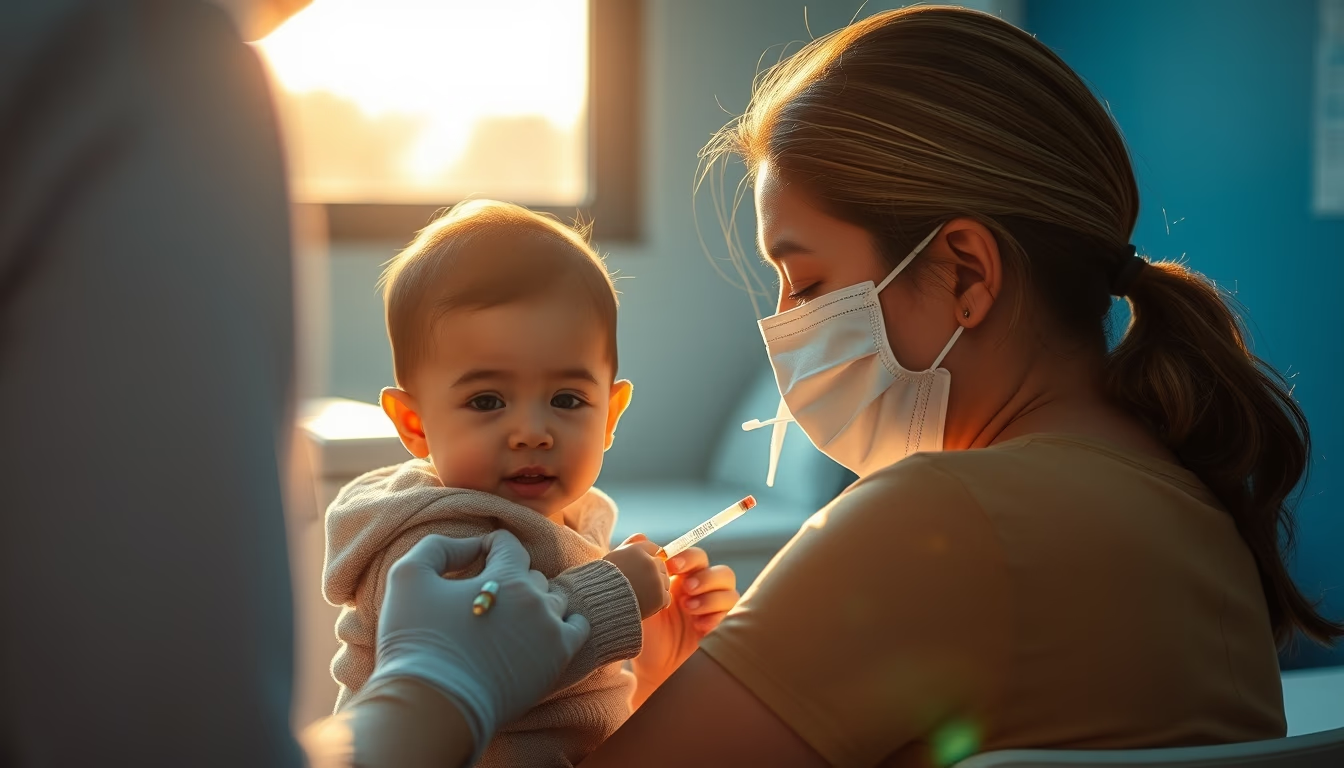
Mother and child at a vaccination clinic in the late afternoon: the importance of childhood immunization in Brazil.
About this subject
Childhood vaccination is one of the most effective and cost-effective public health interventions ever implemented. In Brazil, the National Immunization Program (PNI), created in 1973, offers more than 20 vaccines for children free of charge, including BCG, pentavalent, polio, and MMR. The basic vaccination schedule recommends doses at birth, 2, 4, 6, 12, and 15 months, with boosters at 4 and 9 years. Although vaccination coverage in the country has declined in recent years, it remains a benchmark in Latin America, with rates above 70% for most vaccines. The presence of a guardian during administration is essential to ensure follow-up of the vaccination card and to clarify doubts about possible adverse reactions, which are usually mild and transient. The World Health Organization estimates that immunization prevents 2 to 3 million deaths per year globally, and in Brazil, the eradication of polio and measles (in 2016) are examples of success. Vaccinating not only protects the individual but also contributes to herd immunity, reducing pathogen circulation in the community. Vaccination clinics, whether public or private, follow strict storage and application protocols, such as the cold chain that keeps vaccines at temperatures between 2°C and 8°C. The choice of the late afternoon for the appointment may be related to school routines or parents' work hours, showing how services adapt to family needs.
Frequently Asked Questions
Which vaccines are mandatory for children in Brazil?
The basic PNI schedule includes BCG, hepatitis B, pentavalent, polio, rotavirus, pneumococcal 10-valent, meningococcal C, yellow fever, MMR, and DTP, among others. Mandatory status is defined by the Ministry of Health and required for school enrollment.
What is the ideal age to start childhood vaccination?
The first doses should be given right after birth (BCG and hepatitis B) and follow the schedule up to 9 years old. It is best not to delay doses to ensure early protection.
Is it safe to vaccinate children at private clinics?
Yes, as long as the clinic follows Anvisa standards and maintains the proper cold chain. The vaccines are the same as those in the public system, but may be combined or offer additional protection, such as meningococcal B.
Direct URL
https://pub-c7d6a6ea828543ac903a74a341ccb2e1.r2.dev/imagens/mother-and-child-at-vaccination-clinic-wide-late-afternoon.avifHow to credit
Include a visible link back to UtilizAí. Copy one of the snippets below:
<a href="https://xn--utiliza-eza.com/en/midia/imagens/mother-and-child-at-vaccination-clinic-wide-late-afternoon">Mother and child at vaccination clinic</a> by <a href="https://xn--utiliza-eza.com">UtilizAí</a>, licensed under <a href="https://creativecommons.org/licenses/by/4.0/">CC BY 4.0</a>.
[Mother and child at vaccination clinic](https://xn--utiliza-eza.com/en/midia/imagens/mother-and-child-at-vaccination-clinic-wide-late-afternoon) by [UtilizAí](https://xn--utiliza-eza.com), CC BY 4.0
License: CC-BY-4.0