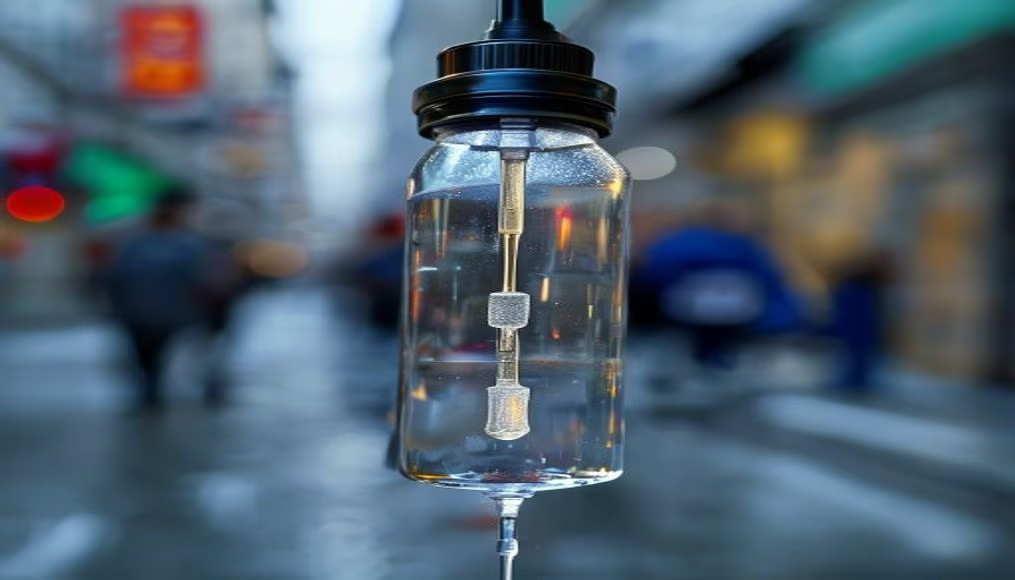
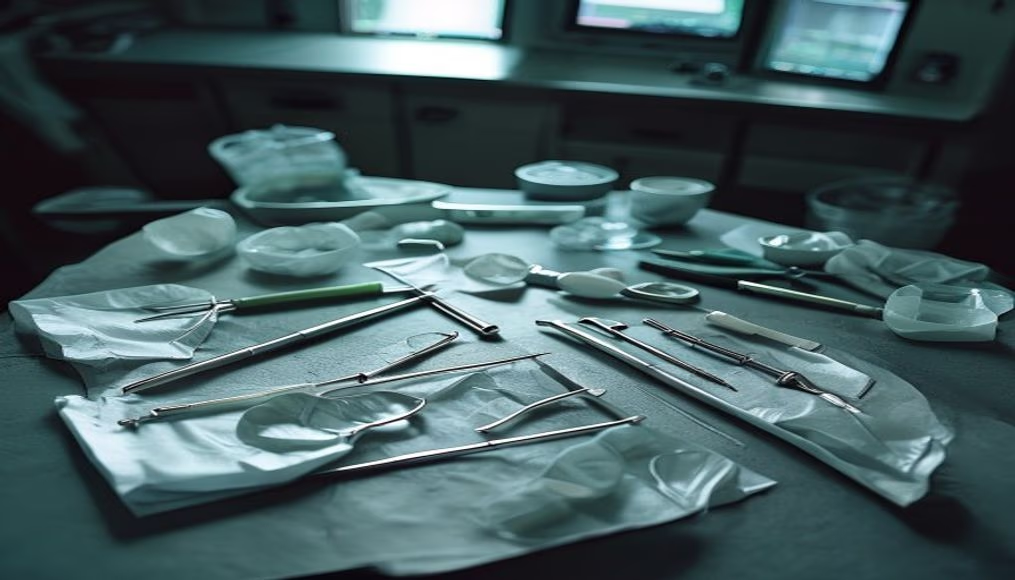
Mother and child at vaccination clinic
1344×768 · AVIF · CC BY 4.0

Documentary scene of mother and baby at a childhood vaccination clinic in the morning, highlighting the immunization routine in Brazil.
About this subject
Childhood vaccination is a major public health strategy in Brazil, with the National Immunization Program (PNI) being a global reference. Created in 1973, the PNI offers over 20 vaccines free of charge for children, covering diseases such as measles, polio, tuberculosis, and hepatitis. The routine of taking children to vaccination clinics, often in the morning, is a deeply ingrained habit in Brazilian culture, especially during the annual national multivaccination campaigns.
The Brazilian vaccination schedule is one of the most comprehensive in Latin America, with more than 30 doses scheduled up to the age of 10. Vaccination clinics, like the one depicted in the scene, are typically located in Basic Health Units (UBS) or health posts, where trained nursing teams administer vaccines following strict safety protocols. The presence of a mother or guardian is mandatory for minors, and the act of vaccinating is seen as a gesture of care and collective responsibility.
The documentary scene captures a calm moment at the clinic, with the mother holding the baby while waiting for or receiving guidance from the health professional. Such imagery is common in awareness campaigns about the importance of vaccination, which in Brazil achieved high coverage rates until the mid-2010s, when there was a decline in some vaccines. Currently, the country seeks to reverse this trend through active search actions and strengthening trust in vaccines.
Historically, Brazil was a pioneer in eradicating polio in the Americas in 1994, thanks to mass vaccination campaigns. The morning clinic scene reflects the continuity of this legacy, where each dose contributes to individual and collective protection. The image also highlights the role of mothers as primary health agents in early childhood, often facing logistical challenges and misinformation to keep the vaccination card up to date.
Frequently Asked Questions
How many vaccines should a child receive in Brazil by age 10?
The PNI schedule includes over 30 doses of vaccines by age 10, including BCG, hepatitis B, pentavalent, IPV/OPV, pneumococcal, rotavirus, meningococcal C, yellow fever, MMR, DTP, and others.
What should I do if I lose my child's vaccination card?
Go to the Basic Health Unit (UBS) where the child is followed. The team can check the PNI information system and reissue the card based on previous records.
Is vaccination mandatory in Brazil?
Yes, childhood vaccination is mandatory by law (Child and Adolescent Statute). Proof is required for school enrollment and for receiving Bolsa Família, among other benefits.
Direct URL
https://pub-c7d6a6ea828543ac903a74a341ccb2e1.r2.dev/imagens/mother-and-child-at-vaccination-clinic-documentary-morning-7.avifHow to credit
Include a visible link back to UtilizAí. Copy one of the snippets below:
<a href="https://xn--utiliza-eza.com/en/midia/imagens/mother-and-child-at-vaccination-clinic-documentary-morning-7">Mother and child at vaccination clinic</a> by <a href="https://xn--utiliza-eza.com">UtilizAí</a>, licensed under <a href="https://creativecommons.org/licenses/by/4.0/">CC BY 4.0</a>.
[Mother and child at vaccination clinic](https://xn--utiliza-eza.com/en/midia/imagens/mother-and-child-at-vaccination-clinic-documentary-morning-7) by [UtilizAí](https://xn--utiliza-eza.com), CC BY 4.0
License: CC-BY-4.0