Morse code key brass
1344×768 · AVIF · CC BY 4.0

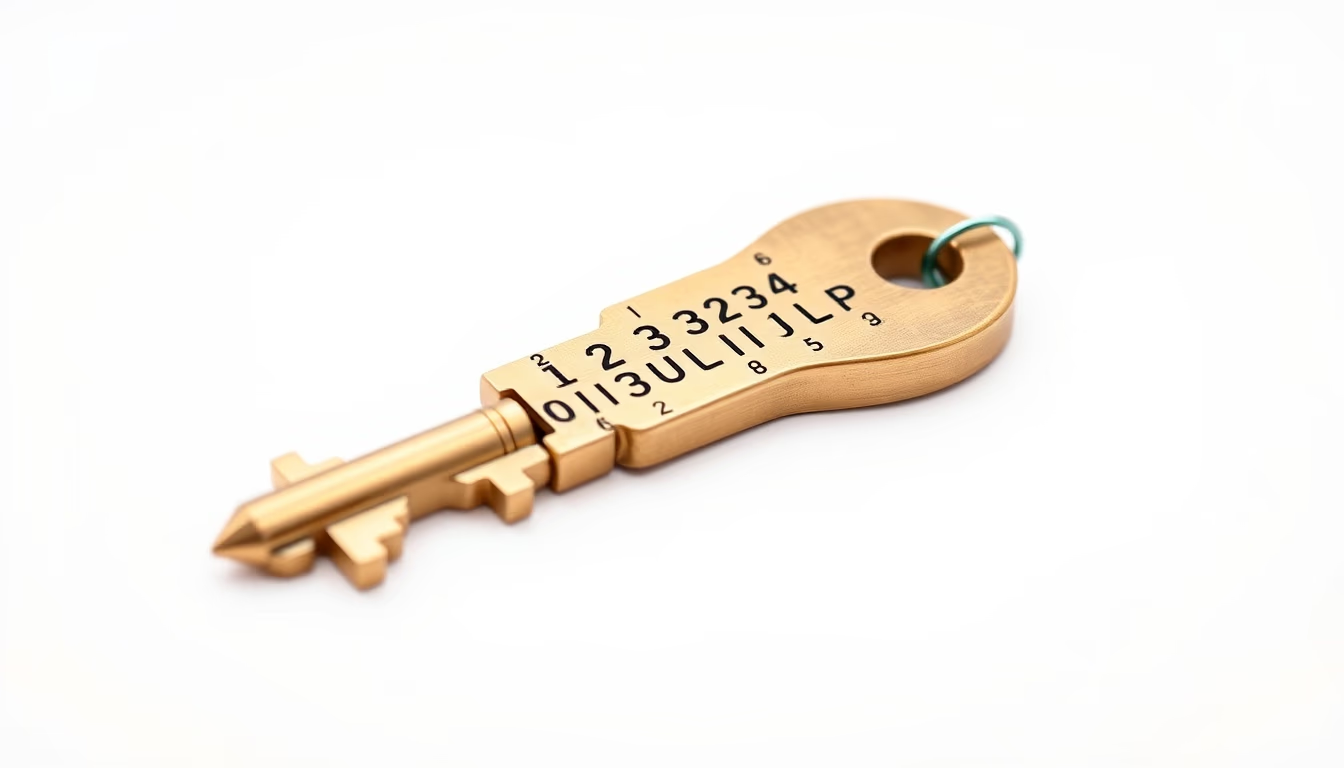
Brass telegraph key used to transmit Morse code, a historic communication instrument.
About this subject
The brass telegraph key is a device that allowed operators to send electrical signals in Morse code, revolutionizing communications in the 19th century. Invented by Samuel Morse and Alfred Vail, the key consisted of a metal lever that, when pressed, closed an electrical circuit, generating current pulses. These pulses traveled along telegraph wires to the recipient, where they were converted into sounds or marks on paper. Brass was the preferred material for its durability and good electrical conductivity, ensuring precise contact and resistance to wear.
Morse code, developed in parallel, associated letters and numbers with sequences of dots and dashes. Operators trained to key at fast rhythms, often achieving speeds over 30 words per minute. The brass key required manual dexterity, and there were variations such as horizontal (long-lever) and vertical (short-lever) keys, each with distinct response characteristics. The characteristic sound of the metal contact became iconic in telegraph stations.
Culturally, the telegraph transformed society by enabling near-instantaneous communication across continents. In the United States, the first telegraph line connected Baltimore to Washington in 1844. In Brazil, the telegraph arrived in 1852, linking Rio de Janeiro to Petrópolis. The brass key was gradually replaced by more modern electric devices like the bug key and vibroplex, but it remains a symbol of the golden age of communications.
Today, the brass key is valued by collectors and amateur radio operators. Many enthusiasts still practice Morse code, considered a useful skill in emergencies. The simple and robust design of the classic key continues to inspire replicas and display pieces, preserving the history of telegraphy.
Frequently Asked Questions
How does a brass telegraph key work?
The key works as a switch: pressing the lever closes an electrical circuit, sending a current pulse. The duration of the contact determines whether the signal is a dot (short) or a dash (long), forming Morse code.
What is the origin of Morse code?
Morse code was developed by Samuel Morse and Alfred Vail in the 1830s for use with the electric telegraph. It associates letters and numbers with combinations of dots and dashes, optimized for manual transmission.
Is Morse code still used today?
Yes, Morse code is still used by amateur radio operators and in some emergency applications. It is a robust form of communication under poor signal conditions.
Direct URL
https://pub-c7d6a6ea828543ac903a74a341ccb2e1.r2.dev/imagens/morse-code-key-brass-studio-editorial-portrait-fresh11.avifHow to credit
Include a visible link back to UtilizAí. Copy one of the snippets below:
<a href="https://xn--utiliza-eza.com/en/midia/imagens/morse-code-key-brass-studio-editorial-portrait-fresh11">Morse code key brass</a> by <a href="https://xn--utiliza-eza.com">UtilizAí</a>, licensed under <a href="https://creativecommons.org/licenses/by/4.0/">CC BY 4.0</a>.
[Morse code key brass](https://xn--utiliza-eza.com/en/midia/imagens/morse-code-key-brass-studio-editorial-portrait-fresh11) by [UtilizAí](https://xn--utiliza-eza.com), CC BY 4.0
License: CC-BY-4.0