Morse code key brass
1344×768 · AVIF · CC BY 4.0

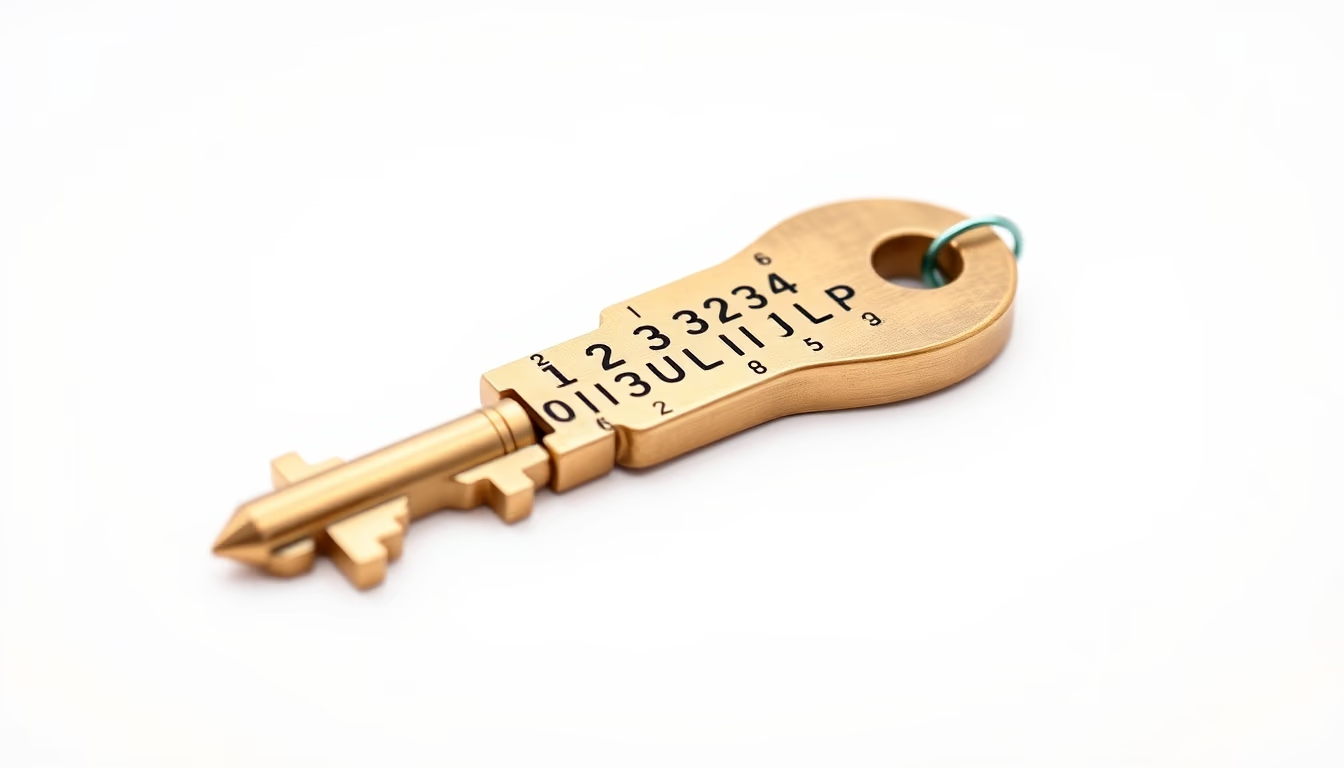
Brass Morse code key, classic instrument of 19th-century communications, symbol of the telegraph era.
About this subject
The Morse code key, also called a telegraph key or manipulator, is the manual device used by telegraph operators to transmit messages in Morse code. It consists of a metal lever mounted on a base; pressing it closes an electrical circuit, releasing it opens the circuit, generating short and long pulses (dots and dashes). Brass was the preferred material due to its excellent electrical conductivity, corrosion resistance, and durability, essential for equipment operating in telegraph stations worldwide. Invented in the early 1840s by Samuel Morse and his assistant Alfred Vail, the straight key was the primary means of electrical communication for over a century, connecting continents via submarine cables and revolutionizing commerce, journalism, and diplomacy. Operation required great skill: operators could send 20 to 40 words per minute, a pace demanding intense practice and fine motor coordination. Over time, variations emerged such as the semi-automatic key (vibroplex or 'bug'), which used a spring mechanism to automatically generate dots, increasing speed. Today, original brass keys are highly prized collectibles, especially those manufactured by historic companies like J.H. Bunnell & Co. and Lionel, and are still used by amateur radio enthusiasts who preserve the art of Morse code. The aesthetic beauty of polished brass, with details in bakelite or ebonite on the contacts, makes these pieces true icons of 19th-century engineering.
Frequently Asked Questions
How does a brass Morse code key work?
Pressing the lever closes the electrical contact, allowing current to flow and produce an audible or visual signal at the receiver. The duration of pressing determines a dot (short) or dash (long).
What is the difference between a straight key and a vibroplex?
A straight key is fully manual: the operator creates each dot and dash. A vibroplex is semi-automatic, with a spring mechanism that automatically produces dots when the lever is moved sideways, increasing speed.
Why was brass used in telegraph keys?
Brass offers good electrical conductivity, resistance to corrosion, ease of machining, and durability. This ensured reliable contacts and a long service life, crucial for continuous telegraph operation.
Direct URL
https://pub-c7d6a6ea828543ac903a74a341ccb2e1.r2.dev/imagens/morse-code-key-brass-cinematic-wide-shot-fresh10.avifHow to credit
Include a visible link back to UtilizAí. Copy one of the snippets below:
<a href="https://xn--utiliza-eza.com/en/midia/imagens/morse-code-key-brass-cinematic-wide-shot-fresh10">Morse code key brass</a> by <a href="https://xn--utiliza-eza.com">UtilizAí</a>, licensed under <a href="https://creativecommons.org/licenses/by/4.0/">CC BY 4.0</a>.
[Morse code key brass](https://xn--utiliza-eza.com/en/midia/imagens/morse-code-key-brass-cinematic-wide-shot-fresh10) by [UtilizAí](https://xn--utiliza-eza.com), CC BY 4.0
License: CC-BY-4.0