Mona lisa louvre
1344×768 · AVIF · CC BY 4.0
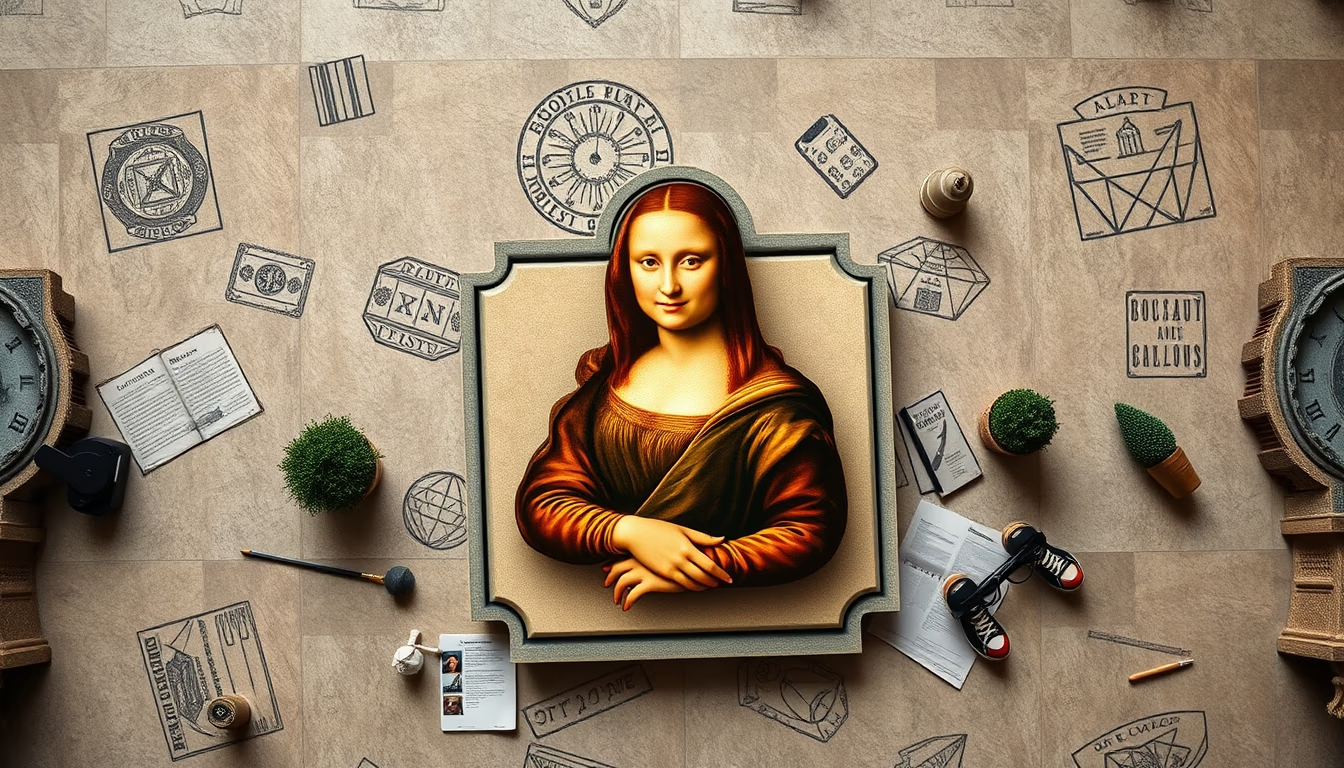
The Mona Lisa, painted by Leonardo da Vinci, is housed at the Louvre Museum in Paris, one of the world's most famous and visited artworks.
About this subject
The Mona Lisa, also known as La Gioconda, was painted by Leonardo da Vinci between 1503 and 1506. The portrait depicts Lisa Gherardini, the wife of a Florentine silk merchant. Leonardo never delivered the painting to the buyer and brought it with him to France at the invitation of King Francis I. After Leonardo's death in 1519, the painting became part of the French royal collections and later the Louvre Museum, where it has been displayed since 1797.
The Mona Lisa's worldwide fame largely stems from its theft in 1911. Louvre employee Vincenzo Peruggia hid the painting for two years before attempting to sell it. The theft generated massive media coverage and long queues of visitors to see the empty spot on the wall. When recovered, the painting had already become a cultural icon. Current protection includes a bulletproof glass case, climate control, and 24-hour security.
Technically, the Mona Lisa is celebrated for its use of sfumato, a technique that creates smooth transitions between colors and tones, giving the figure an enigmatic expression. The ambiguous smile and eyes that seem to follow the viewer have been subjects of debate and study for centuries. The painting measures 77 cm by 53 cm and is oil on poplar wood. In 2022, about 10 million people visited the wing where the artwork is housed, making it one of the Louvre's most popular attractions.
Frequently Asked Questions
Who painted the Mona Lisa?
The Mona Lisa was painted by the Italian Renaissance artist Leonardo da Vinci between 1503 and 1506.
Where is the Mona Lisa currently displayed?
The Mona Lisa is displayed at the Louvre Museum in Paris, France, in a special room designed for its security and conservation.
Why is the Mona Lisa so famous?
The Mona Lisa achieved worldwide fame after its theft in 1911, which generated intense media coverage. Its innovative technique, enigmatic smile, and historical value also contribute to its renown.
Direct URL
https://pub-c7d6a6ea828543ac903a74a341ccb2e1.r2.dev/imagens/mona-lisa-louvre-isometric-flat-lay-p7.avifHow to credit
Include a visible link back to UtilizAí. Copy one of the snippets below:
<a href="https://xn--utiliza-eza.com/en/midia/imagens/mona-lisa-louvre-isometric-flat-lay-p7">Mona lisa louvre</a> by <a href="https://xn--utiliza-eza.com">UtilizAí</a>, licensed under <a href="https://creativecommons.org/licenses/by/4.0/">CC BY 4.0</a>.
[Mona lisa louvre](https://xn--utiliza-eza.com/en/midia/imagens/mona-lisa-louvre-isometric-flat-lay-p7) by [UtilizAí](https://xn--utiliza-eza.com), CC BY 4.0
License: CC-BY-4.0