Modular synthesizer rack
1344×768 · AVIF · CC BY 4.0
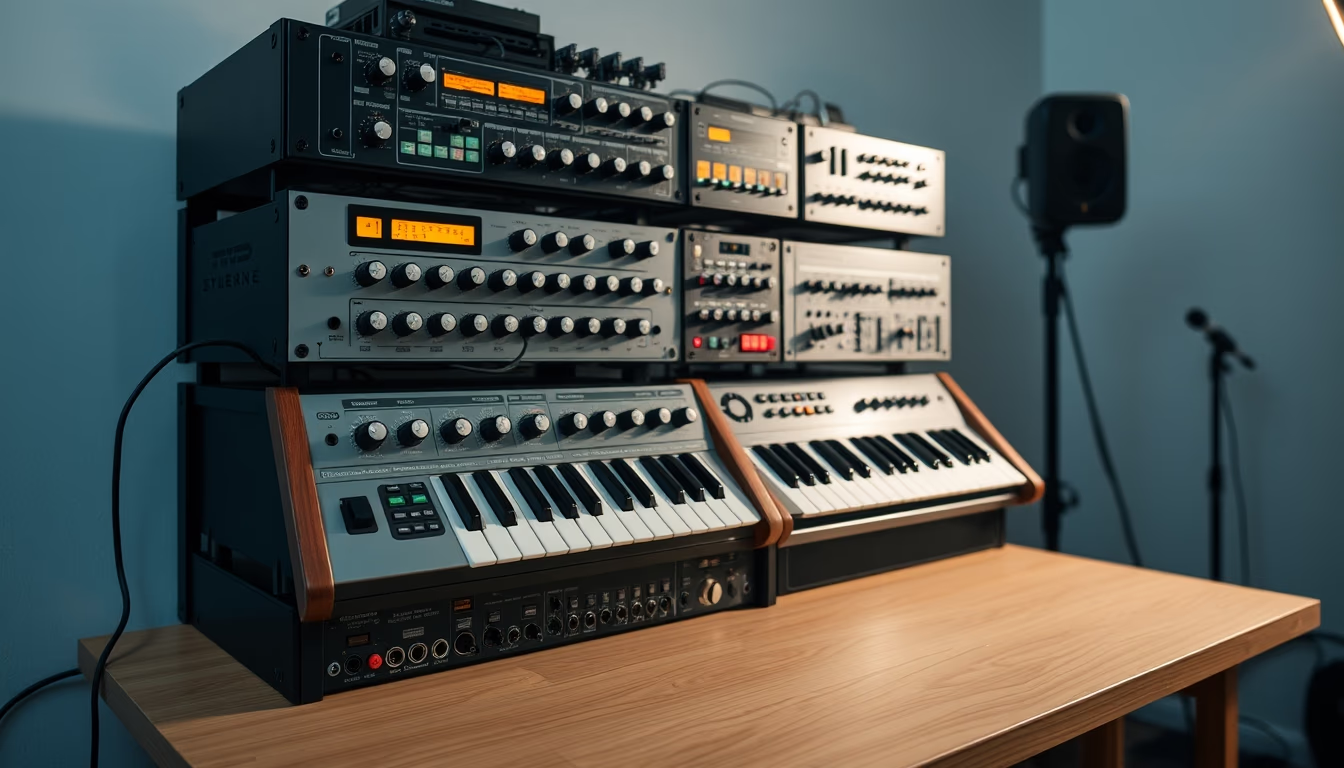
Modular synthesizer rack, an analog or digital audio system composed of interconnecting modules, widely used in electronic and experimental music.
About this subject
A modular synthesizer is an audio system built from independent modules that perform specific functions such as oscillators, filters, amplifiers, envelopes, and sequencers. The user defines the signal flow by connecting these modules with patch cables, creating unique sound paths. The concept originated in the 1960s with pioneers Robert Moog and Don Buchla, who developed the first commercial systems. These instruments were crucial to the birth of electronic music, used in film scores and iconic albums like Wendy Carlos's Switched-On Bach.
Since the 2010s, modular synthesizers have experienced a renaissance driven by the Eurorack format, standardized by the German company Doepfer. Eurorack became an open ecosystem with hundreds of manufacturers producing compatible modules, from vintage circuit clones to digital innovations. This democratization allowed musicians across genres, from techno to experimental jazz, to integrate modulars into their setups. Flexibility is the main advantage: there are no predefined routing limits, enabling sound textures impossible on traditional synthesizers.
In the studio or on stage, the modular synthesizer demands technical knowledge and patience for patching, but rewards with an infinite sonic palette. Artists like Kraftwerk, Aphex Twin, Daft Punk, and Suzanne Ciani have used modulars to create signature sounds. A curious fact is that despite the high cost (a functional system can exceed thousands of dollars), there is a strong community sharing modules and open-source patches. Moreover, maintenance is hands-on: many modules are sold as DIY kits, encouraging electronics learning.
Frequently Asked Questions
What is a modular synthesizer?
It is an audio system where the user connects individual modules, such as oscillators and filters, via patch cables to create custom sounds, without a fixed signal path.
What are the main differences between modular and traditional synthesizers?
Modular synthesizers are highly flexible and allow custom signal routing, while traditional synthesizers have fixed, pre-configured signal paths.
Which modular synthesizer format is most common today?
The Eurorack format, created by Doepfer, has become the industry standard due to its accessibility, wide variety of modules, and cross-manufacturer compatibility.
Direct URL
https://pub-c7d6a6ea828543ac903a74a341ccb2e1.r2.dev/imagens/modular-synthesizer-rack-studio-still-life-p1.avifHow to credit
Include a visible link back to UtilizAí. Copy one of the snippets below:
<a href="https://xn--utiliza-eza.com/en/midia/imagens/modular-synthesizer-rack-studio-still-life-p1">Modular synthesizer rack</a> by <a href="https://xn--utiliza-eza.com">UtilizAí</a>, licensed under <a href="https://creativecommons.org/licenses/by/4.0/">CC BY 4.0</a>.
[Modular synthesizer rack](https://xn--utiliza-eza.com/en/midia/imagens/modular-synthesizer-rack-studio-still-life-p1) by [UtilizAí](https://xn--utiliza-eza.com), CC BY 4.0
License: CC-BY-4.0