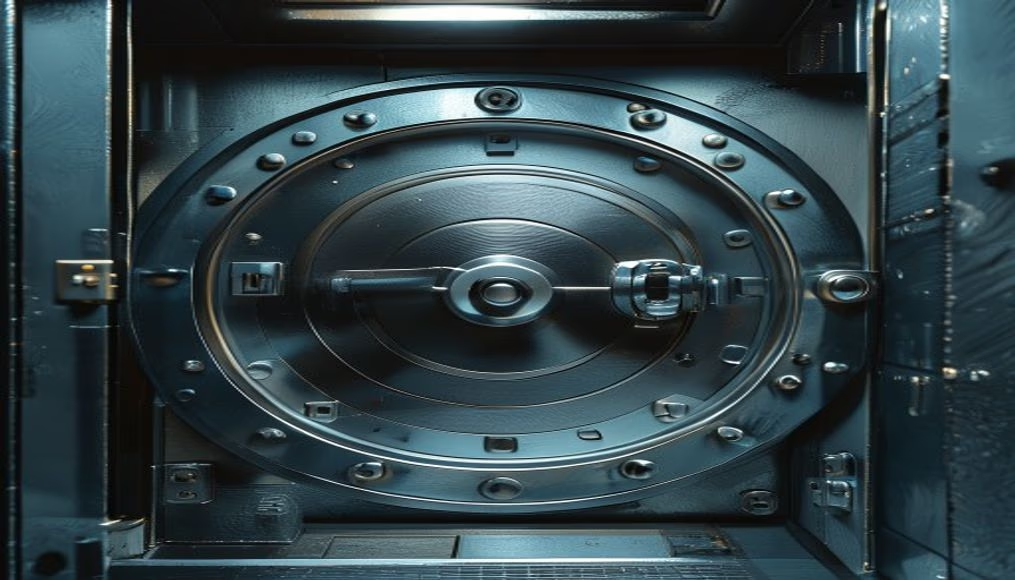
Modern bank vault closed door
1344×768 · AVIF · CC BY 4.0

Modern bank vault doors combine high-strength steel, multi-point locking systems, and electronic security to protect valuables.
About this subject
Modern bank vault doors are the result of centuries of evolution in asset security. Unlike older models that relied solely on mechanical locks and simple steel walls, current versions incorporate multiple layers of protection. A typical bank vault door weighs between 2 and 10 tons, constructed from hardened steel, reinforced concrete, and materials resistant to cutting, drilling, and explosion. Moreover, multi-point locking systems, sometimes with over 20 steel bolts, distribute force across the entire structure, making forced entry extremely difficult.
In Brazil, bank vault regulations follow ABNT standards (e.g., NBR 15036) and Central Bank guidelines. Doors must resist attacks for at least 30 minutes, the minimum time required for alarm systems and police response to be triggered. Many modern vaults also feature heat, motion, and intrusion sensors, integrated with 24-hour monitoring centers. Electronic security includes biometric readers, access codes, and redundant systems to prevent failures.
Interestingly, the image of a closed vault door conveys both security and mystery. Beyond banks, similar vaults are used in jewelry stores, mints, and even some data centers to protect critical servers. Maintenance of these doors is crucial: periodic lubrication, closure tests, and electronic component checks prevent the vault from becoming a trap. Some doors have emergency opening mechanisms with timers to prevent unauthorized access, even by insiders.
Technological evolution has also brought vault doors with UL (Underwriters Laboratories) certifications and classifications such as TL-30, TRTL-30, and TXTL-60. These ratings indicate resistance time to specific tools like torches or diamond drills. Newer models may include vibration detection systems and internal cameras, allowing bank management to remotely view the vault interior. Despite all the technology, the vault door remains the ultimate symbol of asset protection, an object that combines cutting-edge engineering with the tradition of bank security.
Frequently Asked Questions
What is the typical thickness of a modern bank vault door?
Modern vault doors have thicknesses between 0.5 and 1.5 meters, depending on the security level. The core usually contains reinforced concrete and multiple layers of steel, resulting in a weight that can exceed 10 tons.
How does a multi-point locking system work on a vault?
A multi-point locking system uses large-diameter steel bolts that extend from the door into the frame at multiple points. When the door is closed and locked, these bolts distribute force across the entire structure, making it difficult to open with tools like crowbars or hydraulic jacks.
What safety certifications exist for vault doors?
The most common certifications are from Underwriters Laboratories (UL), such as TL-30 (resistance to attacks for 30 minutes with hand tools), TRTL-30 (resistance to power tools and torches), and TXTL-60 (resistance to explosives for up to 60 minutes).
Direct URL
https://pub-c7d6a6ea828543ac903a74a341ccb2e1.r2.dev/imagens/modern-bank-vault-closed-door-commercial-product-photography-v9.avifHow to credit
Include a visible link back to UtilizAí. Copy one of the snippets below:
<a href="https://xn--utiliza-eza.com/en/midia/imagens/modern-bank-vault-closed-door-commercial-product-photography-v9">Modern bank vault closed door</a> by <a href="https://xn--utiliza-eza.com">UtilizAí</a>, licensed under <a href="https://creativecommons.org/licenses/by/4.0/">CC BY 4.0</a>.
[Modern bank vault closed door](https://xn--utiliza-eza.com/en/midia/imagens/modern-bank-vault-closed-door-commercial-product-photography-v9) by [UtilizAí](https://xn--utiliza-eza.com), CC BY 4.0
License: CC-BY-4.0