Mixing console studio professional
1344×768 · AVIF · CC BY 4.0
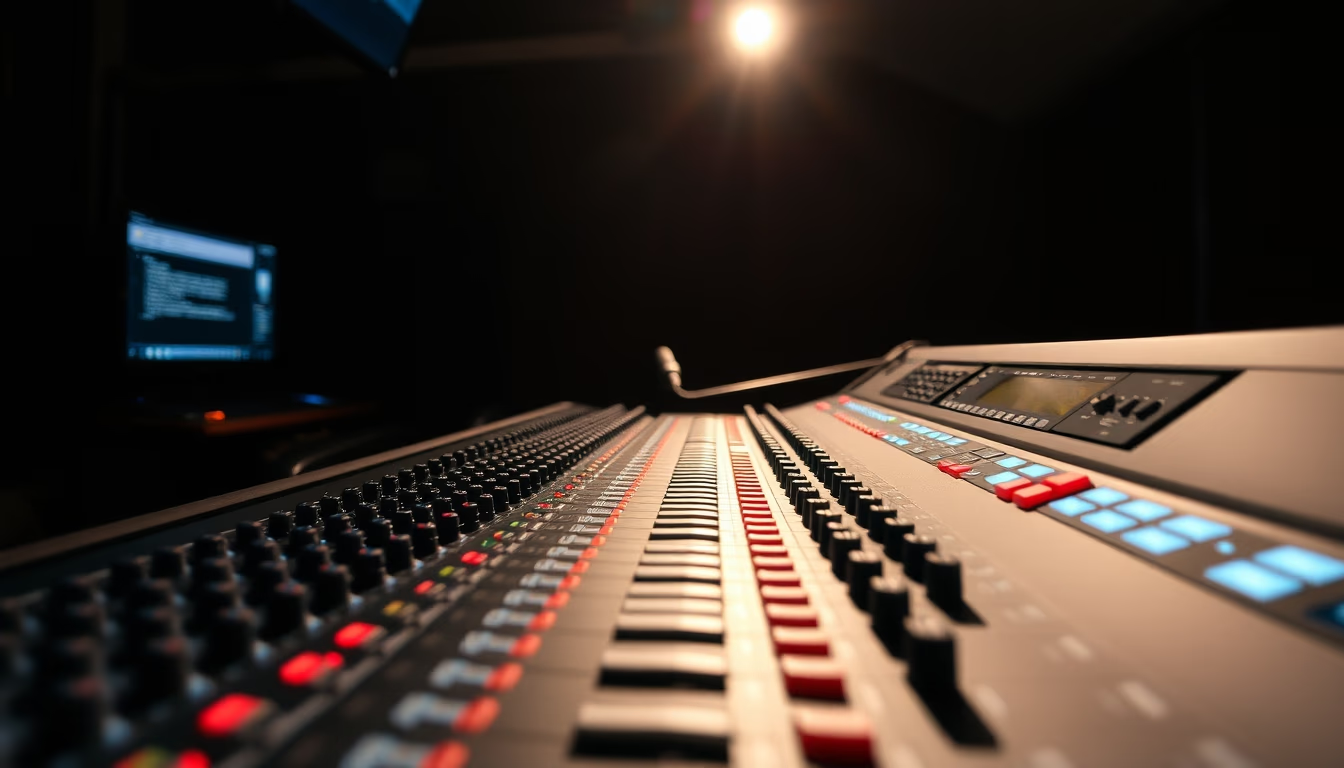
The mixing console is the heart of a professional studio, controlling audio from each instrument and voice with technical precision and sonic creativity.
About this subject
A mixing console, also called an audio mixer or soundboard, is the central hub in a professional recording studio. It allows sound engineers to blend, equalize, and process multiple audio sources, such as microphones, guitars, and synthesizers, before routing them to tape or monitors. Each channel provides independent controls for gain, EQ, dynamics, and routing, enabling precise adjustments to tone and volume.
The evolution of mixing consoles began with large analog boards in the 1960s and 1970s, such as the iconic Neve and SSL models, known for their warm sound and rugged build. These consoles could feature 24 to 96 channels and occupy entire rooms. Digital consoles later emerged, like the Yamaha CL5 and Behringer X32, offering onboard processing, advanced automation, and seamless computer integration. Despite this, many studios still favor analog sound, and there is a growing market for reissues and clones of classic consoles.
A professional mixing console is equipped with long-throw faders, high-quality preamps, parametric equalizers, and aux send sections for effects like reverb and delay. Channel counts vary: recording studios typically use 24 to 64 channels, while touring consoles can exceed 100 channels. The choice between analog and digital depends on workflow: analog provides natural saturation and hands-on control, while digital enables instant recall and limitless processing.
Renowned brands include SSL, Neve, API, and Audient. The SSL 4000 G+ console, for instance, was used on countless classic records from the 1980s and 1990s, and its sound remains highly sought after. Understanding the intricacies of a mixing console is essential for any audio engineer, as it is the tool that transforms raw performances into polished, emotive productions.
Frequently Asked Questions
What is the difference between an analog and a digital mixing console?
Analog consoles process audio continuously using electronic components, offering natural saturation and immediate hands-on control. Digital consoles convert the signal to binary data, enabling instant recall, advanced automation, and built-in effects processing without external hardware.
Why are SSL consoles so famous in professional studios?
SSL consoles, especially the 4000 series, became legendary for their clean yet punchy sound, precise EQs, and integrated bus compression. They were used on countless hit records in the 1980s and 1990s, cementing their status as an industry standard.
How many channels does a professional mixing console typically have?
The channel count depends on the application: recording studios usually use consoles with 24 to 64 channels, while consoles for live sound or large productions can range from 48 to over 100 channels, including mic and line inputs.
Direct URL
https://pub-c7d6a6ea828543ac903a74a341ccb2e1.r2.dev/imagens/mixing-console-studio-professional-fine-art-photography-p2.avifHow to credit
Include a visible link back to UtilizAí. Copy one of the snippets below:
<a href="https://xn--utiliza-eza.com/en/midia/imagens/mixing-console-studio-professional-fine-art-photography-p2">Mixing console studio professional</a> by <a href="https://xn--utiliza-eza.com">UtilizAí</a>, licensed under <a href="https://creativecommons.org/licenses/by/4.0/">CC BY 4.0</a>.
[Mixing console studio professional](https://xn--utiliza-eza.com/en/midia/imagens/mixing-console-studio-professional-fine-art-photography-p2) by [UtilizAí](https://xn--utiliza-eza.com), CC BY 4.0
License: CC-BY-4.0