Mitochondria 3d render
1344×768 · AVIF · CC BY 4.0
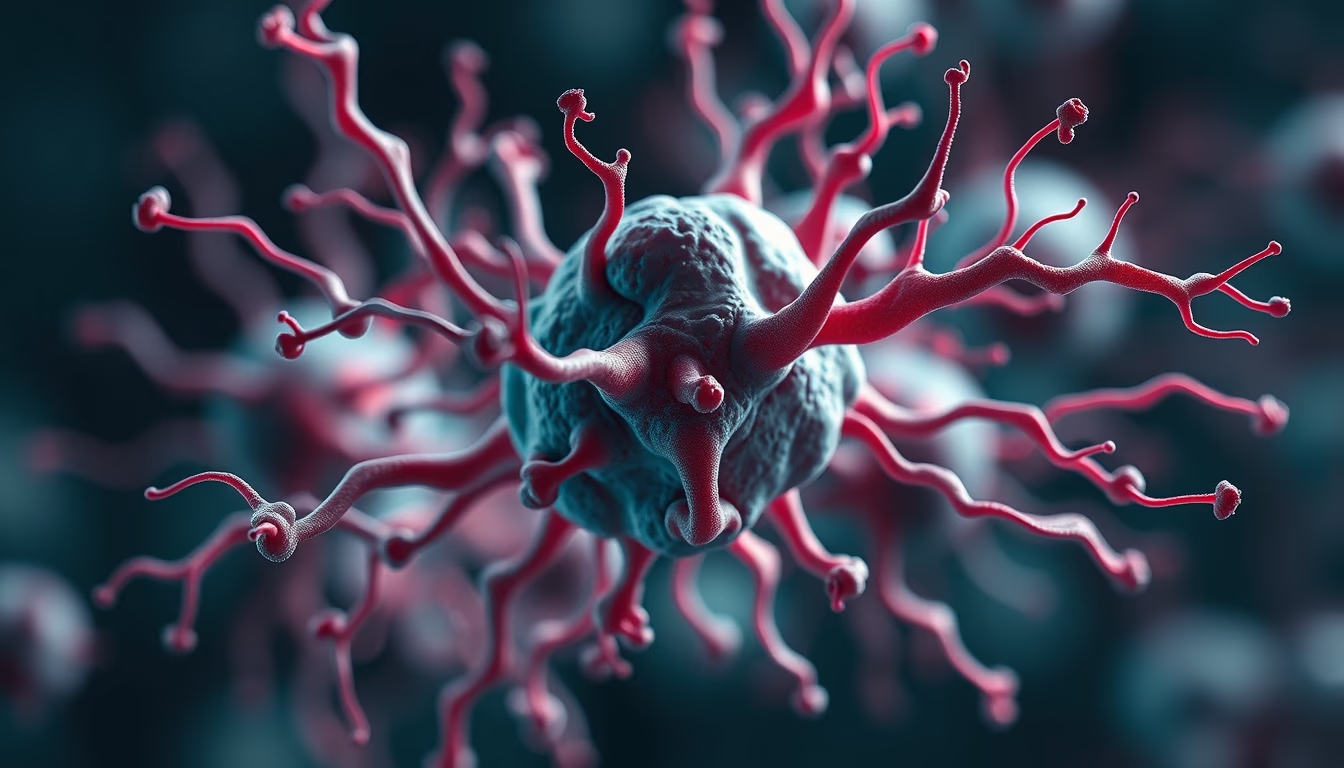
Mitochondria are cellular organelles responsible for producing energy in the form of ATP, essential for the functioning of eukaryotic cells.
About this subject
Mitochondria are known as the powerhouses of the cell, converting nutrients into ATP through the process of cellular respiration. This organelle has two membranes: a smooth outer membrane and a highly folded inner membrane forming cristae that increase the surface area for energy production. A fascinating fact is that mitochondria have their own circular DNA, similar to bacteria, which supports the endosymbiotic theory that they originated from prokaryotic organisms incorporated into ancestral cells.
Besides generating energy, mitochondria play crucial roles in processes such as cell signaling, apoptosis (programmed cell death), and metabolic regulation. Mitochondrial dysfunction is linked to various diseases, including neuromuscular disorders, type 2 diabetes, and premature aging. Mitochondrial inheritance is exclusively maternal, as sperm mitochondria are degraded after fertilization, a fact with important implications for genetic genealogy studies.
In the context of evolution, the incorporation of mitochondria is considered a fundamental step for the development of complex life, allowing eukaryotic cells to have an efficient energy supply to support larger structures and specialized functions. It is estimated that there are hundreds to thousands of mitochondria per cell, depending on cell type and energy demand. For example, muscle cells and neurons contain a particularly high number of these organelles.
In the laboratory, mitochondria are often studied using techniques such as electron microscopy and cellular respiration assays. The discovery of mitochondrial DNA revolutionized fields like forensic medicine and anthropology, as mutations in this DNA can be traced over generations to study human migrations. Understanding mitochondrial function continues to open doors to innovative therapies for metabolic and neurodegenerative diseases.
Frequently Asked Questions
Why do mitochondria have their own DNA?
Mitochondria have their own DNA because they originated from ancestral bacteria that were incorporated into primitive eukaryotic cells through endosymbiosis. This circular DNA is inherited only from the mother and encodes some essential proteins for mitochondrial function.
What diseases are associated with mitochondrial dysfunction?
Mitochondrial dysfunction is linked to a variety of diseases, such as neuromuscular syndromes (e.g., Leigh syndrome), type 2 diabetes, neurodegenerative diseases (Parkinson's, Alzheimer's), and conditions related to premature aging.
How do mitochondria produce energy?
Mitochondria produce energy through cellular respiration, which occurs in stages: glycolysis (in the cytoplasm), the Krebs cycle, and the electron transport chain (on the inner membrane). The result is the generation of ATP, the main energy currency of the cell.
Direct URL
https://pub-c7d6a6ea828543ac903a74a341ccb2e1.r2.dev/imagens/mitochondria-3d-render-fine-art-photography-p10.avifHow to credit
Include a visible link back to UtilizAí. Copy one of the snippets below:
<a href="https://xn--utiliza-eza.com/en/midia/imagens/mitochondria-3d-render-fine-art-photography-p10">Mitochondria 3d render</a> by <a href="https://xn--utiliza-eza.com">UtilizAí</a>, licensed under <a href="https://creativecommons.org/licenses/by/4.0/">CC BY 4.0</a>.
[Mitochondria 3d render](https://xn--utiliza-eza.com/en/midia/imagens/mitochondria-3d-render-fine-art-photography-p10) by [UtilizAí](https://xn--utiliza-eza.com), CC BY 4.0
License: CC-BY-4.0