Mitochondria 3d render
1344×768 · AVIF · CC BY 4.0
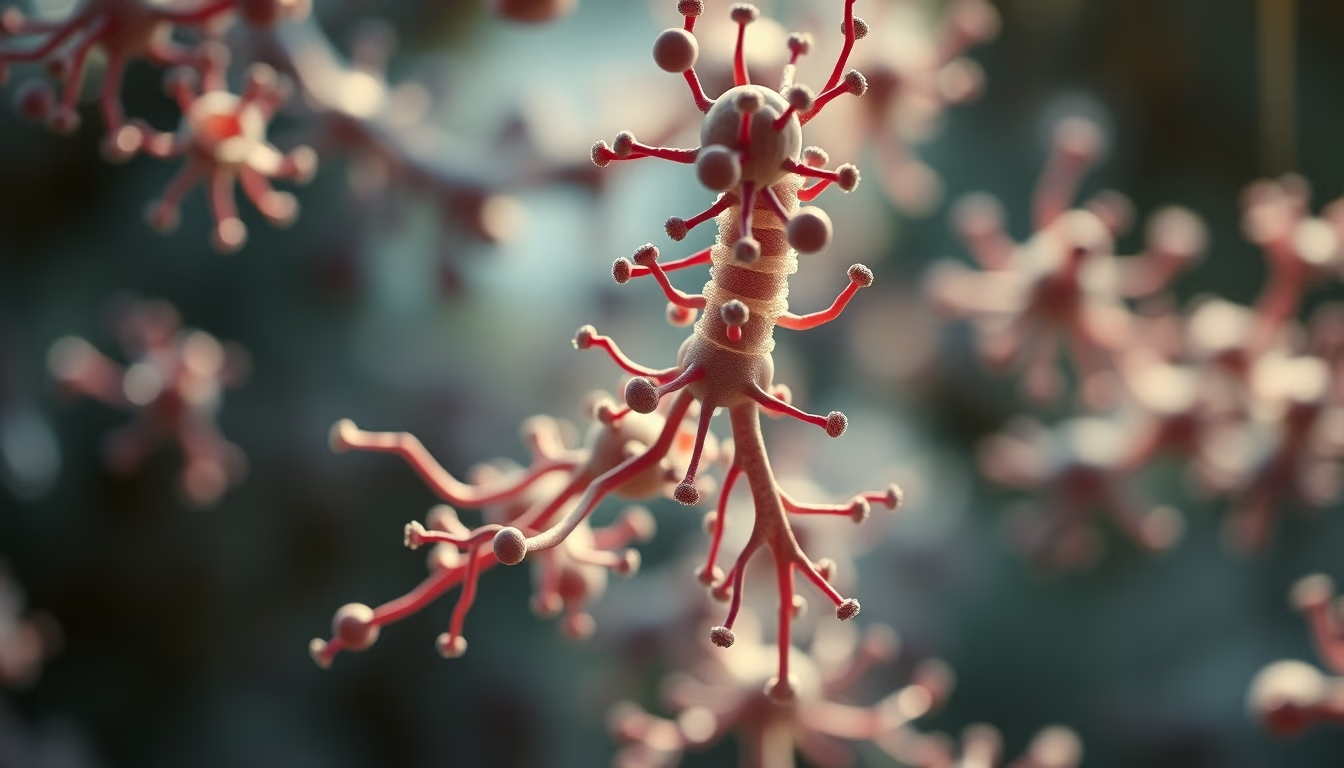
Mitochondria are essential organelles for cellular energy production, known as the powerhouses of the cell.
About this subject
Mitochondria are double-membrane organelles found in most eukaryotic cells. Their primary function is to produce ATP (adenosine triphosphate) through oxidative phosphorylation, a process that occurs in the inner mitochondrial membrane. Each mitochondrion contains its own circular DNA (mtDNA), a legacy of its endosymbiotic origin from ancestral bacteria. mtDNA is inherited exclusively from the mother, making it a valuable tool for studies of human evolution and genealogy.
Beyond energy production, mitochondria play crucial roles in regulating cellular metabolism, calcium signaling, apoptosis (programmed cell death), and the synthesis of compounds such as steroid hormones. Mitochondrial dysfunction is associated with various diseases, including neuromuscular disorders, type 2 diabetes, neurodegenerative diseases (such as Parkinson's and Alzheimer's), and aging. The number of mitochondria per cell varies according to energy demand: muscle cells and neurons can contain thousands of them.
Mitochondrial structure is dynamic: they constantly fuse and divide in processes called fusion and fission, regulated by specific proteins. This balance is fundamental for maintaining cellular health. The endosymbiotic theory, proposed by Lynn Margulis in the 1960s, explains that mitochondria evolved from aerobic bacteria that were engulfed by ancestral host cells, establishing a symbiotic relationship. Evidence includes the presence of a double membrane, circular DNA, and their own ribosomes.
Recent studies show that mitochondria also participate in innate immune response and inflammation. Mitochondrial stress can release molecules that activate inflammatory pathways. Additionally, mitophagy, the selective degradation of damaged mitochondria, is essential for mitochondrial quality control. Advances in microscopy and 3D imaging techniques allow us to visualize the complexity of these organelles in unprecedented detail.
Frequently Asked Questions
What is the main function of mitochondria?
To produce ATP, the main energy molecule of the cell, through oxidative phosphorylation.
Why do mitochondria have their own DNA?
Because they originated from endosymbiotic bacteria that were incorporated into ancestral eukaryotic cells. mtDNA is circular and maternally inherited.
How are mitochondria related to diseases?
Mitochondrial dysfunction can cause neuromuscular disorders, diabetes, neurodegeneration, and is associated with aging.
Direct URL
https://pub-c7d6a6ea828543ac903a74a341ccb2e1.r2.dev/imagens/mitochondria-3d-render-documentary-photography-p4.avifHow to credit
Include a visible link back to UtilizAí. Copy one of the snippets below:
<a href="https://xn--utiliza-eza.com/en/midia/imagens/mitochondria-3d-render-documentary-photography-p4">Mitochondria 3d render</a> by <a href="https://xn--utiliza-eza.com">UtilizAí</a>, licensed under <a href="https://creativecommons.org/licenses/by/4.0/">CC BY 4.0</a>.
[Mitochondria 3d render](https://xn--utiliza-eza.com/en/midia/imagens/mitochondria-3d-render-documentary-photography-p4) by [UtilizAí](https://xn--utiliza-eza.com), CC BY 4.0
License: CC-BY-4.0