Mitochondria 3d render
1344×768 · AVIF · CC BY 4.0
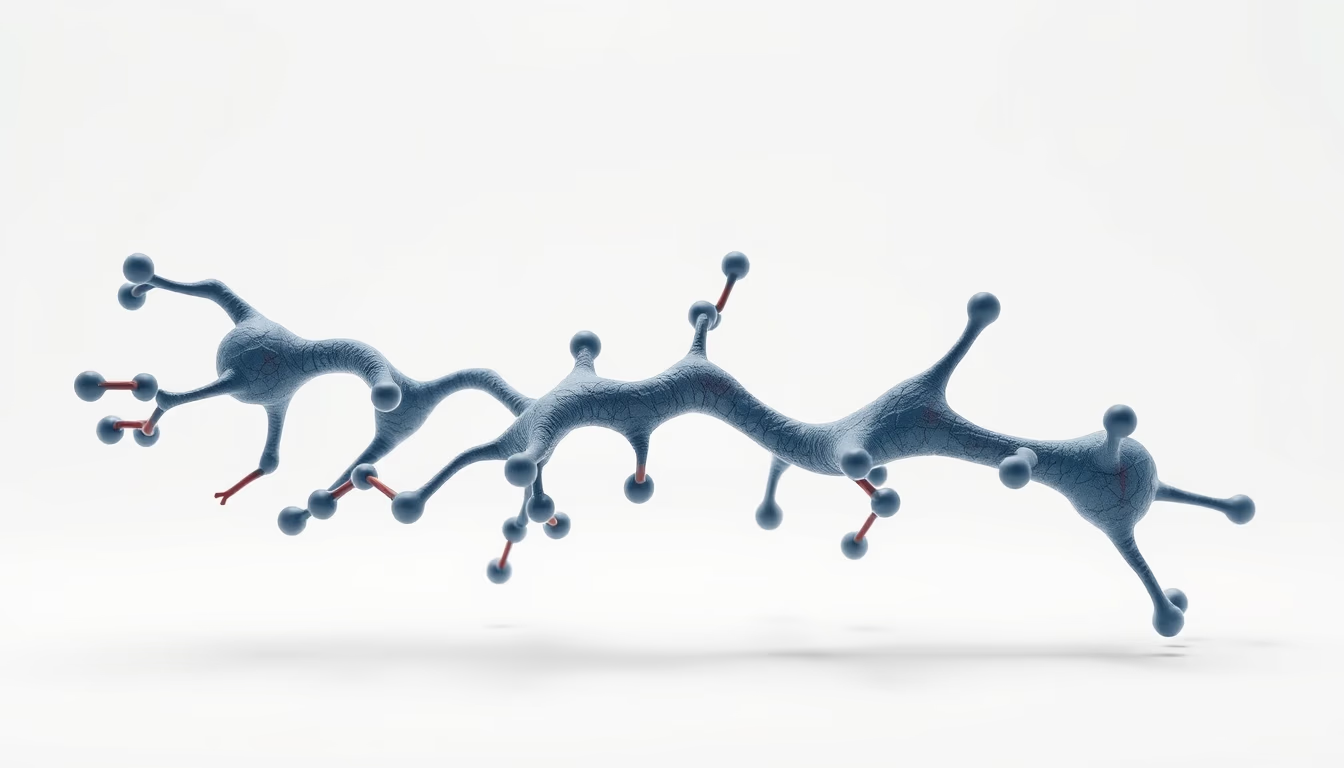
Mitochondria are cellular organelles essential for energy production, with a double-membrane structure and their own DNA, key in aerobic metabolism.
About this subject
Mitochondria are cytoplasmic organelles found in almost all eukaryotic cells, often called the powerhouses of the cell. They convert nutrients into ATP (adenosine triphosphate) through cellular respiration, a process that requires oxygen. Each mitochondrion has two membranes: a smooth outer membrane and an inner membrane highly folded into cristae, which increase the surface area for chemical reactions. Inside the mitochondrial matrix are their own ribosomes, circular DNA, and RNA, suggesting an evolutionary origin from endosymbiotic bacteria, as proposed by Lynn Margulis in the 1960s.
Beyond energy production, mitochondria play crucial roles in cell cycle regulation, apoptosis (programmed cell death), and heat production in brown adipose tissue. Mutations in mitochondrial DNA are linked to various hereditary diseases, such as Leber's hereditary optic neuropathy and Kearns-Sayre syndrome. In Brazil, research on mitochondria advances in studies of aging, neurodegenerative diseases, and energy metabolism, with notable groups at the University of São Paulo (USP) and the Federal University of Rio de Janeiro (UFRJ).
The dynamic structure of mitochondria is remarkable: they can fuse and divide, forming complex networks within the cell, a process called mitochondrial fusion and fission. This plasticity is vital for maintaining cellular health and responding to stress. Recent studies show that mitochondrial dysfunction is linked to aging and diseases such as type 2 diabetes and Alzheimer's, making these organelles promising therapeutic targets. Understanding mitochondrial mechanisms remains a fertile field in cell and molecular biology.
Frequently Asked Questions
What are mitochondria and what is their main function?
Mitochondria are organelles responsible for producing energy in the form of ATP through aerobic cellular respiration. They have their own DNA and are considered the powerhouses of eukaryotic cells.
Why do mitochondria have their own DNA?
This is evidence for the endosymbiotic theory, which suggests that mitochondria originated from ancient bacteria engulfed by primitive cells. Mitochondrial DNA is circular and similar to bacterial DNA.
How are mitochondria related to human diseases?
Mutations in mitochondrial DNA can cause diseases such as Leber's hereditary optic neuropathy and Kearns-Sayre syndrome. Additionally, mitochondrial dysfunction is linked to aging and diseases like Alzheimer's and type 2 diabetes.
Direct URL
https://pub-c7d6a6ea828543ac903a74a341ccb2e1.r2.dev/imagens/mitochondria-3d-render-commercial-product-photography-p12.avifHow to credit
Include a visible link back to UtilizAí. Copy one of the snippets below:
<a href="https://xn--utiliza-eza.com/en/midia/imagens/mitochondria-3d-render-commercial-product-photography-p12">Mitochondria 3d render</a> by <a href="https://xn--utiliza-eza.com">UtilizAí</a>, licensed under <a href="https://creativecommons.org/licenses/by/4.0/">CC BY 4.0</a>.
[Mitochondria 3d render](https://xn--utiliza-eza.com/en/midia/imagens/mitochondria-3d-render-commercial-product-photography-p12) by [UtilizAí](https://xn--utiliza-eza.com), CC BY 4.0
License: CC-BY-4.0