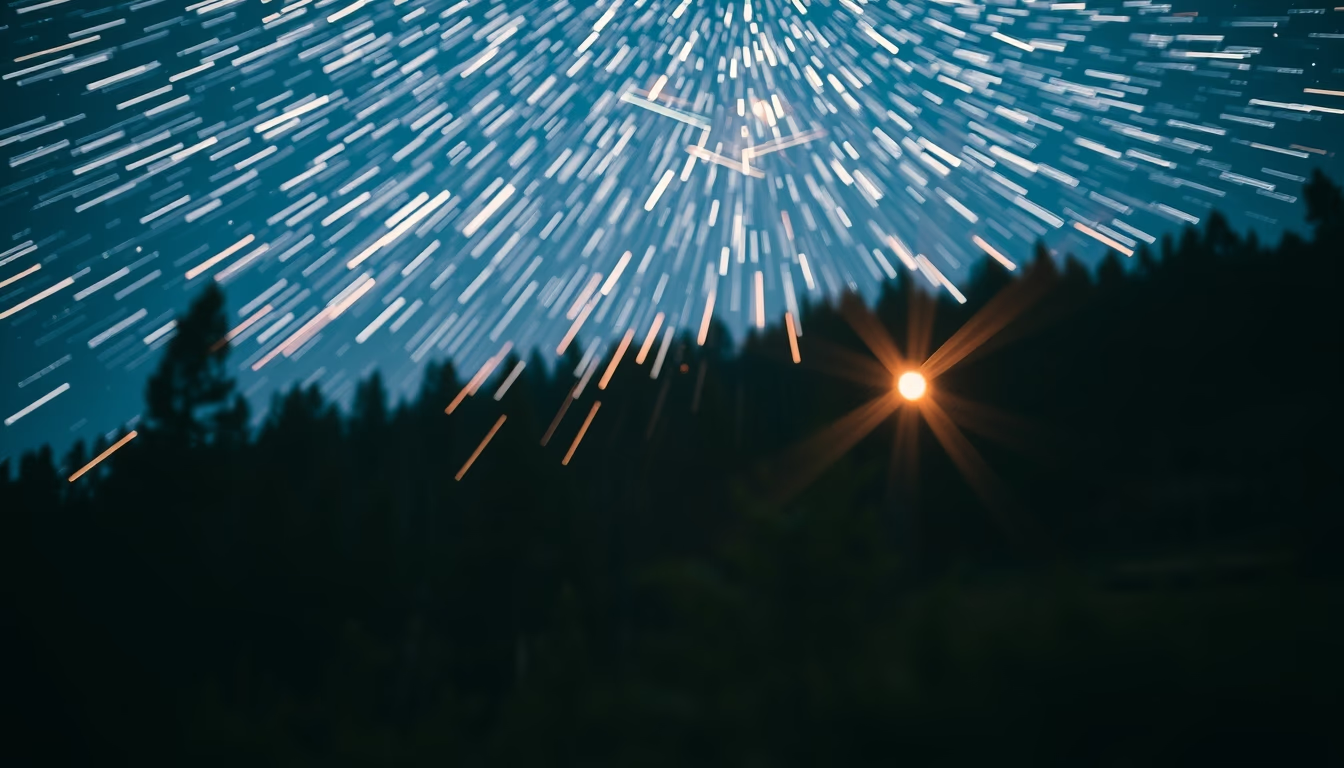
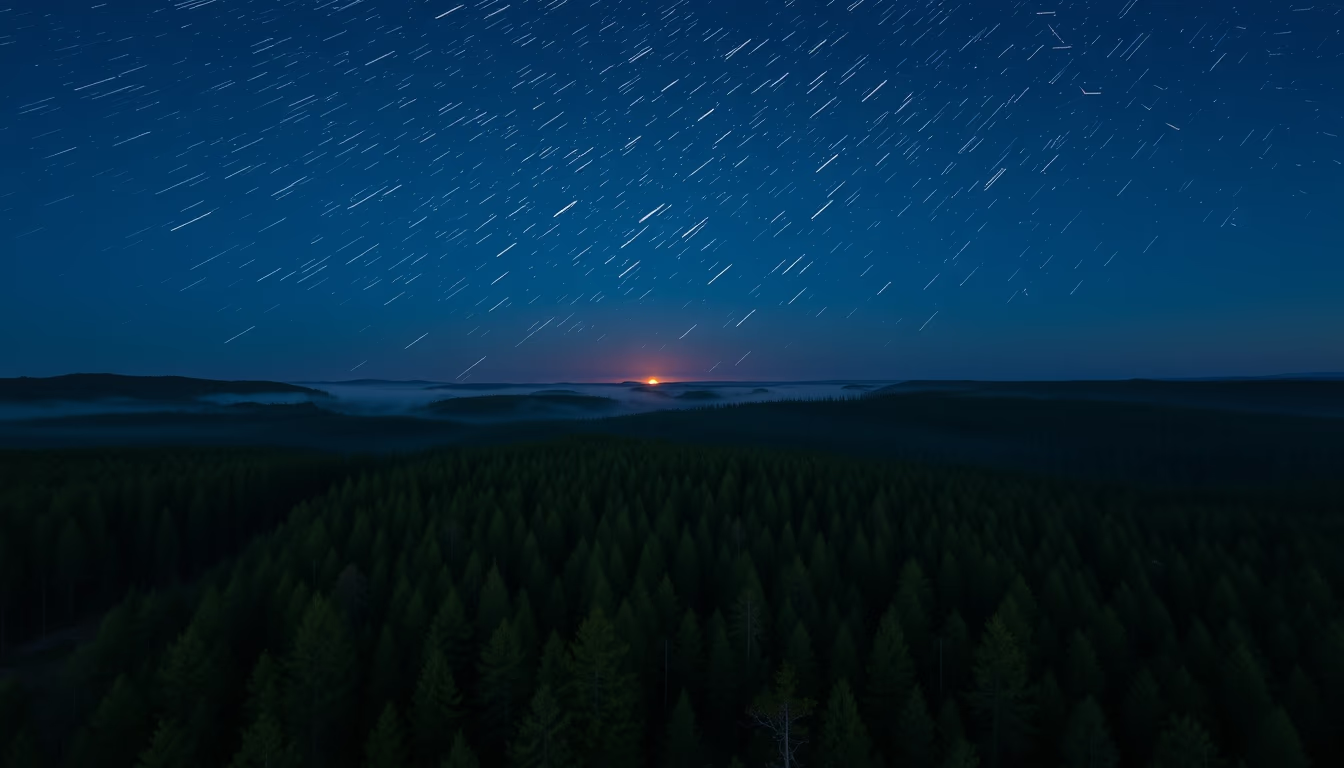
Meteor shower over forest
1344×768 · AVIF · CC BY 4.0
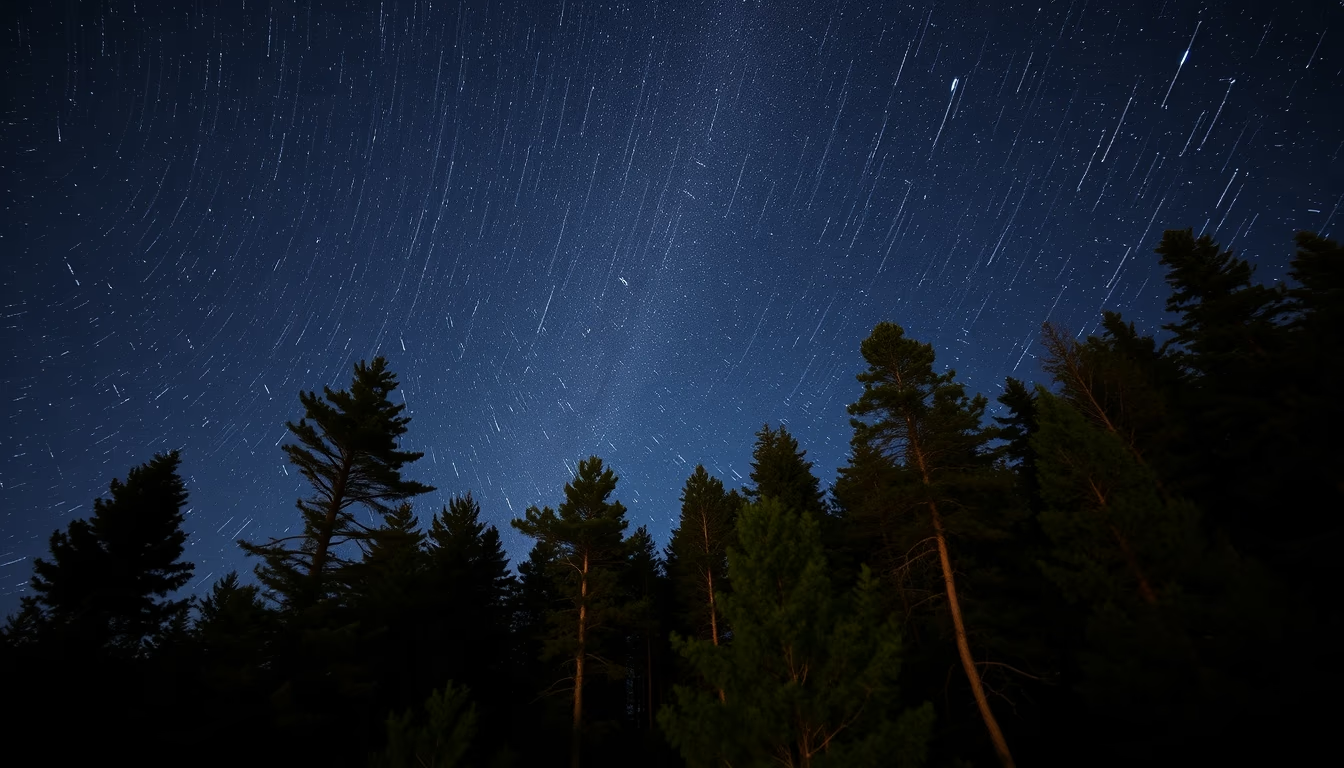
Meteor showers are celestial events that occur when Earth passes through comet debris, creating streaks of light in the night sky.
About this subject
Meteor showers are among the most accessible and fascinating astronomical spectacles. They occur when Earth, in its orbit, crosses a stream of debris left by comets or, more rarely, asteroids. Entering the atmosphere at speeds exceeding 70 km/s, these particles heat up and ionize the air, producing the familiar streaks of light. The most famous showers include the Perseids (August), Geminids (December), and Leonids (November). Hourly rates range from a few dozen to hundreds, depending on the flux intensity.
Ideal observation requires dark skies free from light pollution, preferably during a new moon. No special equipment is needed; meteors are visible to the naked eye anywhere with a good view of the horizon. In Brazil, the best season is winter and early spring, when nights are longer and air drier. Locations like the northeastern hinterlands or rural areas in the Southeast offer excellent conditions.
Historically, meteor showers held great cultural significance. Ancient civilizations interpreted them as divine signs or omens. In medieval Europe, the 1833 Leonids caused widespread panic. Today, science studies them to gain insights into the composition of parent bodies and the evolution of the solar system. Each meteor we see is a disintegrating particle contributing to our understanding of orbital dynamics.
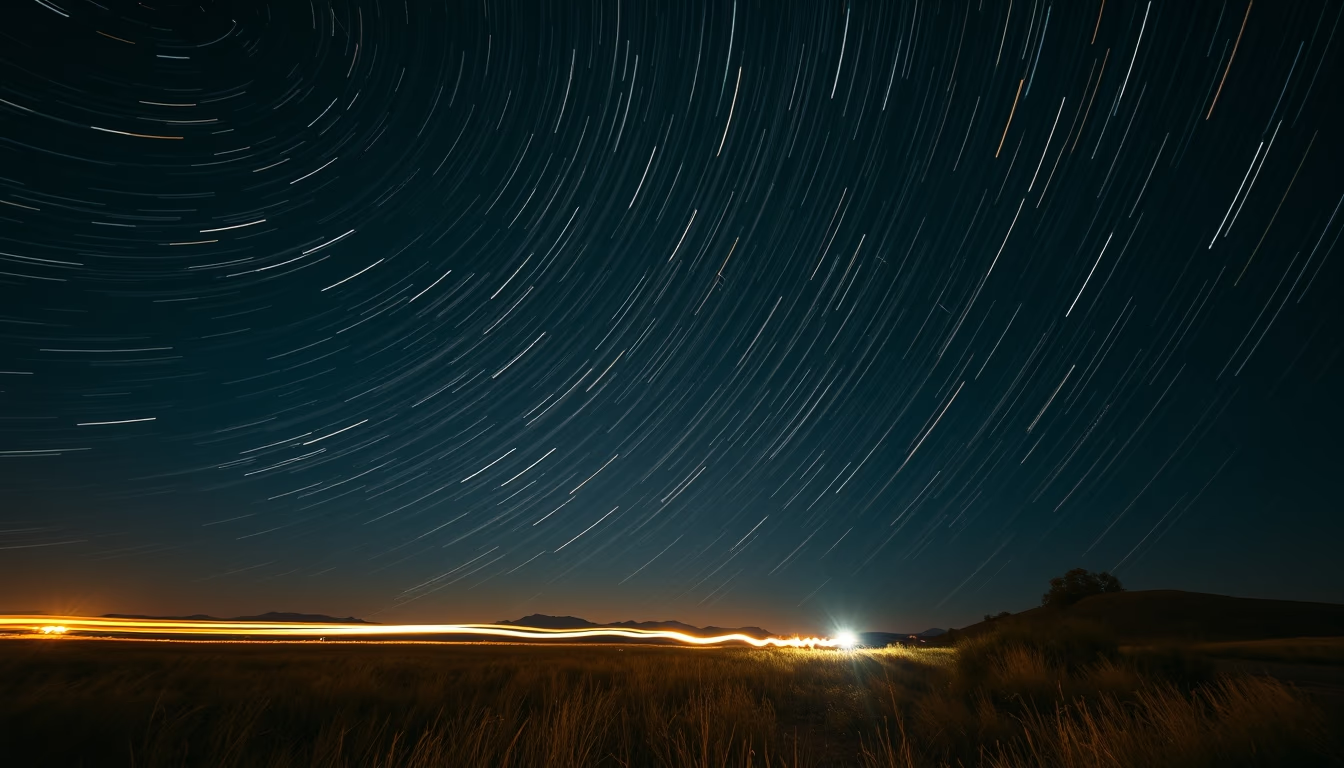
For photographers, meteors can be captured with DSLR cameras and wide-angle lenses using long exposures (20, 30 seconds) and a tripod. Image stacking techniques allow multiple streaks to be combined into a single photo. Showers like the Geminids, occurring in December, are particularly photogenic due to their high rate and varied colors.
Frequently Asked Questions
What is the best time of year to observe meteor showers in Brazil?
Major showers occur between July and December. The Perseids (August) and Geminids (December) are the most intense visible from the Southern Hemisphere.
Do I need special equipment to see a meteor shower?
No. Just a dark location away from artificial lights and a bit of patience. No telescope or binoculars are needed.
Are meteor showers dangerous to Earth?
No. Meteoroids are very small and completely disintegrate in the atmosphere before hitting the ground. Only larger fragments (bolides) might cause impacts, but these are extremely rare.
Direct URL
https://pub-c7d6a6ea828543ac903a74a341ccb2e1.r2.dev/imagens/meteor-shower-over-forest-documentary-photography-p2.avifHow to credit
Include a visible link back to UtilizAí. Copy one of the snippets below:
<a href="https://xn--utiliza-eza.com/en/midia/imagens/meteor-shower-over-forest-documentary-photography-p2">Meteor shower over forest</a> by <a href="https://xn--utiliza-eza.com">UtilizAí</a>, licensed under <a href="https://creativecommons.org/licenses/by/4.0/">CC BY 4.0</a>.
[Meteor shower over forest](https://xn--utiliza-eza.com/en/midia/imagens/meteor-shower-over-forest-documentary-photography-p2) by [UtilizAí](https://xn--utiliza-eza.com), CC BY 4.0
License: CC-BY-4.0