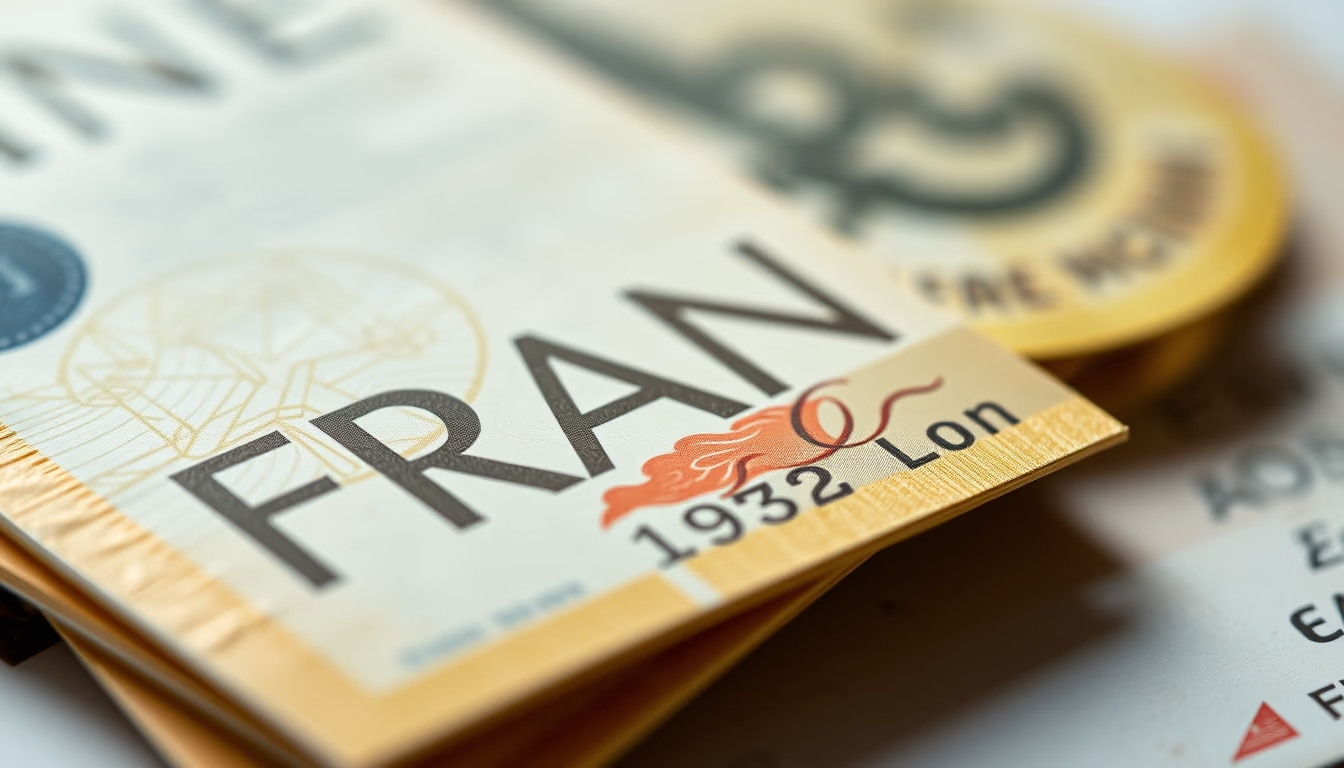
Medieval florin gold
1344×768 · AVIF · CC BY 4.0
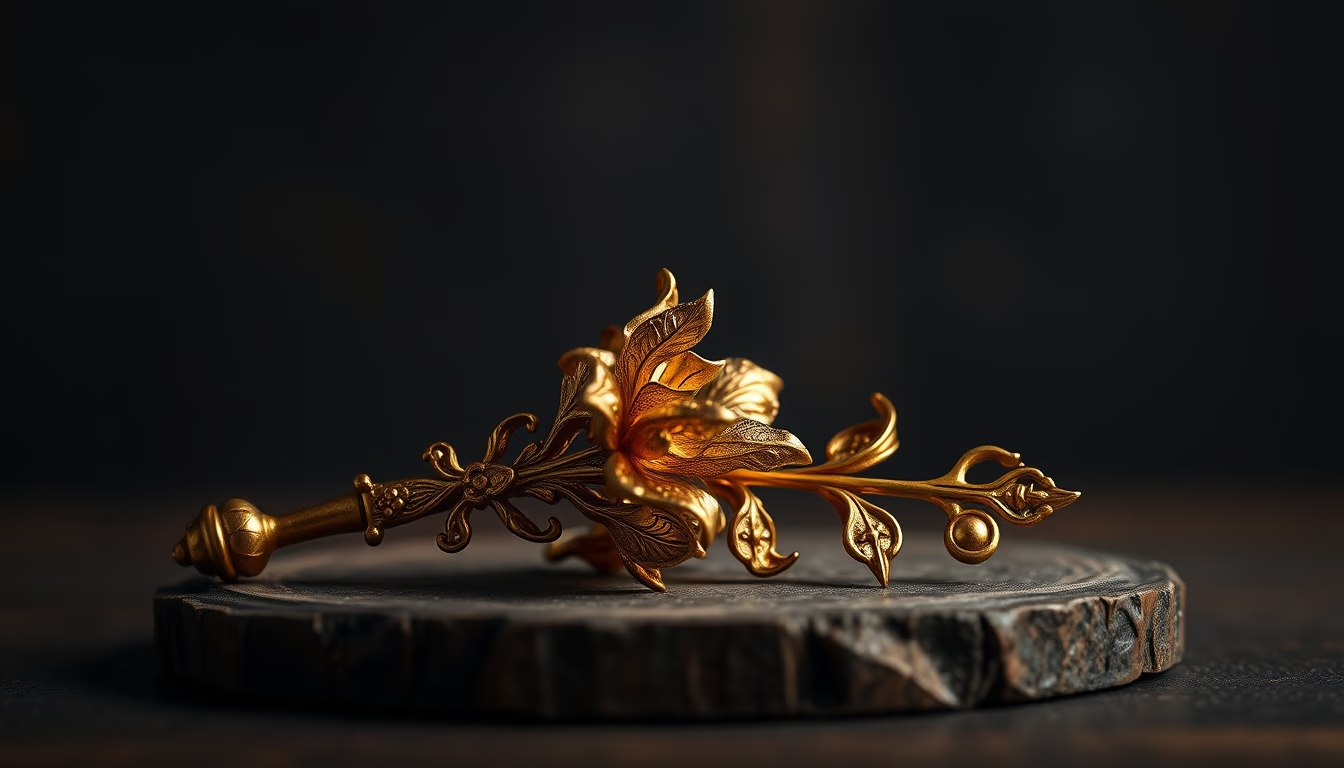
The medieval gold florin, minted in Florence from 1252, revolutionized European trade as a stable international currency.
About this subject
The gold florin, also known as fiorino d'oro, was introduced by the Republic of Florence in 1252 and quickly became the benchmark currency for European trade during the Late Middle Ages. Minted in high-purity gold (24 carats), it weighed approximately 3.5 grams and maintained its intrinsic value, a rarity in an era of frequent coin debasement. The name florin derives from the lily (fleur-de-lis) embossed on the obverse, the heraldic symbol of Florence, while the reverse depicted Saint John the Baptist, the city's patron saint.
The florin's adoption was propelled by Florence's economic and financial dominance, led by banking families like the Medici. It facilitated international transactions at fairs in Champagne and along the Silk Road, serving as a standard for contracts and loans. Its influence spread so widely that other cities and kingdoms began minting their own versions, such as the Hungarian florin and the Venetian ducat, the latter directly inspired by the Florentine success.
A notable detail is that the florin remained in circulation for centuries, even after Florence's political decline. During the Renaissance, it was the preferred currency of merchants and bankers, referenced in literary works like Shakespeare's "The Merchant of Venice." Today, original specimens are highly sought after by numismatists, often fetching thousands of euros at auction. The florin's design also influenced modern coins, such as the Dutch guilder, used until the adoption of the euro.
Frequently Asked Questions
What was the value of a medieval gold florin?
A gold florin was roughly equivalent to 1 pound sterling or 20 shillings in the 13th century, but its purchasing power varied. It could buy, for example, a sheep or 100 kilograms of wheat.
Why was the florin more reliable than other coins?
Florence maintained consistent gold purity and weight for centuries, unlike monarchs who often debased the metal content for profit. This engendered international trust.
Does the florin still exist today?
Not as a circulating currency, but the name survives in coins like the Hungarian forint and the Dutch guilder, the latter replaced by the euro in 2002. Historical specimens are collector's items.
Direct URL
https://pub-c7d6a6ea828543ac903a74a341ccb2e1.r2.dev/imagens/medieval-florin-gold-studio-still-life-fresh11.avifHow to credit
Include a visible link back to UtilizAí. Copy one of the snippets below:
<a href="https://xn--utiliza-eza.com/en/midia/imagens/medieval-florin-gold-studio-still-life-fresh11">Medieval florin gold</a> by <a href="https://xn--utiliza-eza.com">UtilizAí</a>, licensed under <a href="https://creativecommons.org/licenses/by/4.0/">CC BY 4.0</a>.
[Medieval florin gold](https://xn--utiliza-eza.com/en/midia/imagens/medieval-florin-gold-studio-still-life-fresh11) by [UtilizAí](https://xn--utiliza-eza.com), CC BY 4.0
License: CC-BY-4.0