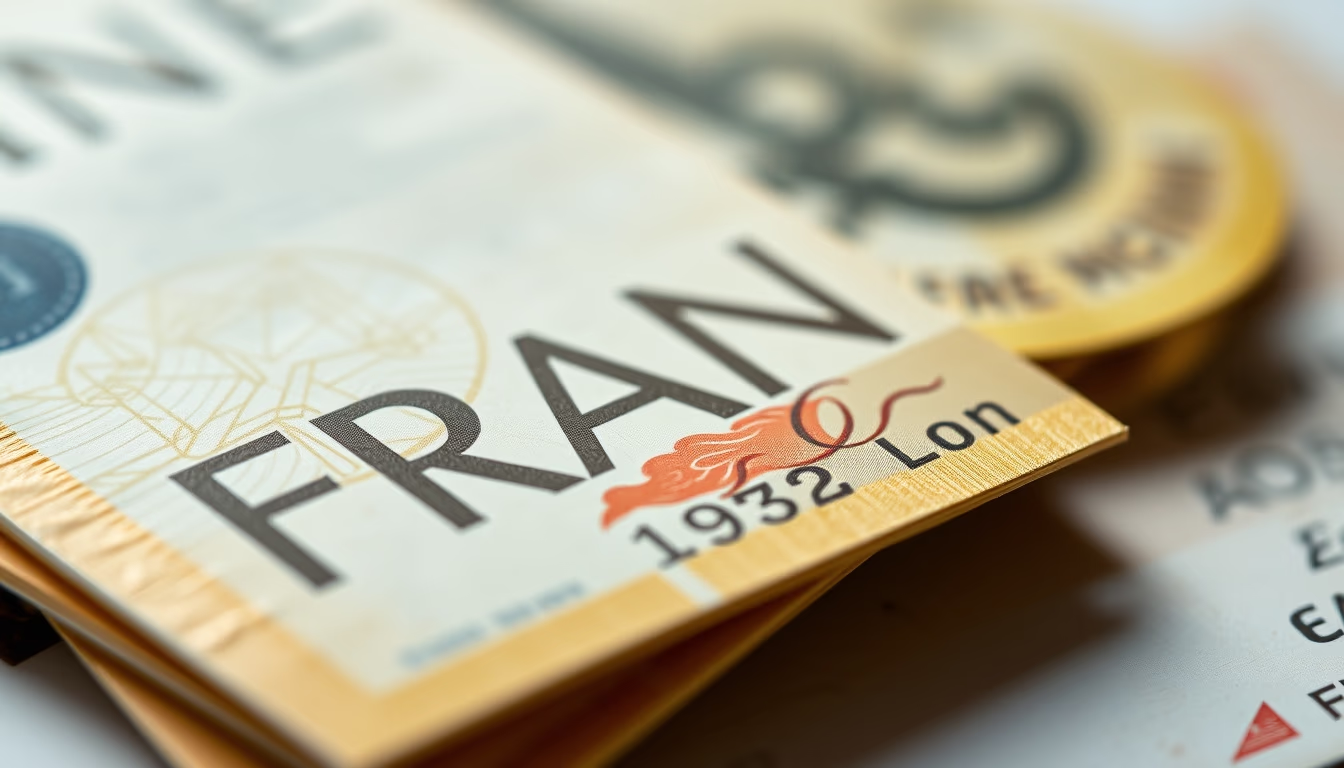
Medieval florin gold
1344×768 · AVIF · CC BY 4.0

The medieval gold florin, minted from 1252 in Florence, was Europe's most influential gold coin and a commercial standard for centuries.
About this subject
The gold florin (fiorino d'oro) was introduced by the Republic of Florence in 1252, becoming the first widely circulated gold coin in Western Europe since the fall of the Roman Empire. Each florin contained approximately 3.5 grams of pure gold (24 karats) and measured about 20 mm in diameter. Its name derives from the lily (giglio), the city's symbol, featured on the obverse, while the reverse bore the image of Saint John the Baptist, Florence's patron saint.
The stability of the florin's weight and purity made it widely accepted along trade routes connecting Italy to France, Germany, the Netherlands, and England. Banks and merchants preferred the florin over regional currencies, establishing it as a de facto monetary standard. Its influence was so great that many Italian city-states (such as Genoa and Venice) and other European kingdoms began minting their own versions, like the Venetian ducat and the Hungarian florin.
The florin's production continued for over three centuries, until Florence's decline in the 16th century. The coin became a symbol of wealth and economic stability, referenced in literary works such as Shakespeare's "The Merchant of Venice." Today, well-preserved specimens are highly sought after by collectors and numismatists, often fetching thousands of dollars at auction.
Interestingly, the florin's design influenced even modern coins: the Florentine lily remains in use as a heraldic symbol, and the name "florin" was adopted by later currencies, such as the Dutch gulden, which circulated until 2002.
Frequently Asked Questions
What is the origin of the name 'florin'?
The name comes from Italian fiorino, derived from fiore (flower), referring to the lily stamped on the coin, the symbol of Florence.
Why was the gold florin so important in the Middle Ages?
Due to its constant purity and standard weight, the florin became a reliable currency for international trade, accepted across Europe and serving as a model for other gold coins.
Does the florin still exist today?
Not as a physical coin. The name survived in some modern currencies, such as the Dutch guilder (gulden), but original minting ceased in the 16th century.
Direct URL
https://pub-c7d6a6ea828543ac903a74a341ccb2e1.r2.dev/imagens/medieval-florin-gold-minimalist-composition-fresh2.avifHow to credit
Include a visible link back to UtilizAí. Copy one of the snippets below:
<a href="https://xn--utiliza-eza.com/en/midia/imagens/medieval-florin-gold-minimalist-composition-fresh2">Medieval florin gold</a> by <a href="https://xn--utiliza-eza.com">UtilizAí</a>, licensed under <a href="https://creativecommons.org/licenses/by/4.0/">CC BY 4.0</a>.
[Medieval florin gold](https://xn--utiliza-eza.com/en/midia/imagens/medieval-florin-gold-minimalist-composition-fresh2) by [UtilizAí](https://xn--utiliza-eza.com), CC BY 4.0
License: CC-BY-4.0