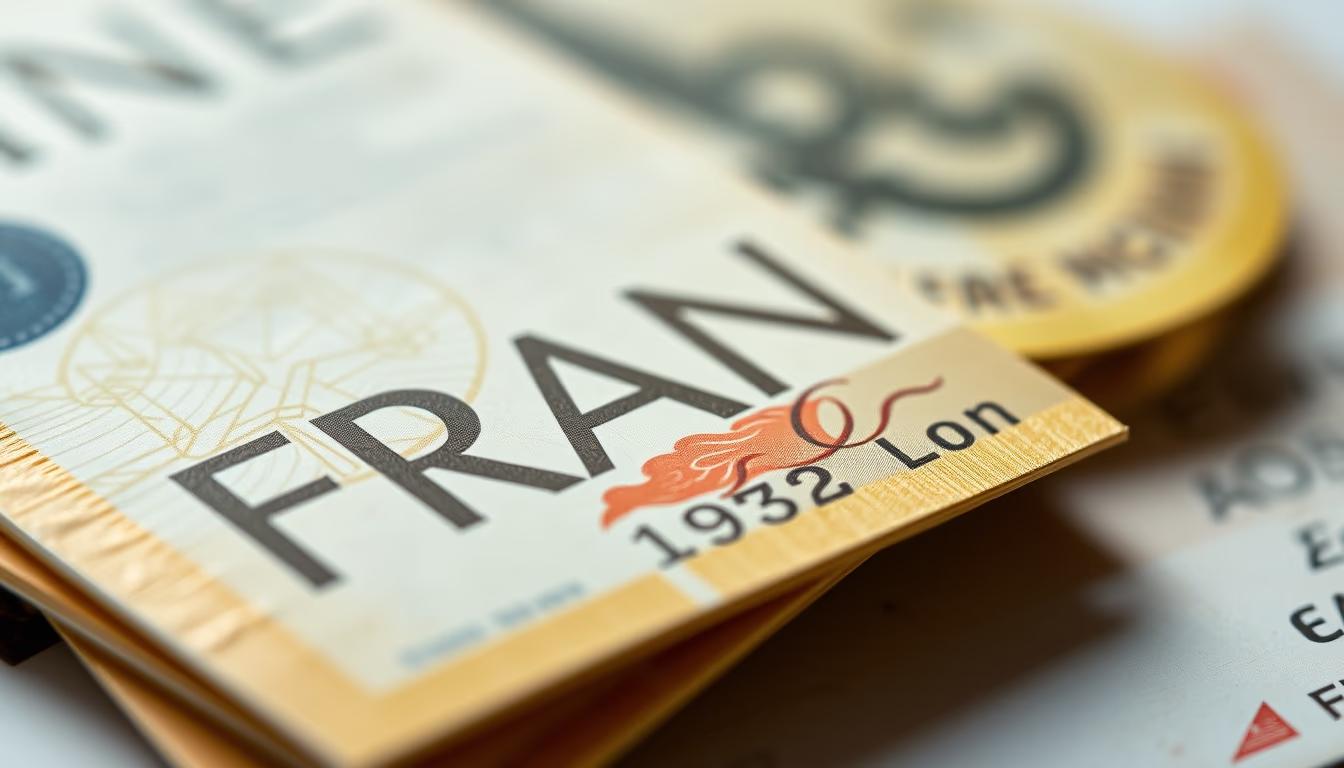
Medieval florin gold
1344×768 · AVIF · CC BY 4.0

The medieval gold florin, minted in Florence from 1252, became the European monetary standard due to its consistent weight and purity.
About this subject
The gold florin (fiorino d'oro) was introduced by the Republic of Florence in 1252 and quickly became one of the most influential coins of the Middle Ages. Weighing approximately 3.5 grams of fine gold (24 carats), the florin maintained an unchanging standard that ensured its acceptance across the continent. Its name derives from the lily (giglio), the symbol of Florence, featured on the obverse, while the reverse bore the figure of Saint John the Baptist, the city's patron saint.
The florin's stability contrasted with the frequent debasement of other medieval coins, making it the preferred choice for international trade and large-scale financial transactions. Florentine bankers and merchants spread its use along routes from England to the Levant. The florin's success inspired imitations, such as the Venetian ducat and the Hungarian florin, which retained similar characteristics.
Interestingly, the florin even influenced American coinage: the name "florin" was used for some U.S. gold coins in the 19th century. In Italy, the Florentine lira was worth one florin, and the phrase "senza fiorini" became synonymous with being broke. Production of the florin continued for centuries, but its importance declined with Italian unification and the abandonment of the gold standard.
Today, original florins are highly valued collector's items. Their purity and weight have been confirmed by modern assays, verifying the precision of medieval goldsmiths. The legacy of the florin lies not only in its material worth but as a symbol of the financial engineering that enabled the growth of European capitalism.
Frequently Asked Questions
What was the weight and purity of the medieval gold florin?
The florin weighed about 3.5 grams and was minted in 24-carat gold (99.9% pure), an exceptionally high standard for its time.
Why did the florin become so widely accepted internationally?
Its consistent purity and weight provided trust in commercial transactions, avoiding the debasement common in other coins. Additionally, the network of Florentine banks facilitated its use across Europe.
Did the florin influence other currencies?
Yes, it inspired the Venetian ducat and the Hungarian florin, and its name was used for some U.S. gold coins in the 19th century.
Direct URL
https://pub-c7d6a6ea828543ac903a74a341ccb2e1.r2.dev/imagens/medieval-florin-gold-macro-closeup-fresh1.avifHow to credit
Include a visible link back to UtilizAí. Copy one of the snippets below:
<a href="https://xn--utiliza-eza.com/en/midia/imagens/medieval-florin-gold-macro-closeup-fresh1">Medieval florin gold</a> by <a href="https://xn--utiliza-eza.com">UtilizAí</a>, licensed under <a href="https://creativecommons.org/licenses/by/4.0/">CC BY 4.0</a>.
[Medieval florin gold](https://xn--utiliza-eza.com/en/midia/imagens/medieval-florin-gold-macro-closeup-fresh1) by [UtilizAí](https://xn--utiliza-eza.com), CC BY 4.0
License: CC-BY-4.0