Medieval florin gold
1344×768 · AVIF · CC BY 4.0
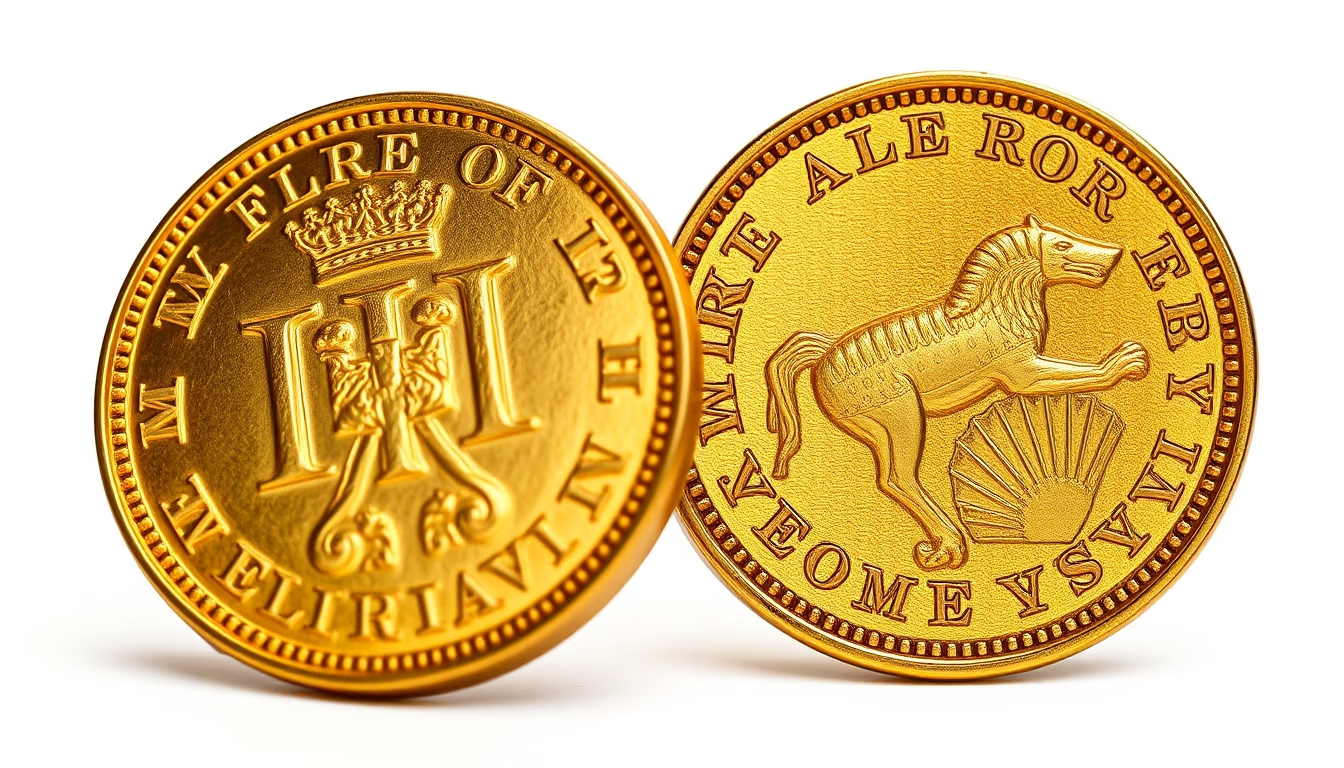
The medieval gold florin, minted in Florence from 1252, revolutionized European trade with its standardized purity and weight.
About this subject
The gold florin was introduced by the Republic of Florence in 1252, during a period of economic and commercial expansion. The coin weighed approximately 3.5 grams of high-purity gold (about 24 carats), a standard that ensured its international acceptance. Its design featured a fleur-de-lis on one side (symbol of Florence) and Saint John the Baptist, the city's patron saint, on the other, depicted in simple robes with a halo.
The creation of the florin was driven by the need for a stable coin to facilitate trade with other kingdoms and Italian city-states. Unlike earlier coins that varied in weight and purity, the florin remained consistent for centuries, becoming the reference currency for international transactions. Florentine bankers and merchants spread its use across Europe, especially along trade routes for textiles, spices, and precious metals.
The florin's success inspired similar coins in other countries, such as the Hungarian florin (forint) and the Dutch guilder. In England, the noble and later the sovereign were influenced by its standard. The florin also contributed to the development of modern banking, as its stability enabled the creation of bills of exchange and credit based on its value. Even after Florence's decline as an economic power, the florin continued in circulation until the 16th century, when new coins like the Venetian ducat took its place.
Frequently Asked Questions
What is the origin of the gold florin?
The gold florin was first minted in Florence, Italy, in 1252 during the Florentine Republic. Its name comes from the fleur-de-lis depicted on the coin.
What was the weight and purity of the medieval florin?
Each florin weighed approximately 3.5 grams and was made of gold about 24 carats fine, ensuring high value and international trust.
Why was the florin so important for medieval trade?
Due to its standardized purity and weight, the florin became a stable currency accepted across Europe, facilitating transactions and serving as a basis for banking and exchange systems.
Direct URL
https://pub-c7d6a6ea828543ac903a74a341ccb2e1.r2.dev/imagens/medieval-florin-gold-commercial-product-photography-fresh5.avifHow to credit
Include a visible link back to UtilizAí. Copy one of the snippets below:
<a href="https://xn--utiliza-eza.com/en/midia/imagens/medieval-florin-gold-commercial-product-photography-fresh5">Medieval florin gold</a> by <a href="https://xn--utiliza-eza.com">UtilizAí</a>, licensed under <a href="https://creativecommons.org/licenses/by/4.0/">CC BY 4.0</a>.
[Medieval florin gold](https://xn--utiliza-eza.com/en/midia/imagens/medieval-florin-gold-commercial-product-photography-fresh5) by [UtilizAí](https://xn--utiliza-eza.com), CC BY 4.0
License: CC-BY-4.0