Medical evacuation helicopter
1344×768 · AVIF · CC BY 4.0
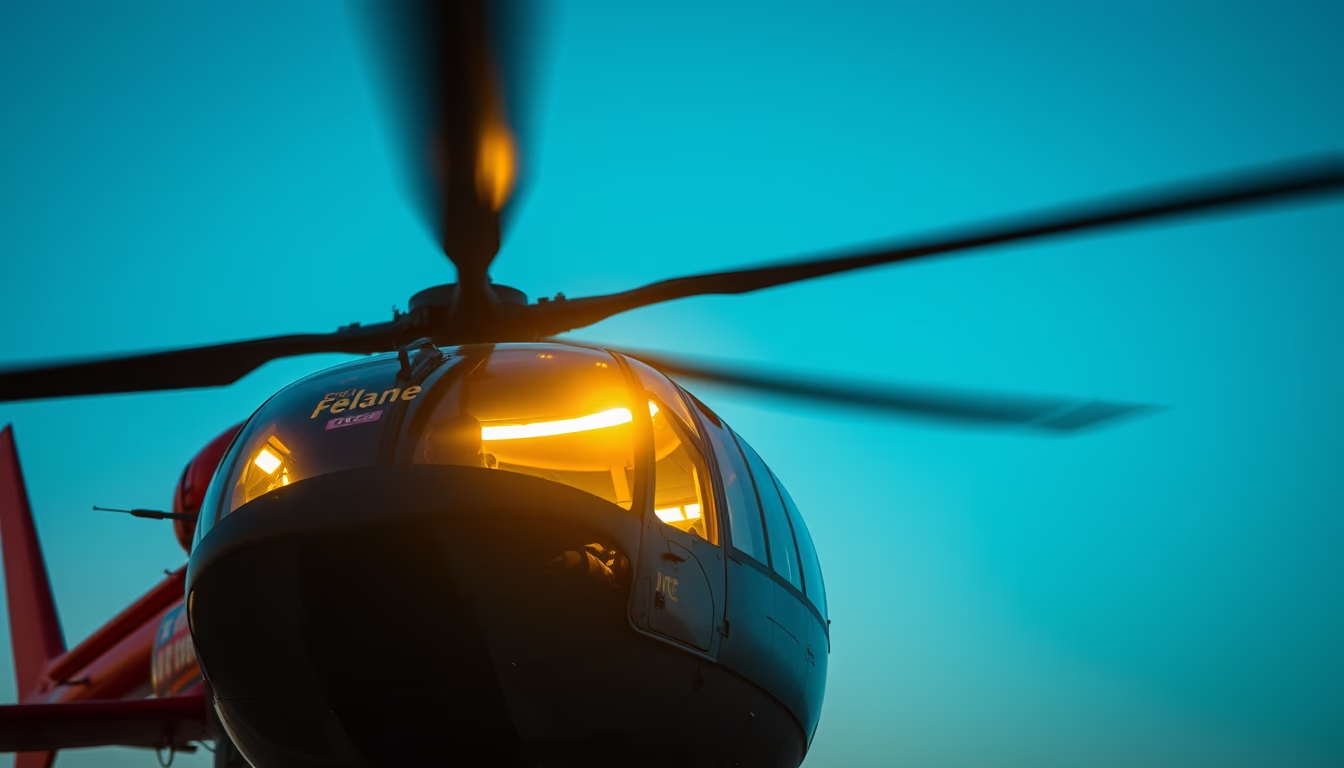
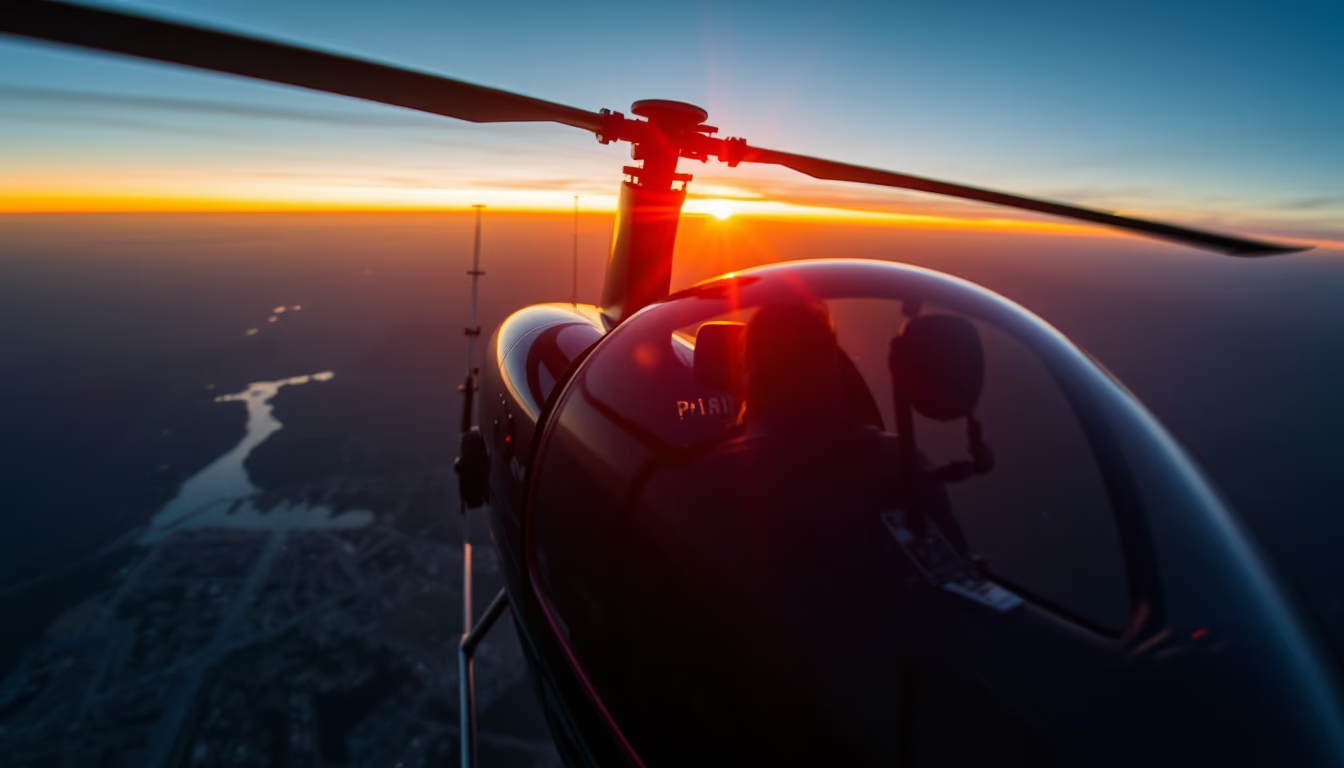
Medical evacuation helicopters are vital in aeromedical transport, shortening distances to save lives in emergencies across Brazil and worldwide.
About this subject
Medical evacuation helicopters, also known as air ambulances, are specially adapted aircraft for the rapid transport of critically ill or injured patients. In Brazil, they are operated by the Mobile Emergency Care Service (SAMU), the Armed Forces, and private companies. Unlike conventional helicopters, these vehicles are equipped with advanced life support equipment such as ventilators, defibrillators, and neonatal incubators, along with space for a full medical team. Their agility allows them to land in hard-to-reach places, such as highways, rural areas, and even hospital rooftops.
The concept of medical evacuation by helicopter emerged during the Korean War (1950-1953) and was refined in the Vietnam War, drastically reducing the time between injury and hospital care. In Brazil, the first civilian air ambulance services appeared in the 1990s, notably SAMU Aéreo in São Paulo, established in 2005. Today, the country has dozens of bases spread across states such as Amazonas, Rio de Janeiro, and Minas Gerais, serving from traffic accidents to inter-hospital transfers.
From a technical standpoint, the most commonly used models in Brazil include the Bell 429, the Airbus EC135, and the AW119 Koala. These aircraft can fly at speeds exceeding 250 km/h and operate in adverse weather conditions. Pilots undergo specific training in night flight with night vision goggles (NVG) and landing in confined areas. Integration with medical dispatch centers is crucial to optimize routes and ensure team readiness.
One of the biggest challenges in Brazil is the vast territorial expanse and poor infrastructure in remote regions like the Amazon. In these areas, the helicopter is often the only viable means to deliver emergency care. Studies show that the use of aeromedical transport can reduce mortality in severe trauma by up to 50%, provided it is deployed correctly. However, maintenance and operational costs still limit its expansion, requiring partnerships between government and private sector.
Frequently Asked Questions
What is the difference between a medical evacuation helicopter and a regular helicopter?
A medical evacuation helicopter is outfitted with advanced life support equipment such as ventilators and defibrillators, plus space for a medical team. It also has integrated communication systems and often specialized lighting for night operations.
How are air ambulance pilots trained?
Pilots undergo rigorous training in instrument flying, night operations with night vision goggles (NVG), and confined area landings. They also learn specific emergency procedures for the medical environment.
What is the transport capacity of a medical evacuation helicopter?
It depends on the model, but most carry one or two patients on stretchers, plus two or three crew members (pilot, doctor, nurse). Some larger models can carry up to four patients.
Direct URL
https://pub-c7d6a6ea828543ac903a74a341ccb2e1.r2.dev/imagens/medical-evacuation-helicopter-rembrandt-lighting-dramatic-shadows-fresh12.avifHow to credit
Include a visible link back to UtilizAí. Copy one of the snippets below:
<a href="https://xn--utiliza-eza.com/en/midia/imagens/medical-evacuation-helicopter-rembrandt-lighting-dramatic-shadows-fresh12">Medical evacuation helicopter</a> by <a href="https://xn--utiliza-eza.com">UtilizAí</a>, licensed under <a href="https://creativecommons.org/licenses/by/4.0/">CC BY 4.0</a>.
[Medical evacuation helicopter](https://xn--utiliza-eza.com/en/midia/imagens/medical-evacuation-helicopter-rembrandt-lighting-dramatic-shadows-fresh12) by [UtilizAí](https://xn--utiliza-eza.com), CC BY 4.0
License: CC-BY-4.0