Medical evacuation helicopter
1344×768 · AVIF · CC BY 4.0
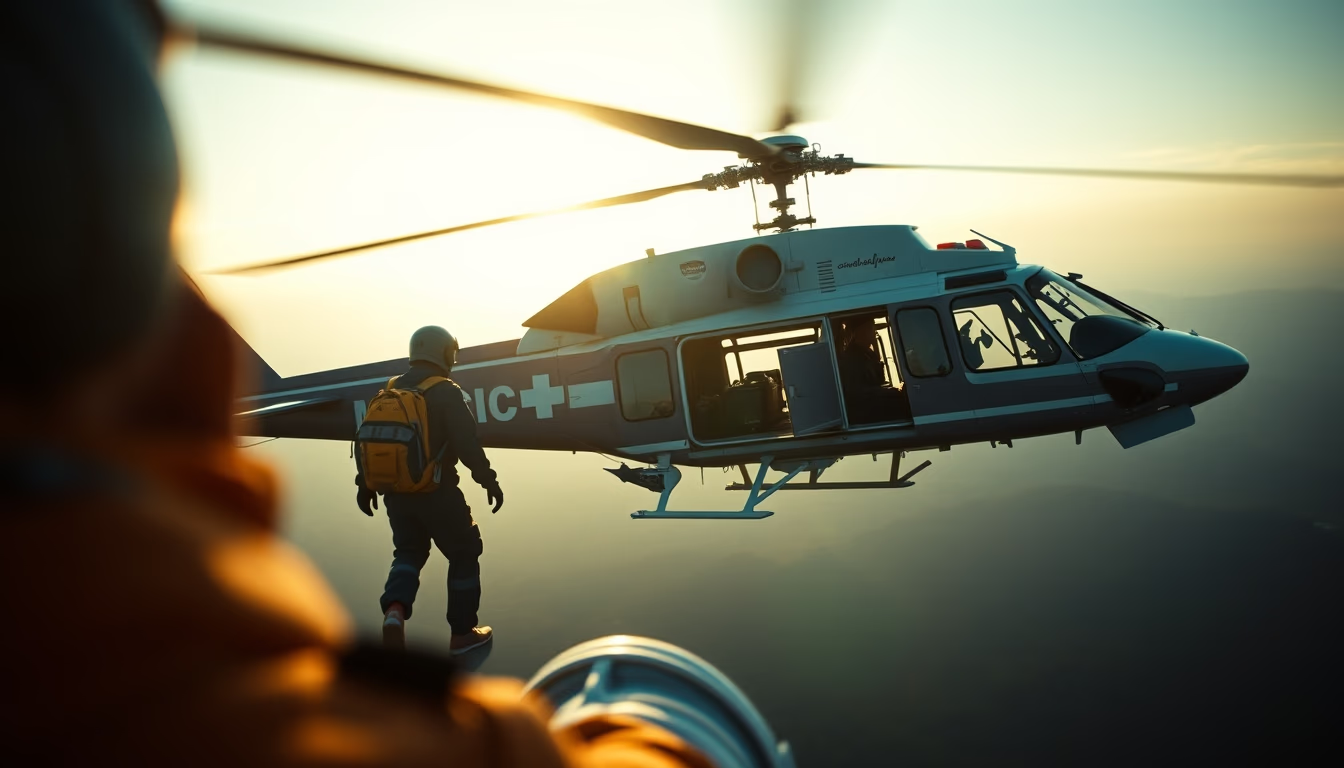
Medical evacuation helicopters are specialized aircraft for rapid patient transport in emergencies, saving lives by reducing response and transport time.
About this subject
Medical evacuation helicopters, also known as air ambulances or medevac helicopters, are aircraft specifically modified for rescue and transport of critically ill or injured patients. Their importance is particularly evident in remote areas such as rural regions, mountains, forests, or congested urban zones, where ground ambulances cannot arrive in time.
The modern concept of medical air evacuation emerged during the Korean War (1950-1953), when Bell H-13 helicopters were used to remove wounded soldiers from battlefields. Since then, technology has evolved to aircraft like the Eurocopter EC145 and AgustaWestland AW139, featuring pressurized cabins with space for two to four patients and a full mobile ICU: ventilators, defibrillators, infusion pumps, and cardiac monitors. Flight time can cut transport duration to less than half of what a ground ambulance would take, a critical factor in trauma, stroke, or heart attack cases.
In Brazil, medical evacuation helicopter usage is increasing, both by public services such as SAMU and the Fire Department and by private assistance companies. They are essential in operations in the Amazon rainforest, during floods, or on busy highways like BR-101. Real-time coordination with regulation centers ensures patients are taken to the most suitable hospital. Piloting these helicopters requires specific training in instrument flight and landing in confined areas, often without natural light.
Frequently Asked Questions
What is the difference between a medical evacuation helicopter and a regular helicopter?
A medical evacuation helicopter is equipped with stretchers, mounts for hospital equipment, medical oxygen, and a power system for devices like ventilators and monitors. The cabin is modified for easy patient access, and the structure may include rescue hoists. A regular helicopter lacks these features.
What essential equipment is onboard a rescue helicopter?
Essential equipment includes a defibrillator, mechanical ventilator, infusion pump, cardiac monitor, suction aspirator, supplemental oxygen, a stretcher with immobilization system, emergency medications, and, in some models, an electric hoist for rescues in hard-to-reach areas.
How is coordination between helicopter and hospitals carried out during an evacuation?
Coordination is managed by a medical regulation center that assesses case severity, determines the most suitable hospital (with available bed and specialty), and plans the flight route. The helicopter maintains contact via radio or digital system to update the patient's condition and receive instructions on the landing spot at the hospital.
Direct URL
https://pub-c7d6a6ea828543ac903a74a341ccb2e1.r2.dev/imagens/medical-evacuation-helicopter-lo-fi-disposable-camera-fresh6.avifHow to credit
Include a visible link back to UtilizAí. Copy one of the snippets below:
<a href="https://xn--utiliza-eza.com/en/midia/imagens/medical-evacuation-helicopter-lo-fi-disposable-camera-fresh6">Medical evacuation helicopter</a> by <a href="https://xn--utiliza-eza.com">UtilizAí</a>, licensed under <a href="https://creativecommons.org/licenses/by/4.0/">CC BY 4.0</a>.
[Medical evacuation helicopter](https://xn--utiliza-eza.com/en/midia/imagens/medical-evacuation-helicopter-lo-fi-disposable-camera-fresh6) by [UtilizAí](https://xn--utiliza-eza.com), CC BY 4.0
License: CC-BY-4.0