Medical evacuation helicopter
1344×768 · AVIF · CC BY 4.0

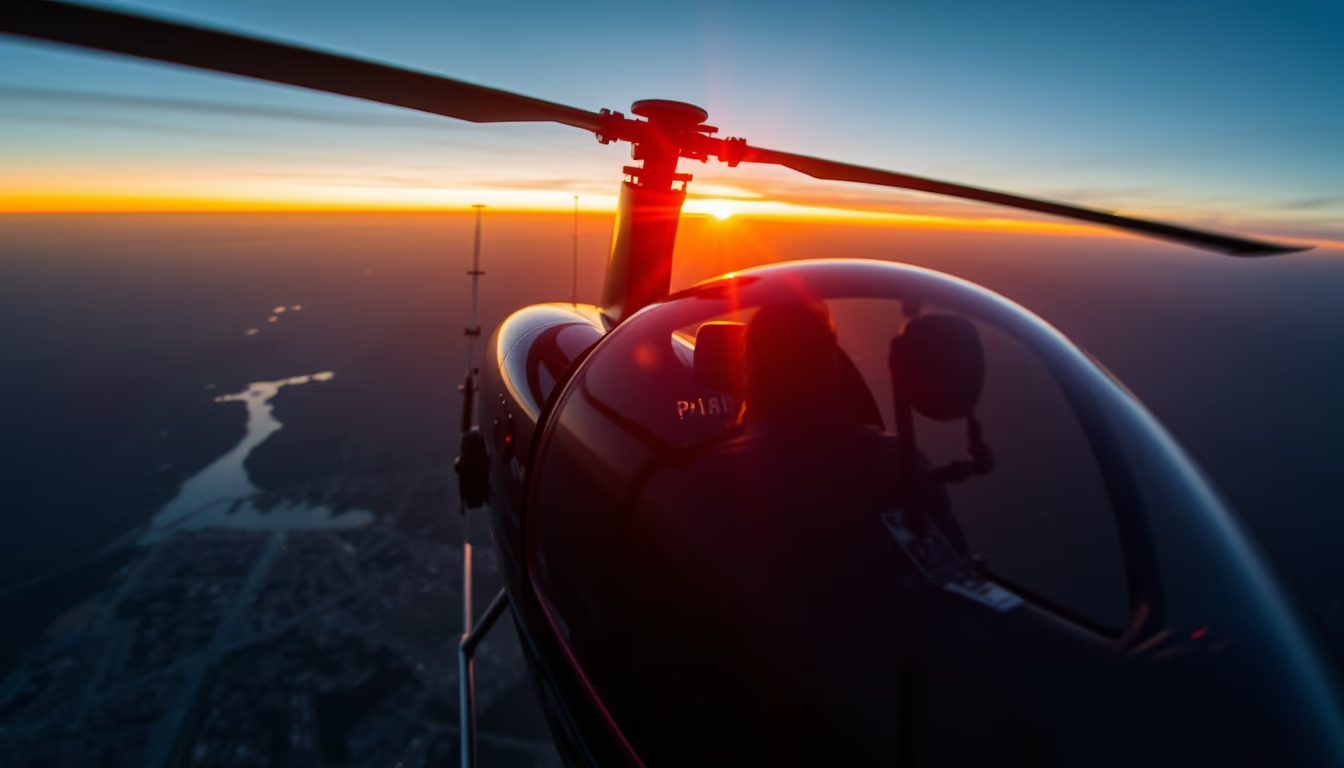
A medical evacuation helicopter is a specialized aircraft for rapid transport of critically ill patients, equipped with advanced life support.
About this subject
Medical evacuation helicopters, known as HEMS (Helicopter Emergency Medical Service) aircraft, are adapted for rescue and aeromedical transport missions. Unlike standard helicopters, they feature expanded cabins to accommodate stretchers, medical teams, and equipment such as ventilators, defibrillators, and infusion pumps. In the United States, services like Life Flight and Air Methods operate fleets across rural and urban areas, while in the United Kingdom, the London Air Ambulance provides critical care within minutes. Globally, military organizations also deploy medevac helicopters for battlefield casualties.
Technically, these helicopters are typically twin-engine for enhanced safety and can operate in adverse conditions, including night flights and confined-area landings. Common models include the Eurocopter EC145 and Bell 429, offering average speeds of 155 mph and ranges of up to 400 miles. The interior configuration prioritizes rapid patient access, with large sliding doors and surgical lighting systems. Many are also equipped with hoists for rescues from inaccessible terrain.
The cultural and social impact is profound. In major cities, they reduce response times for severe trauma or heart attacks, while in remote regions they provide the only link to advanced hospitals. During natural disasters such as hurricanes or earthquakes, they become indispensable for search and rescue. High operational costs limit availability, but the investment is justified by the number of lives saved.
Historically, military medevac operations during the Korean War, using Bell H-13 Sioux helicopters, pioneered the concept. Since then, technology has advanced to include GPS navigation, autostabilization, and satellite communications. Notable civilian programs include Norway's air ambulance service, which covers vast fjords and islands, and the Swiss Rega network, known for its alpine rescues. Challenges such as noise pollution and flight safety continue to drive innovation in rotorcraft design.
Frequently Asked Questions
What is the difference between a medical evacuation helicopter and a standard helicopter?
Medical evacuation helicopters are configured as airborne intensive care units, with advanced life support equipment, stretchers, and medical teams. They also have greater range and capability to operate in adverse conditions.
When is a medical evacuation helicopter typically deployed?
They are deployed in emergencies such as severe traffic accidents, heart attacks, strokes, rescues in remote or inaccessible areas, and natural disasters. The goal is to reduce transport time to an appropriate hospital.
Which helicopter models are most commonly used for medevac services in the United States?
Common models include the Eurocopter EC145, Bell 429, AgustaWestland AW109, and the Sikorsky S-76. The US Coast Guard also uses the MH-60 Jayhawk for maritime rescues.
Direct URL
https://pub-c7d6a6ea828543ac903a74a341ccb2e1.r2.dev/imagens/medical-evacuation-helicopter-fish-eye-wide-angle-fresh10.avifHow to credit
Include a visible link back to UtilizAí. Copy one of the snippets below:
<a href="https://xn--utiliza-eza.com/en/midia/imagens/medical-evacuation-helicopter-fish-eye-wide-angle-fresh10">Medical evacuation helicopter</a> by <a href="https://xn--utiliza-eza.com">UtilizAí</a>, licensed under <a href="https://creativecommons.org/licenses/by/4.0/">CC BY 4.0</a>.
[Medical evacuation helicopter](https://xn--utiliza-eza.com/en/midia/imagens/medical-evacuation-helicopter-fish-eye-wide-angle-fresh10) by [UtilizAí](https://xn--utiliza-eza.com), CC BY 4.0
License: CC-BY-4.0