Mars rover surface
1344×768 · AVIF · CC BY 4.0
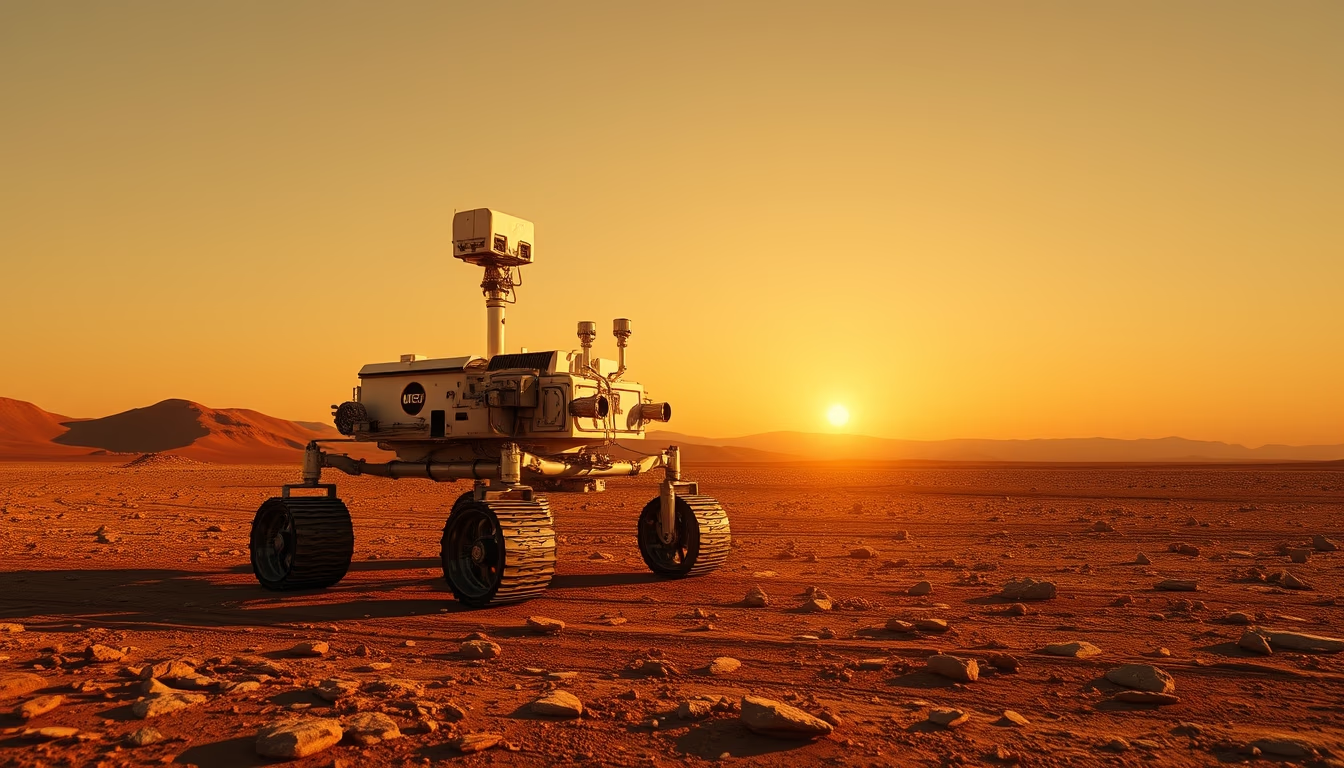
Robotic vehicles explore the Martian surface, collecting geological data and images that reveal the history of the red planet.
About this subject
Rovers like NASA's Perseverance and Curiosity are mobile laboratories that have been analyzing Martian rocks, soil, and atmosphere since 2012 and 2021, respectively. Perseverance, for instance, landed in Jezero Crater, an ancient lake, to search for signs of past microbial life. It collects samples that future missions will bring back to Earth.
These vehicles are equipped with scientific instruments such as high-resolution cameras, spectrometers, and drills to bore into the surface. The Opportunity rover, which operated from 2004 to 2018, traveled over 45 km, far exceeding its 90-day life expectancy. Meanwhile, China's Zhurong rover, part of the Tianwen-1 mission, has been exploring Utopia Planitia since 2021, focusing on subsurface ice and soil composition.
The Martian surface features craters, dunes, dry riverbeds, and mountains like Mount Sharp in the center of Gale Crater. Extreme conditions, with temperatures dropping to -125°C at night and global dust storms, require rovers to be robust and autonomous, capable of making simple decisions without direct communication with Earth.
Frequently Asked Questions
How many rovers have operated on Mars?
As of 2024, six rovers have successfully operated on Mars: Sojourner (1997), Spirit and Opportunity (2004), Curiosity (2012), Perseverance (2021), and China's Zhurong (2021).
What do rovers do with the collected samples?
Perseverance collects and stores samples in sealed tubes, which will be retrieved by a joint NASA-ESA mission planned for the 2030s and brought back to Earth for analysis.
How do rovers communicate with Earth?
They use high-gain antennas to transmit data directly or via orbiters like the Mars Reconnaissance Orbiter, which relay signals to NASA's Deep Space Network.
Direct URL
https://pub-c7d6a6ea828543ac903a74a341ccb2e1.r2.dev/imagens/mars-rover-surface-cinematic-wide-shot-v2.avifHow to credit
Include a visible link back to UtilizAí. Copy one of the snippets below:
<a href="https://xn--utiliza-eza.com/en/midia/imagens/mars-rover-surface-cinematic-wide-shot-v2">Mars rover surface</a> by <a href="https://xn--utiliza-eza.com">UtilizAí</a>, licensed under <a href="https://creativecommons.org/licenses/by/4.0/">CC BY 4.0</a>.
[Mars rover surface](https://xn--utiliza-eza.com/en/midia/imagens/mars-rover-surface-cinematic-wide-shot-v2) by [UtilizAí](https://xn--utiliza-eza.com), CC BY 4.0
License: CC-BY-4.0