Olympic stadium empty
1344×768 · AVIF · CC BY 4.0
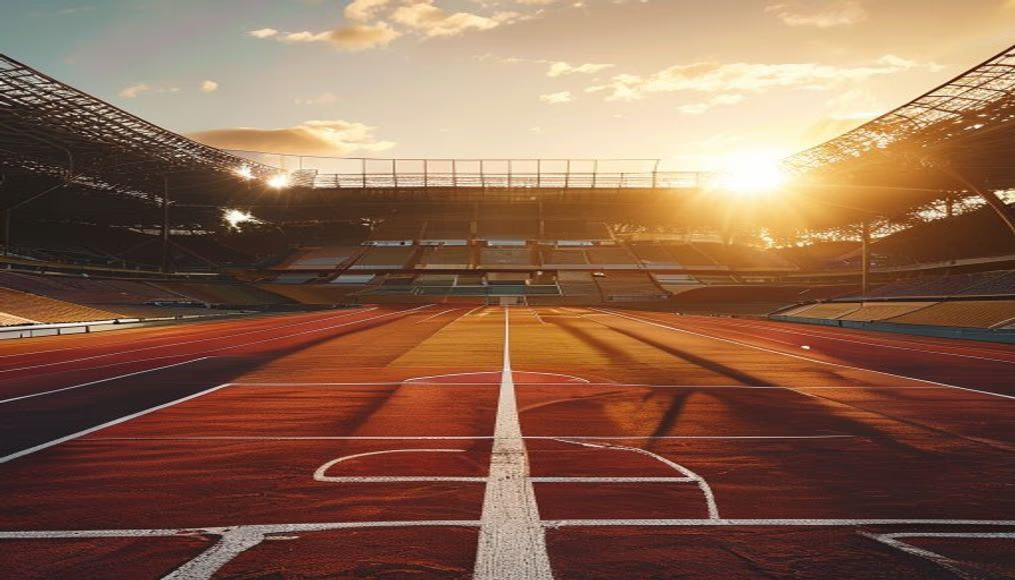
Empty Olympic stadiums, such as Maracanã and the Bird's Nest, symbolize the challenge of maintenance and legacy after the Games.
About this subject
Olympic stadiums are built to host massive events, but many face a dilemma after the Games: underuse and high maintenance costs. Maracanã in Rio de Janeiro, venue for the 2016 Olympics, had its capacity reduced and suffers from conservation issues. Beijing National Stadium, known as the Bird's Nest, hosted the 2008 Games and now attracts tourists, but still incurs millions in annual expenses. Stadiums like the Olympic Stadium in Athens, built for 2004, fell into disuse and became symbols of waste. The architecture of these stadiums often incorporates iconic elements, such as the Bird's Nest's steel structure designed by Herzog & de Meuron. In Brazil, the National Stadium of Brasília, used in the 2014 World Cup, is an example of high costs and low utilization. Maintaining grass fields, drainage systems, and lighting consumes significant resources. In contrast, some stadiums, like London 2012's, were planned to be dismantled or downsized; the London Olympic Stadium now has a smaller capacity. Financial sustainability is a key topic in Olympic planning, with projects seeking multiple uses like concerts and local sports events. The phenomenon of empty stadiums reflects the difficulty of balancing grandeur and post-event functionality.
Frequently Asked Questions
Why do Olympic stadiums become empty after the Games?
Many stadiums are oversized for local demand, leading to high maintenance costs and lack of regular events. Examples include Athens 2004 and Rio 2016.
What is the most expensive Olympic stadium ever built?
The Tokyo Olympic Stadium, renovated for 2020, cost about 1.4 billion USD. The Bird's Nest in Beijing cost approximately 423 million USD.
Are there solutions to avoid abandonment of Olympic stadiums?
Yes, legacy planning with mixed uses, capacity reduction, partial dismantling, or conversion into parks. London 2012 and Sydney 2000 are examples of successful reuse.
Direct URL
https://pub-c7d6a6ea828543ac903a74a341ccb2e1.r2.dev/imagens/olympic-stadium-empty-travel-photography-v10.avifHow to credit
Include a visible link back to UtilizAí. Copy one of the snippets below:
<a href="https://xn--utiliza-eza.com/en/midia/imagens/olympic-stadium-empty-travel-photography-v10">Olympic stadium empty</a> by <a href="https://xn--utiliza-eza.com">UtilizAí</a>, licensed under <a href="https://creativecommons.org/licenses/by/4.0/">CC BY 4.0</a>.
[Olympic stadium empty](https://xn--utiliza-eza.com/en/midia/imagens/olympic-stadium-empty-travel-photography-v10) by [UtilizAí](https://xn--utiliza-eza.com), CC BY 4.0
License: CC-BY-4.0