Marimba xylophone
1344×768 · AVIF · CC BY 4.0
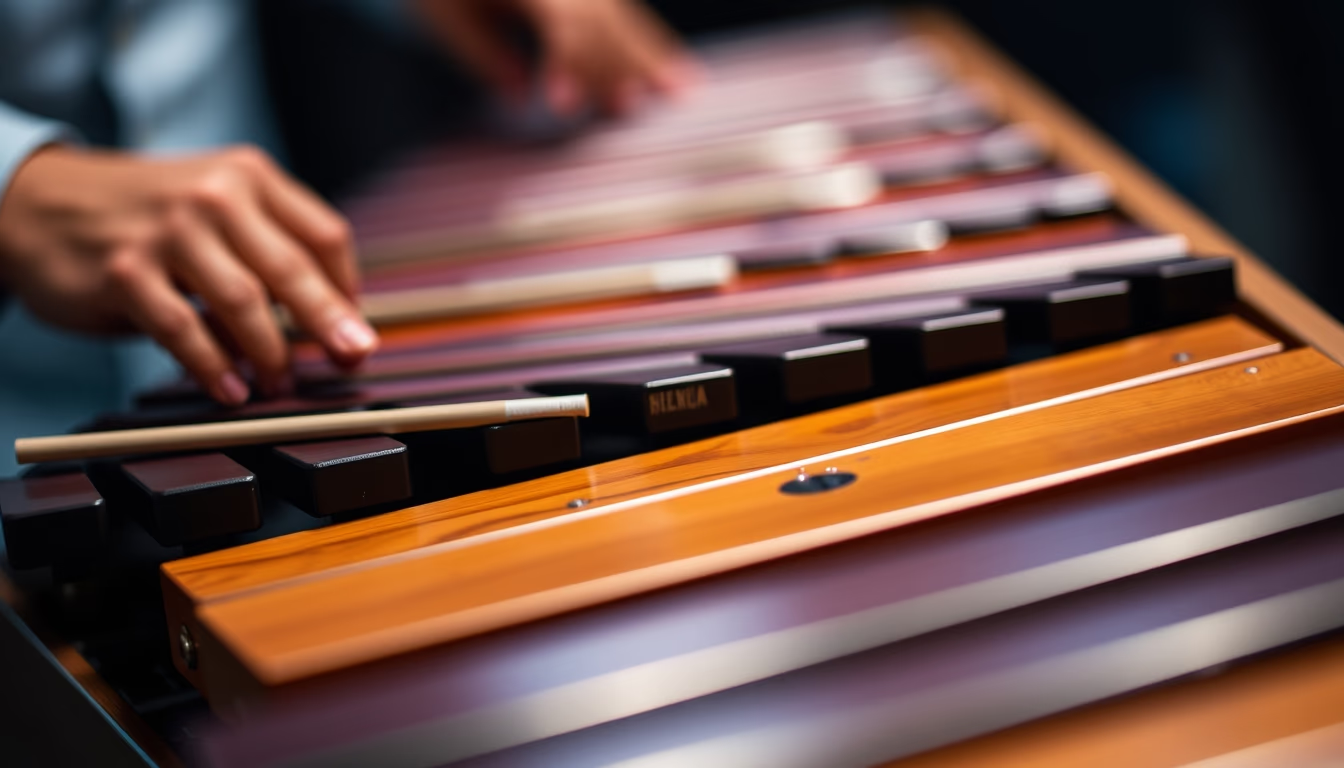
The marimba is a melodic percussion instrument with tuned wooden bars struck with mallets, found in various cultures and musical genres worldwide.
About this subject
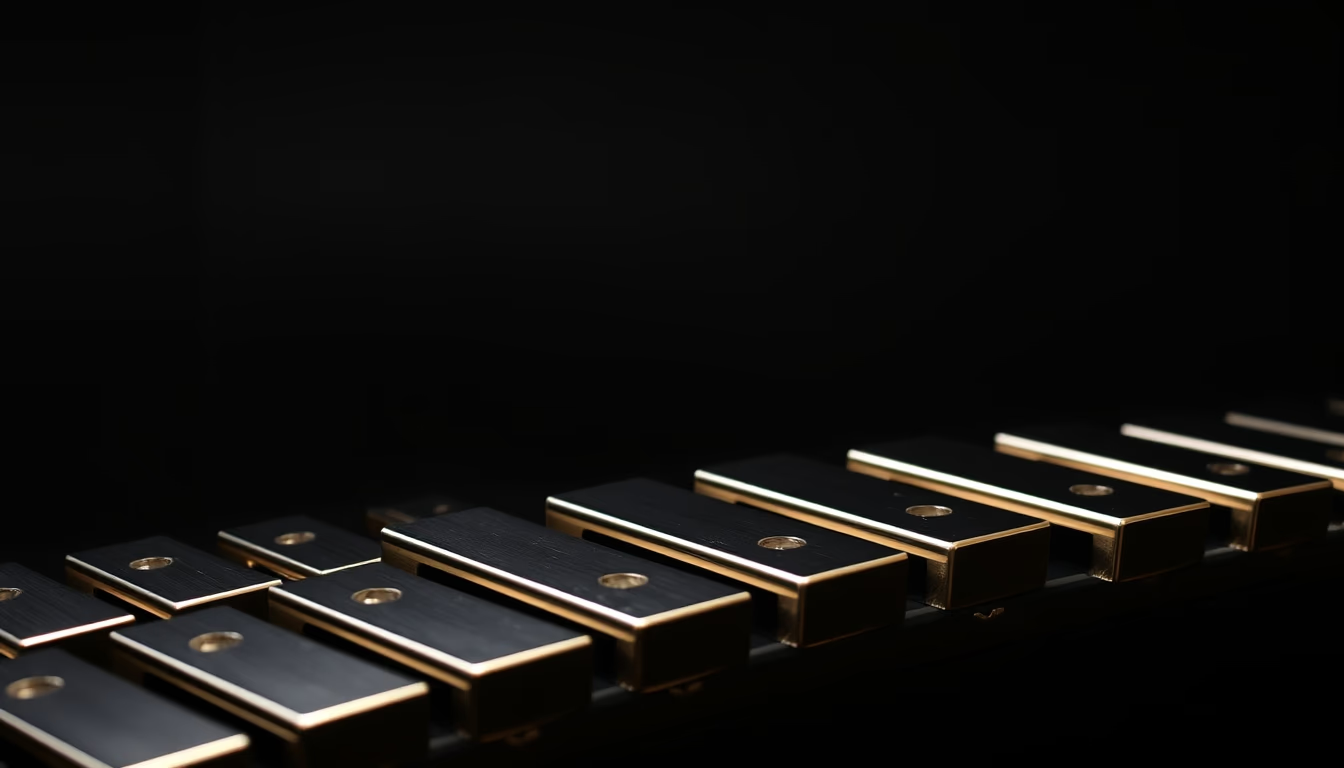
The marimba and the xylophone belong to the same family of melodic percussion instruments, but they differ in construction and tone. The xylophone has narrower bars and produces a brighter, more brittle sound, whereas the marimba features wider bars, tubular resonators, and a deeper, fuller, more rounded timbre. The marimba originated in Africa, where similar instruments were brought to Central America by enslaved people. There, it evolved, with resonators first made from gourds and later from metal, becoming a national symbol of Guatemala and Honduras.
Construction of the marimba uses hardwoods like rosewood, padauk, or grenadilla. The bars are tuned by carving the underside, adjusting thickness to achieve the correct pitch. Tubular resonators made of metal or PVC amplify and enrich the sound. The instrument typically spans three to five octaves, and mallets vary in hardness: rubber, yarn, cord, or wood heads, each producing different timbres. The four-mallet technique allows chords and greater virtuosity.
Culturally, the marimba is central to Central American folk music and is also used in jazz, contemporary classical, and pop. Composers such as Steve Reich, Keiko Abe, and Ney Rosauro have written significant works for it. In Brazil, the marimba is less common but appears in symphony orchestras and percussion ensembles. An interesting fact: the marimba can be chromatic or diatonic, and tuning differs by tradition, Western classical marimbas use equal temperament, while traditional Guatemalan marimbas have their own tuning system.
Frequently Asked Questions
What is the difference between a marimba and a xylophone?
The marimba has wider bars and tubular resonators, producing a deeper, richer sound. The xylophone has narrower bars and a brighter, more piercing tone. The marimba typically has a larger range (up to 5 octaves) and uses softer mallets.
How many octaves does a traditional marimba have?
Common marimbas have 4 octaves (chromatic), but models with 3, 4.3, or 5 octaves exist. Professional concert marimbas often feature 4.3 or 5 octaves.
What material are marimba bars made of?
The bars are made from hardwoods like rosewood, padauk, or grenadilla. Dense, resonant woods are preferred to produce a rich, sustained tone.
Direct URL
https://pub-c7d6a6ea828543ac903a74a341ccb2e1.r2.dev/imagens/marimba-xylophone-macro-closeup-p2.avifHow to credit
Include a visible link back to UtilizAí. Copy one of the snippets below:
<a href="https://xn--utiliza-eza.com/en/midia/imagens/marimba-xylophone-macro-closeup-p2">Marimba xylophone</a> by <a href="https://xn--utiliza-eza.com">UtilizAí</a>, licensed under <a href="https://creativecommons.org/licenses/by/4.0/">CC BY 4.0</a>.
[Marimba xylophone](https://xn--utiliza-eza.com/en/midia/imagens/marimba-xylophone-macro-closeup-p2) by [UtilizAí](https://xn--utiliza-eza.com), CC BY 4.0
License: CC-BY-4.0