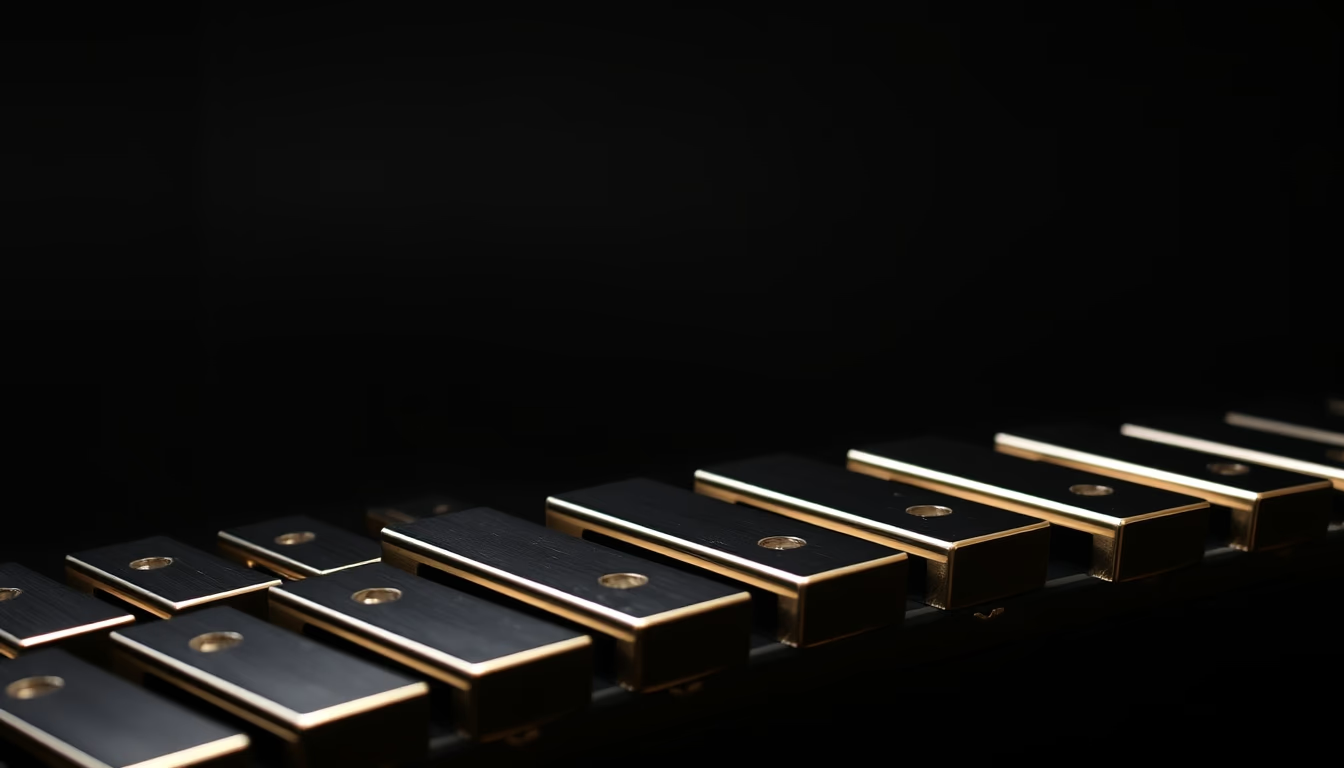
Mandolin antique wooden
1344×768 · AVIF · CC BY 4.0

The mandolin is a plucked string instrument of Italian origin, with a pear-shaped body and a solid wood soundboard.
About this subject
The mandolin, a plucked string instrument with origins in 17th-century Italy, evolved from the Renaissance mandola. Its typical construction features a pear-shaped body, often made from woods like maple, spruce, and ebony. The soundboard, usually solid spruce, is arched to project the instrument's characteristic bright, penetrating tone. The neck is fretted and holds eight strings arranged in four paired courses (G, D, A, E), tuned like a violin.
Historically, the Neapolitan mandolin, with its deep bowl back and C-shaped soundholes, became the standard by the 19th century. The instrument was popularized in classical music by composers such as Vivaldi, Mozart, and Beethoven, who wrote dedicated works. In the 20th century, the mandolin gained prominence in American bluegrass, especially through Bill Monroe, who made it a central instrument of the genre. It is also fundamental in Irish folk music and mandolin orchestras.
The wood used in construction directly influences the timbre. Antique mandolins, such as those made by Giuseppe Vinaccia or the famous Gibson line (F-style models), are highly valued by collectors and musicians. The aging of the wood, combined with artisanal construction techniques, gives these instruments a unique sonority with notable projection and sustain. Preserving antique mandolins involves careful control of humidity and temperature, along with periodic maintenance of the peghead and bridge.
Interestingly, the mandolin is one of the few instruments that uses an alternating picking motion (down-up) for each note, allowing extremely rapid execution. This technique, called tremolo, is a hallmark of the instrument, enabling continuous sustained notes. On antique mandolins, patina and wear tell stories of performances and travels, making each piece a testament to musical tradition.
Frequently Asked Questions
What is the difference between a Neapolitan mandolin and a flatback mandolin?
The Neapolitan mandolin has a rounded bowl back and C-shaped soundholes, while the flatback mandolin has a flat body, similar to a guitar, with oval or F-holes. The Neapolitan produces a fuller, more projecting sound; the flatback is more common in bluegrass.
How can you identify the age of an antique mandolin?
Examine the construction: 19th-century mandolins often have wooden pegs, a shorter neck, and internal labels. Wood wear, patina, and soundhole shape (C or F) help date it. Brands like Gibson, Vinaccia, or Embergher are key references.
What is the standard tuning of a mandolin?
Standard tuning is in fifths: G2, D3, A3, E4 (low to high), identical to the violin. Each pair of strings is tuned in unison.
Direct URL
https://pub-c7d6a6ea828543ac903a74a341ccb2e1.r2.dev/imagens/mandolin-antique-wooden-tilt-shift-miniature-p0.avifHow to credit
Include a visible link back to UtilizAí. Copy one of the snippets below:
<a href="https://xn--utiliza-eza.com/en/midia/imagens/mandolin-antique-wooden-tilt-shift-miniature-p0">Mandolin antique wooden</a> by <a href="https://xn--utiliza-eza.com">UtilizAí</a>, licensed under <a href="https://creativecommons.org/licenses/by/4.0/">CC BY 4.0</a>.
[Mandolin antique wooden](https://xn--utiliza-eza.com/en/midia/imagens/mandolin-antique-wooden-tilt-shift-miniature-p0) by [UtilizAí](https://xn--utiliza-eza.com), CC BY 4.0
License: CC-BY-4.0