Mandolin antique wooden
1344×768 · AVIF · CC BY 4.0
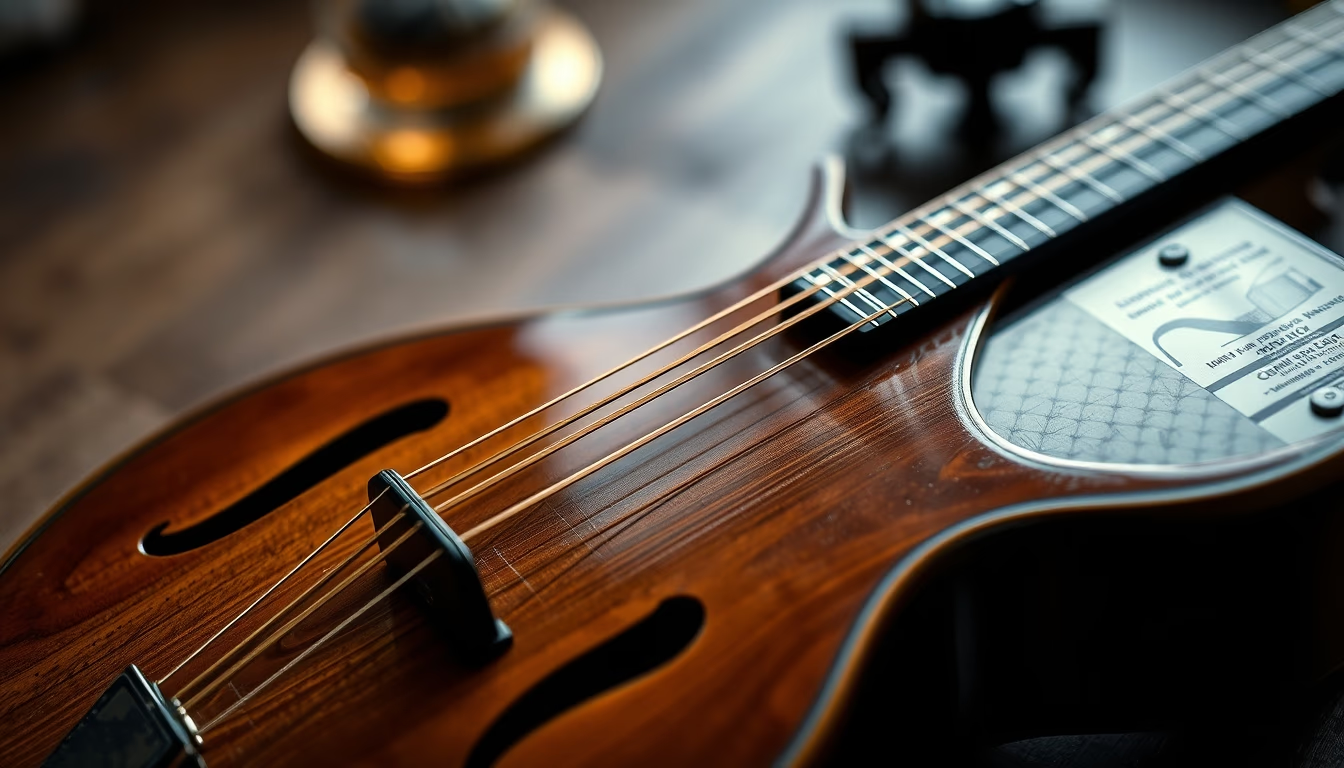
The antique wooden mandolin, with its teardrop-shaped body and arched top, is a plucked string instrument dating back to 18th-century Italy.
About this subject
The mandolin originated in 18th-century Italy, particularly Naples, evolving from earlier lute-like instruments. Modern versions were standardized by the Vinaccia family, leading to the Neapolitan bowl-back model. Its bright, penetrating tone made it a staple in Italian folk music, bluegrass, classical compositions, and Brazilian choro.
Crafting an antique mandolin involves selecting specific woods: spruce or cedar for the soundboard, maple or rosewood for the back and ribs, and mahogany or walnut for the neck. The bowl-back design consists of thin glued strips of wood, creating a resonant, warm timbre. In contrast, the flat-back style, popularized by Gibson in the early 1900s, delivers a fuller sound favored in bluegrass.
Historical makers such as Luigi Embergher, Raffaele Calace, and Gibson (F-5 model) are highly collectible. Antique mandolins can fetch tens of thousands of dollars depending on condition and provenance. The instrument also played a key role in Brazilian choro, a genre that flourished in Rio de Janeiro with virtuosos like Jacob do Bandolim.
When acquiring an antique mandolin, inspecting the soundboard for cracks, checking string action, and verifying the integrity of the bowl-back structure are crucial. Well-preserved examples offer not just a distinct sound but a tangible link to eighteenthnineteenth-century musical heritage.
Frequently Asked Questions
What is the difference between a Neapolitan mandolin and a flat-back mandolin?
The Neapolitan mandolin has a curved, bowl-shaped back made of thin strips of wood, producing a brighter, more resonant tone. The flat-back mandolin, popularized by Gibson, has a flat back, offering a fuller sound with more sustain, preferred in bluegrass and folk music.
What woods are commonly used in antique mandolins?
The soundboard is typically spruce or cedar. The back and sides are made of maple or rosewood. The neck is mahogany or walnut. These woods provide resonance and durability.
How can I identify a valuable antique mandolin?
Look for labels from renowned makers like Gibson, Luigi Embergher, Raffaele Calace, or Vega. Check for structural integrity: no cracks in the soundboard, straight neck, and working tuning pegs. Instruments with original labels and good sound quality are most valuable.
Direct URL
https://pub-c7d6a6ea828543ac903a74a341ccb2e1.r2.dev/imagens/mandolin-antique-wooden-fine-art-photography-p7.avifHow to credit
Include a visible link back to UtilizAí. Copy one of the snippets below:
<a href="https://xn--utiliza-eza.com/en/midia/imagens/mandolin-antique-wooden-fine-art-photography-p7">Mandolin antique wooden</a> by <a href="https://xn--utiliza-eza.com">UtilizAí</a>, licensed under <a href="https://creativecommons.org/licenses/by/4.0/">CC BY 4.0</a>.
[Mandolin antique wooden](https://xn--utiliza-eza.com/en/midia/imagens/mandolin-antique-wooden-fine-art-photography-p7) by [UtilizAí](https://xn--utiliza-eza.com), CC BY 4.0
License: CC-BY-4.0