Mandolin antique wooden
1344×768 · AVIF · CC BY 4.0
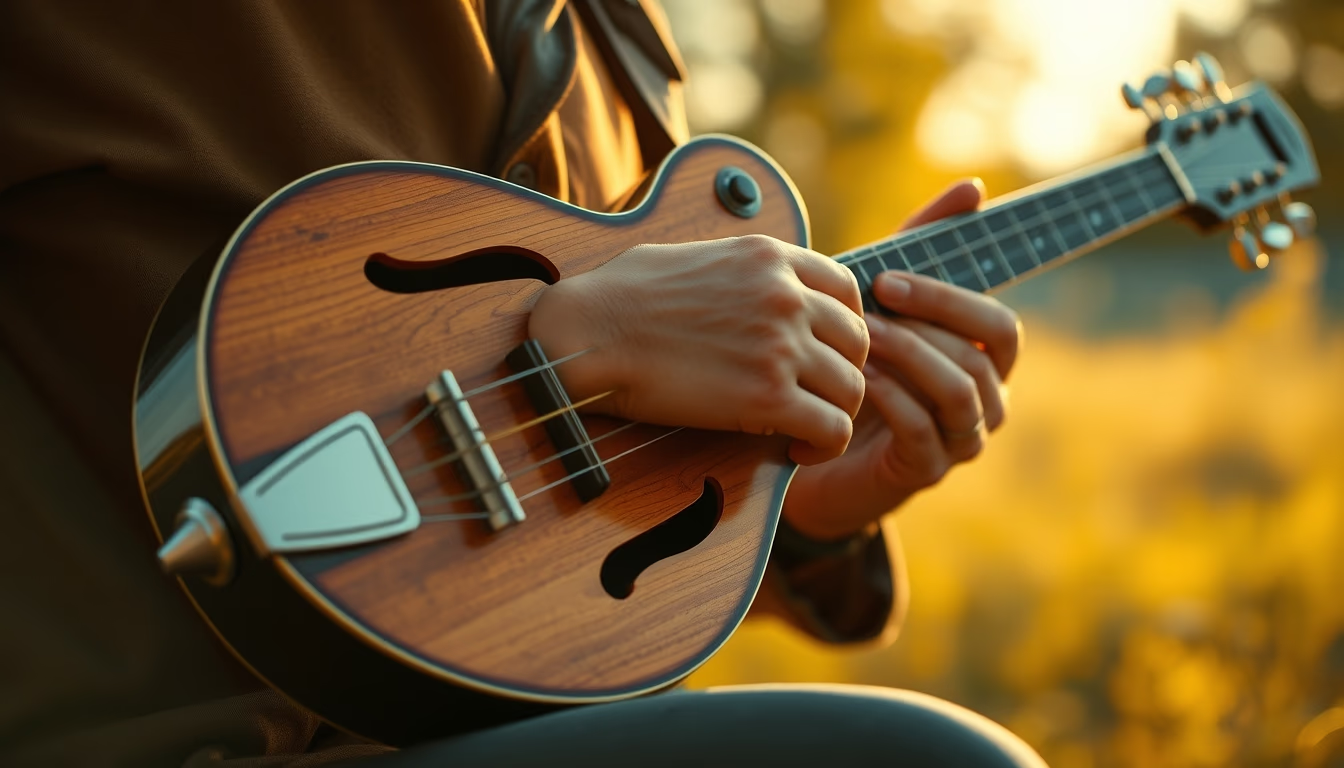
Antique wooden mandolin, a plucked string instrument with a pear-shaped body and rich handcrafted details.
About this subject
The mandolin is a plucked string instrument that originated in Italy during the 18th century, evolving from predecessors like the mandola. Its classic pear-shaped body, also known as bowlback, is carved from precious woods such as rosewood, maple, and spruce, producing a bright, penetrating tone. Antique mandolins, especially those made by Neapolitan luthiers, are prized for their handmade construction, with finely carved soundboards and ornaments like ivory purfling and intricately carved rosettes.
Aged wood contributes to the instrument's unique sound, as natural drying over decades alters its acoustic properties. Many antique mandolins feature bone or metal tuning pegs, ebony fingerboards, and silver or brass frets. During the 19th century, the mandolin gained popularity across Europe and the United States, being adopted in chamber orchestras and folk music. The bowlback model gradually gave way to the flatback, common in American bluegrass, but antique specimens are coveted by collectors and musicians seeking the original sound of Italian and Portuguese traditions.
Interestingly, the mandolin was one of the first instruments recorded on phonograph cylinders in the early 20th century. Historic manufacturers like Gibson (with the F-5 model designed by Lloyd Loar) and Vinaccia in Naples produced instruments that are now considered works of art. Preserving these antique wooden mandolins requires careful control of humidity and temperature, as old wood is more prone to cracking. An antique wooden mandolin is not just a musical tool; it is a testament to the luthier's craft and the culture of bygone eras.
Frequently Asked Questions
What is the difference between an antique and a modern mandolin?
Antique mandolins often have a bowlback (pear-shaped) body and are made with aged woods, giving a softer, more resonant tone. Modern ones may have a flatback body and use synthetic materials, with more standardized construction.
Which woods are typical in antique mandolins?
Common woods include rosewood for the body, maple for the neck, and spruce for the soundboard. Ebony is used for the fretboard due to its hardness.
How can one verify the authenticity of an antique mandolin?
Check for manufacturer labels, serial numbers, handcrafted details like purfling and rosettes, and natural wood aging. Original components and characteristic sound are key indicators.
Direct URL
https://pub-c7d6a6ea828543ac903a74a341ccb2e1.r2.dev/imagens/mandolin-antique-wooden-cinematic-wide-shot-p2.avifHow to credit
Include a visible link back to UtilizAí. Copy one of the snippets below:
<a href="https://xn--utiliza-eza.com/en/midia/imagens/mandolin-antique-wooden-cinematic-wide-shot-p2">Mandolin antique wooden</a> by <a href="https://xn--utiliza-eza.com">UtilizAí</a>, licensed under <a href="https://creativecommons.org/licenses/by/4.0/">CC BY 4.0</a>.
[Mandolin antique wooden](https://xn--utiliza-eza.com/en/midia/imagens/mandolin-antique-wooden-cinematic-wide-shot-p2) by [UtilizAí](https://xn--utiliza-eza.com), CC BY 4.0
License: CC-BY-4.0