Louvre pyramid glass
1344×768 · AVIF · CC BY 4.0
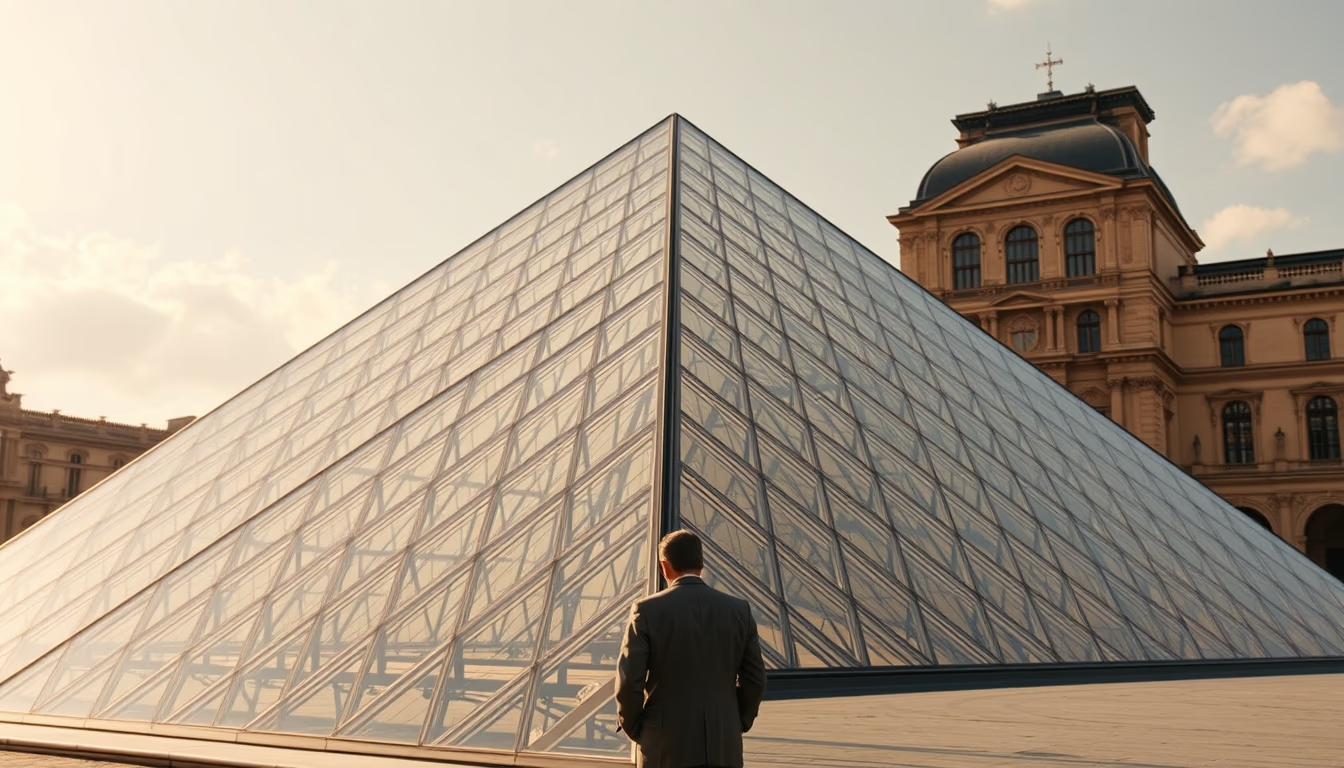
The Louvre Pyramid in Paris is an iconic glass and metal structure serving as the museum's main entrance. Designed by architect I.M. Pei, it opened in 1989.
About this subject
The Louvre Pyramid is a large glass and metal structure located in the main courtyard of the Louvre Museum in Paris. Commissioned by French President François Mitterrand in 1983 and designed by Chinese-American architect I.M. Pei, it was inaugurated on March 29, 1989, as part of the Grand Louvre project to modernize and expand the museum. Standing 21.6 meters tall with a square base of 35 meters on each side, the pyramid comprises 603 rhombus-shaped and 70 triangular glass panes supported by a framework of stainless steel and aluminum.
The choice of a glass pyramid for a Renaissance palace initially sparked controversy. Critics deemed the futuristic design an affront to the historical architecture of the Louvre. However, Pei argued that the glass transparency would allow the pyramid to not compete with the palace but instead enhance natural light in the underground lobby. Over time, the pyramid became an iconic symbol of Paris and one of the most photographed structures in the world, overcoming initial resistance.
Functionally, the pyramid serves as the main entrance to the Louvre, leading visitors into a vast underground lobby that provides access to the museum's three wings. Light filtering through the glass illuminates the entrance hall, reducing the need for artificial lighting during the day. The structure also includes an inverted pyramid (La Pyramide Inversée) in the Carrousel du Louvre underground shopping mall, acting as a skylight. The main pyramid underwent renovations in 2017 to improve energy efficiency and visitor experience.
Frequently Asked Questions
Why was the Louvre Pyramid built?
The pyramid was built to serve as the new main entrance to the Louvre Museum, streamlining visitor flow and providing natural light to the underground lobby. It was part of the Grand Louvre project to modernize the museum.
How many glass panes does the Louvre Pyramid have?
The pyramid has 603 rhombus-shaped and 70 triangular glass panes, totaling 673 panels. The glass is laminated and slightly reflective for thermal control.
Who designed the Louvre Pyramid?
Chinese-American architect I.M. Pei designed the pyramid, chosen by President François Mitterrand. Pei also designed the inverted pyramid in the Carrousel du Louvre.
Direct URL
https://pub-c7d6a6ea828543ac903a74a341ccb2e1.r2.dev/imagens/louvre-pyramid-glass-national-geographic-style-p0.avifHow to credit
Include a visible link back to UtilizAí. Copy one of the snippets below:
<a href="https://xn--utiliza-eza.com/en/midia/imagens/louvre-pyramid-glass-national-geographic-style-p0">Louvre pyramid glass</a> by <a href="https://xn--utiliza-eza.com">UtilizAí</a>, licensed under <a href="https://creativecommons.org/licenses/by/4.0/">CC BY 4.0</a>.
[Louvre pyramid glass](https://xn--utiliza-eza.com/en/midia/imagens/louvre-pyramid-glass-national-geographic-style-p0) by [UtilizAí](https://xn--utiliza-eza.com), CC BY 4.0
License: CC-BY-4.0