Louvre pyramid glass
1344×768 · AVIF · CC BY 4.0
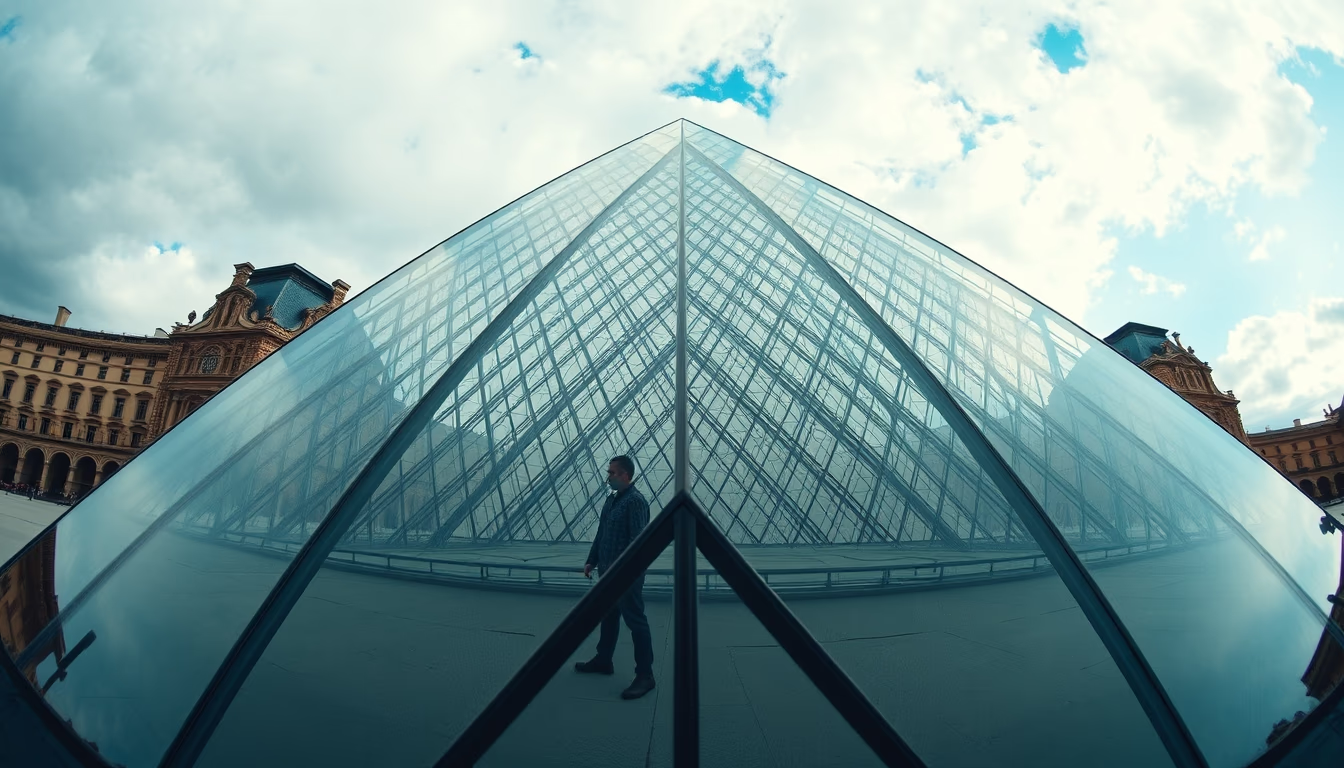
The Louvre Pyramid, designed by I. M. Pei, is an iconic glass and metal landmark in the heart of Paris, France.
About this subject
The Louvre Pyramid, inaugurated in 1989, was the centerpiece of the Grand Louvre project, aimed at modernizing and expanding the world's most visited museum. Designed by Chinese-American architect I. M. Pei, the structure initially generated intense controversy, as many Parisians considered the modernist design a clash with the Renaissance architecture of the palace. Today, it is one of the most recognizable symbols of Paris.
The pyramid consists of 603 rhombus-shaped and 70 triangular glass panels, totaling 673 panes, mounted on a steel and aluminum frame. The choice of laminated glass and lightweight structure allowed for a transparent entrance that does not obstruct views of the historic surrounding buildings. Night lighting further enhances its beauty, making it a popular meeting point.
Culturally, the pyramid serves as the main entrance to the museum, receiving millions of visitors annually. Its image has been immortalized in films such as The Da Vinci Code and countless photographs. The fish-eye or wide-angle lens often used in photographic records emphasizes the grandeur and geometric lines of the structure, creating a sense of dynamism and depth.
Interestingly, the pyramid is not alone in the courtyard: there are three smaller pyramids around it, which function as skylights for the underground spaces. Pei's design also includes an inverted pyramid in the Carrousel du Louvre shopping mall, creating a play of light and reflections that complements the ensemble.
Frequently Asked Questions
Who designed the Louvre Pyramid?
The pyramid was designed by Chinese-American architect I. M. Pei, a Pritzker Prize winner, and inaugurated in 1989.
How many glass panels make up the pyramid?
The pyramid consists of 673 glass panels: 603 rhombus-shaped and 70 triangular, mounted on a steel frame.
Why was the pyramid controversial when built?
Many Parisians criticized the modernist design as clashing with the historic Louvre architecture. Over time, it became a beloved icon.
Direct URL
https://pub-c7d6a6ea828543ac903a74a341ccb2e1.r2.dev/imagens/louvre-pyramid-glass-fish-eye-wide-angle-p8.avifHow to credit
Include a visible link back to UtilizAí. Copy one of the snippets below:
<a href="https://xn--utiliza-eza.com/en/midia/imagens/louvre-pyramid-glass-fish-eye-wide-angle-p8">Louvre pyramid glass</a> by <a href="https://xn--utiliza-eza.com">UtilizAí</a>, licensed under <a href="https://creativecommons.org/licenses/by/4.0/">CC BY 4.0</a>.
[Louvre pyramid glass](https://xn--utiliza-eza.com/en/midia/imagens/louvre-pyramid-glass-fish-eye-wide-angle-p8) by [UtilizAí](https://xn--utiliza-eza.com), CC BY 4.0
License: CC-BY-4.0