Louvre pyramid glass
1344×768 · AVIF · CC BY 4.0
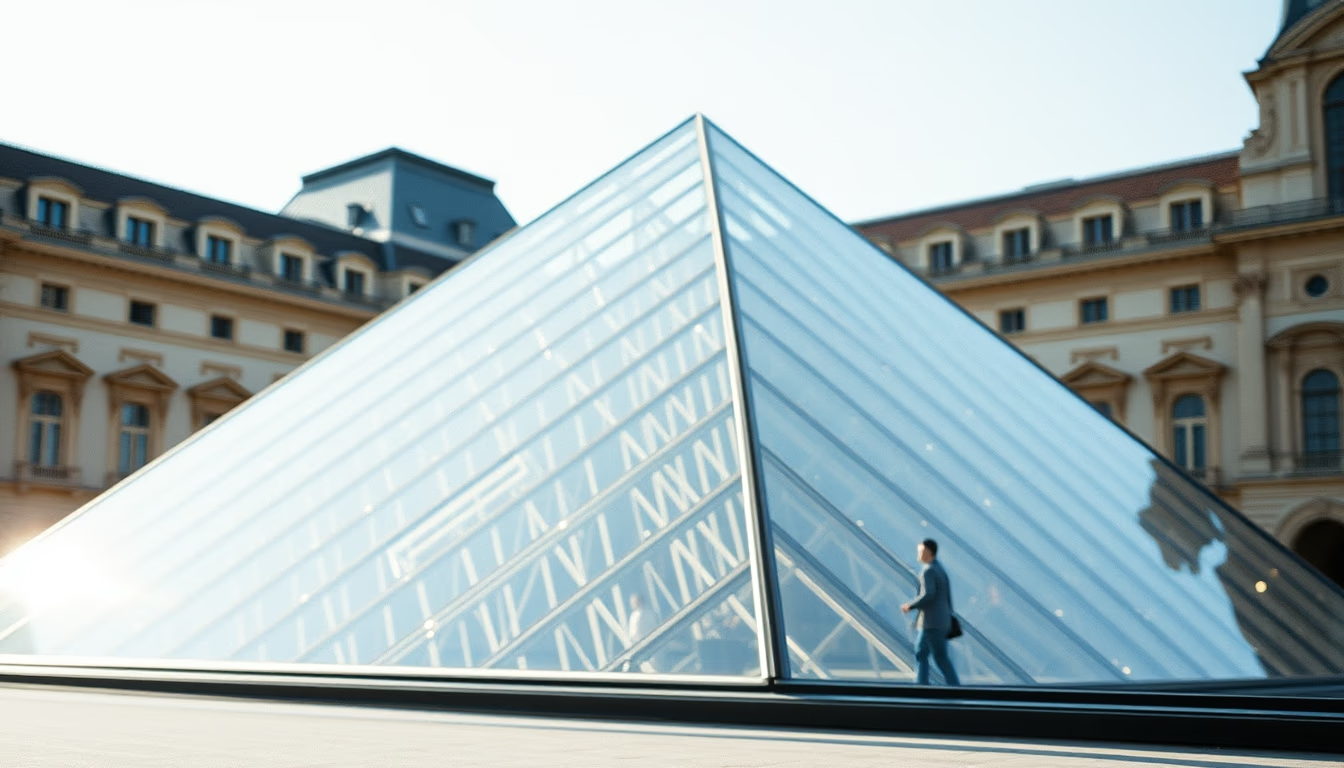
The Louvre Pyramid, made of glass and metal, is the iconic entrance to the world's largest museum, designed by I.M. Pei.
About this subject
The Louvre Pyramid, located in the center of the Cour Napoléon of the Louvre Museum in Paris, France, was inaugurated on March 30, 1989. Designed by Chinese-American architect Ieoh Ming Pei, the glass and steel structure has become one of the most recognizable landmarks in the city. The pyramid stands 21.6 meters tall with a square base of 35.4 meters on each side, composed of 603 rhombi and 70 triangles of laminated glass, totaling 673 panels, a number often mistakenly cited as 666. The glass is transparent but slightly greenish due to iron content, and stainless steel forms the supporting structure.
Before construction, the main entrance to the Louvre was modest, and the museum faced visitor flow issues. The pyramid was conceived as a large underground entrance, flooding the reception hall with natural light. The project stirred intense controversy at the time, with many French considering the modern structure an intrusion on the Renaissance palace. Pei faced criticism, but time established the pyramid as a symbol of Paris, alongside the Eiffel Tower. Today, it receives millions of visitors annually.
The pyramid is not merely aesthetic; it solves logistical problems by distributing visitor flow to the museum's three wings (Denon, Richelieu, and Sully). The underground lobby, called the Hall Napoléon, houses shops, ticket counters, and access to exhibitions. The glass structure also acts as a skylight, reducing the need for artificial lighting. Interestingly, there is a second inverted pyramid (La Pyramide Inversée) in the underground Carrousel du Louvre shopping center, functioning as a water feature and skylight.
The pyramid has been the subject of debates and appearances in pop culture, such as in the film "The Da Vinci Code" (2006), where it was erroneously depicted as having 666 glass panels, a belief Pei denied. In reality, the exact number was confirmed by the manufacturing company, Saint-Gobain. The structure required innovative assembly and maintenance techniques, being regularly cleaned to maintain transparency. In 2017, a renovation modernized the entrance, improving accessibility and visitor flow.
Frequently Asked Questions
How many glass panels does the Louvre Pyramid actually have?
The pyramid has 673 glass panels: 603 rhombi and 70 triangles. The number 666, popularized by the film The Da Vinci Code, is incorrect.
Who designed the Louvre Pyramid and why was it controversial?
Architect I.M. Pei designed the pyramid. Controversy arose because many Parisians felt a modern structure was inappropriate in the courtyard of a Renaissance palace.
What is the main function of the Louvre Pyramid?
It serves as the museum's main entrance, distributing visitors to underground wings and naturally illuminating the central lobby, while managing the flow of millions of tourists.
Direct URL
https://pub-c7d6a6ea828543ac903a74a341ccb2e1.r2.dev/imagens/louvre-pyramid-glass-documentary-photography-p10.avifHow to credit
Include a visible link back to UtilizAí. Copy one of the snippets below:
<a href="https://xn--utiliza-eza.com/en/midia/imagens/louvre-pyramid-glass-documentary-photography-p10">Louvre pyramid glass</a> by <a href="https://xn--utiliza-eza.com">UtilizAí</a>, licensed under <a href="https://creativecommons.org/licenses/by/4.0/">CC BY 4.0</a>.
[Louvre pyramid glass](https://xn--utiliza-eza.com/en/midia/imagens/louvre-pyramid-glass-documentary-photography-p10) by [UtilizAí](https://xn--utiliza-eza.com), CC BY 4.0
License: CC-BY-4.0