Lidar sensor on car roof
1344×768 · AVIF · CC BY 4.0
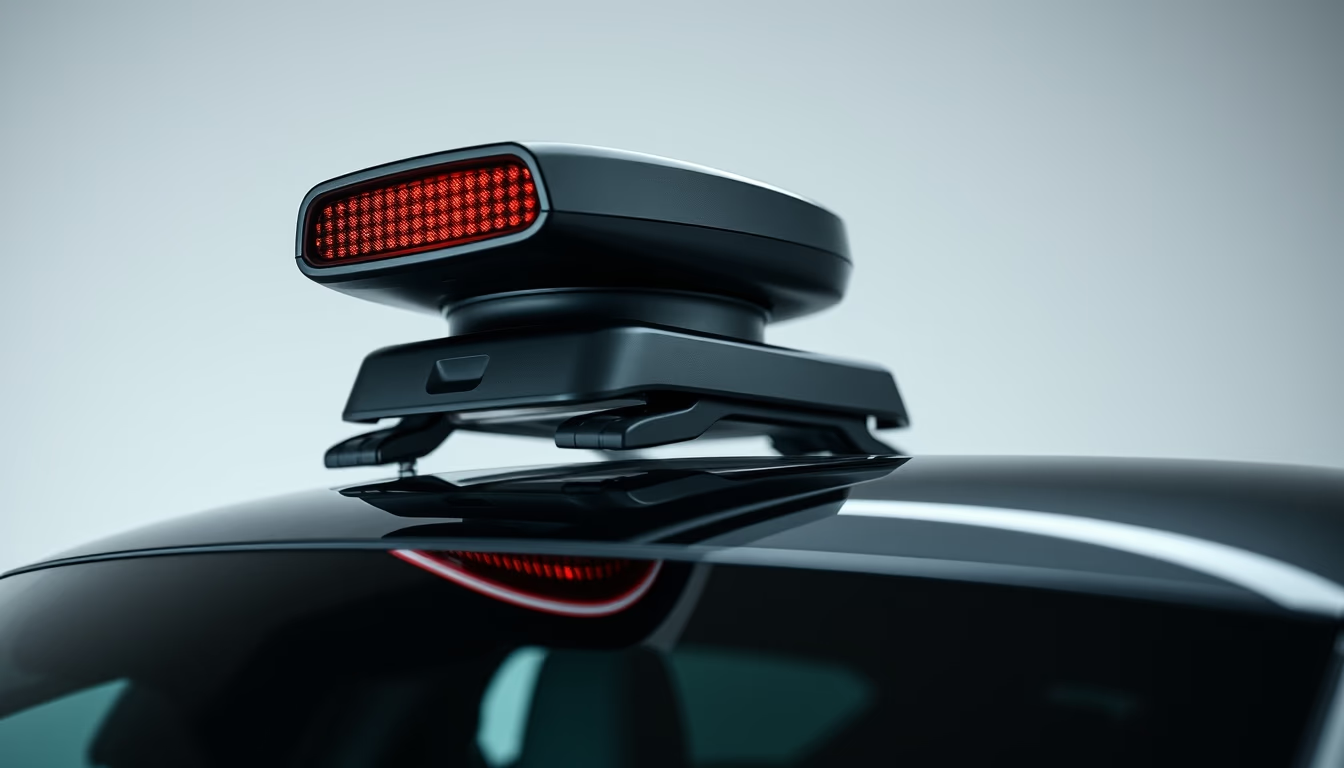
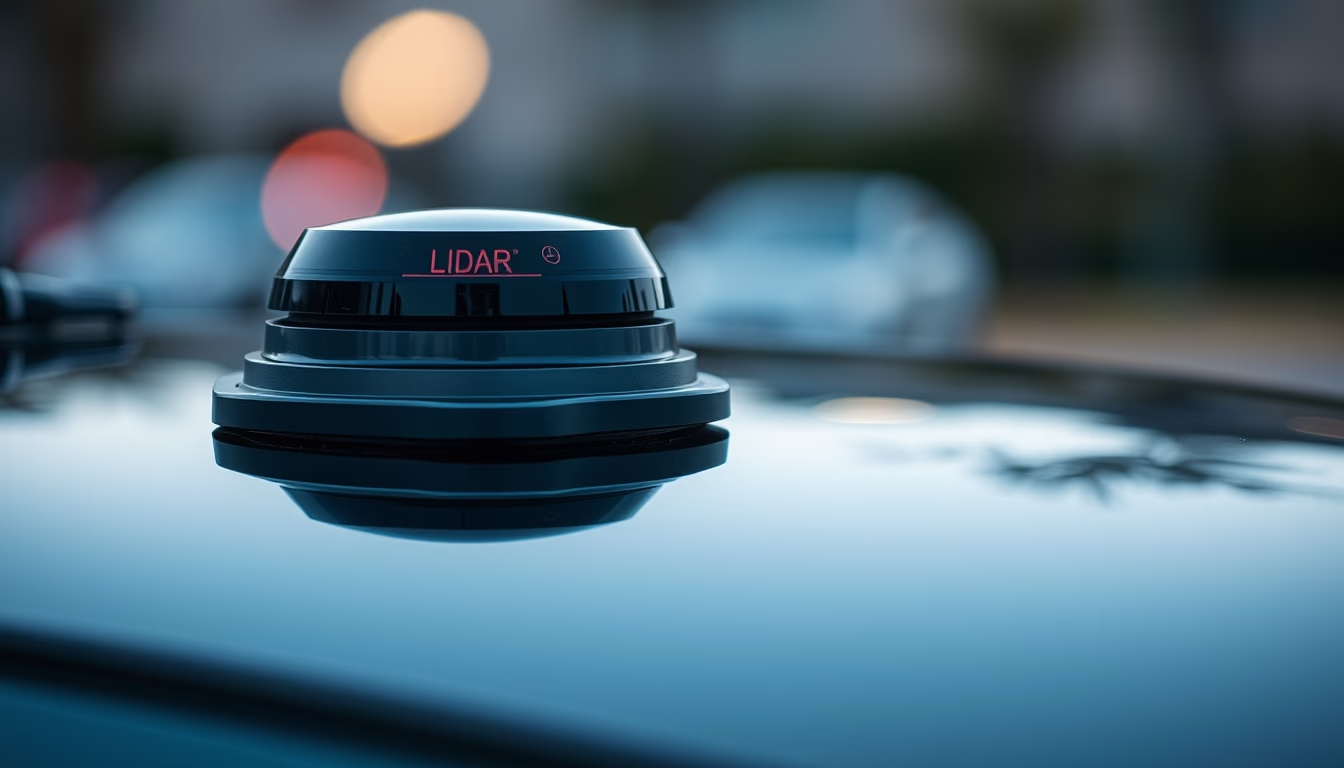
Lidar sensor on a car roof: 3D laser mapping technology essential for autonomous driving and advanced driver-assistance systems.
About this subject
Lidar (Light Detection and Ranging) is a sensor that emits laser pulses and measures their return time to create three-dimensional point clouds of the surrounding environment. Mounted on the roof of autonomous vehicles, it generates high-resolution maps in real time, enabling the car to identify objects, pedestrians, other vehicles, and the road. This technology is considered crucial for safety in autonomous driving, especially in low-light conditions where traditional cameras struggle.
Companies like Waymo, Cruise, and Baidu use lidar as a primary sensor in their autonomous taxi fleets, combining it with radar and cameras for redundancy. In 2026, the trend is toward miniaturization and cost reduction, driven by manufacturers such as Luminar, Velodyne, and Hesai. Newer models operate at 1550 nm wavelengths, which are safer for eyes and perform better in fog, albeit at higher cost.
An historical curiosity: the first automotive use of lidar was in the 2004 DARPA Grand Challenge, where robotic vehicles competed in desert terrain. Since then, the technology has evolved from heavy rotating sensors to compact solid-state units with no moving parts, improving reliability and durability. However, challenges remain, such as interference between multiple sensors in congested roads and degradation in extreme weather like heavy rain or snow. Therefore, Level 4 and 5 autonomous systems still rely on sensor fusion for safe operation.
In Brazil, while fully autonomous vehicles are still rare, lidar is already used in urban mapping projects, precision agriculture, and infrastructure inspection. The technology also appears in autonomous delivery vehicles and service robots, expanding its reach beyond automobiles.
Frequently Asked Questions
How does lidar differ from cameras and radar in autonomous vehicles?
Lidar generates 3D point clouds with high depth accuracy and works well in low light. Cameras provide texture and color but need illumination; radar measures speed and distance over long ranges but with lower angular resolution. Combining all three is common for redundancy.
Is lidar used only in autonomous cars?
No. Lidar is employed in topographic mapping, precision agriculture, archaeology, power line inspection, robotics, and security systems. Its versatility comes from the ability to generate detailed 3D models of environments.
What are lidar's limitations in adverse weather conditions?
Heavy rain, snow, and fog can attenuate or scatter laser beams, reducing range and accuracy. Sensors using 1550 nm are less affected than 905 nm units, but none are immune. That's why autonomous vehicles combine lidar with radar and cameras for safe operation.
Direct URL
https://pub-c7d6a6ea828543ac903a74a341ccb2e1.r2.dev/imagens/lidar-sensor-on-car-roof-studio-editorial-portrait-p4.avifHow to credit
Include a visible link back to UtilizAí. Copy one of the snippets below:
<a href="https://xn--utiliza-eza.com/en/midia/imagens/lidar-sensor-on-car-roof-studio-editorial-portrait-p4">Lidar sensor on car roof</a> by <a href="https://xn--utiliza-eza.com">UtilizAí</a>, licensed under <a href="https://creativecommons.org/licenses/by/4.0/">CC BY 4.0</a>.
[Lidar sensor on car roof](https://xn--utiliza-eza.com/en/midia/imagens/lidar-sensor-on-car-roof-studio-editorial-portrait-p4) by [UtilizAí](https://xn--utiliza-eza.com), CC BY 4.0
License: CC-BY-4.0