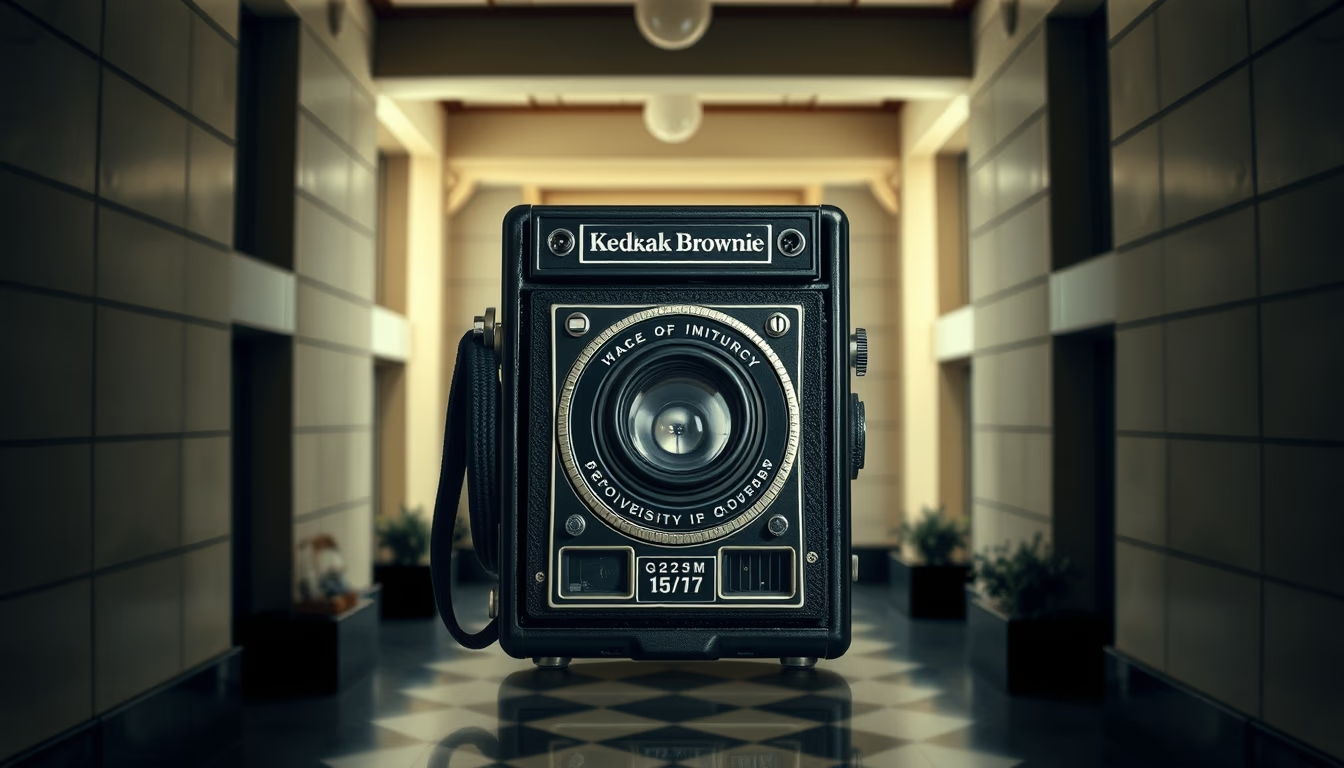
Leica m3 chrome
1344×768 · AVIF · CC BY 4.0
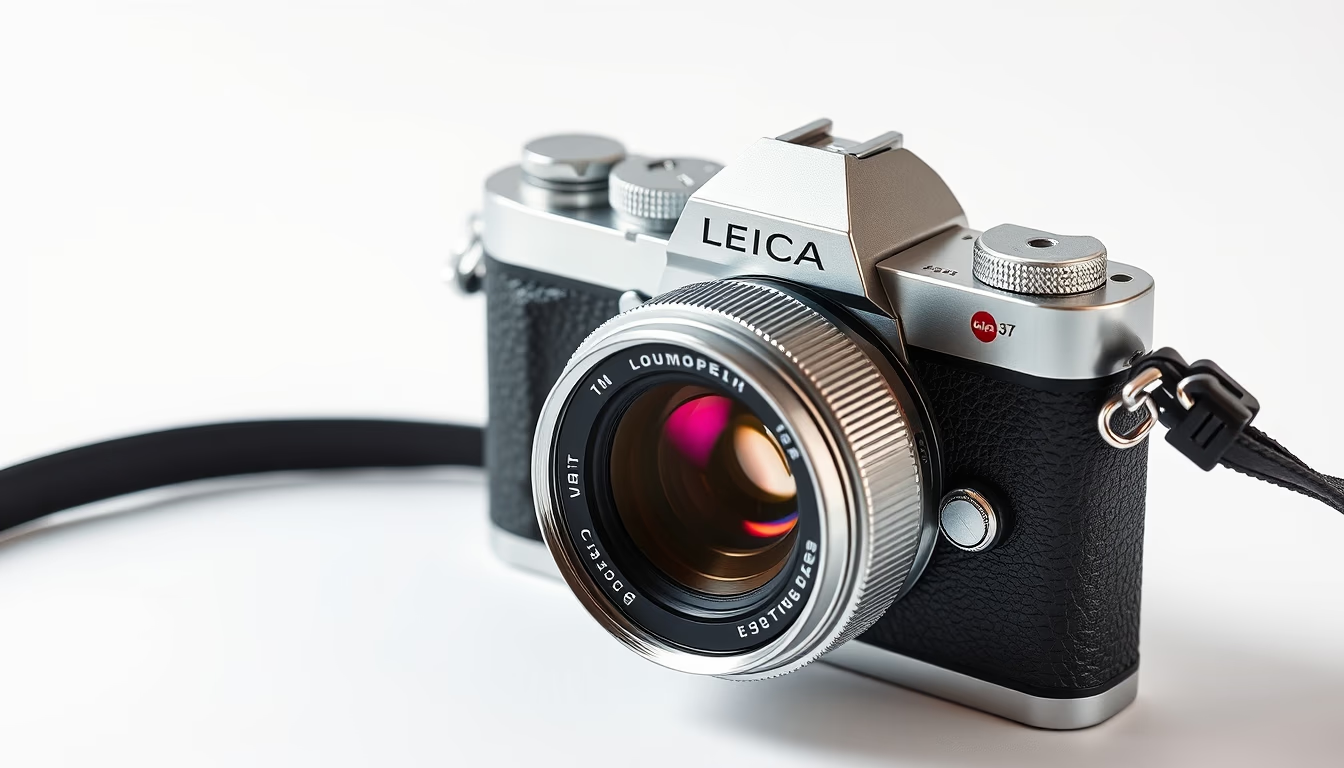
The chrome Leica M3 is a legendary rangefinder camera, launched in 1954, which revolutionized photography with its M-mount system and high-precision viewfinder.
About this subject
The Leica M3 is a landmark in photography history. Introduced in 1954 by Ernst Leitz GmbH in Wetzlar, Germany, it was the first M-series camera to adopt the M bayonet mount, replacing the old screw mount (LTM). This new system allowed faster lens changes and enabled the development of a whole line of high-performance lenses. The M3 also pioneered a rangefinder viewfinder with parallax compensation, automatically displaying frames for 50 mm, 90 mm, and 135 mm lenses when the corresponding lens was mounted.
The chrome finish of the Leica M3 is iconic, combining polished aluminum and chrome-plated steel. Its robust design and precise mechanics made it the choice of photographers like Henri Cartier-Bresson and Robert Capa. The camera was fully mechanical, requiring no battery, with a cloth focal-plane shutter operating from 1 second to 1/1000 second, plus bulb. The famous Leica M3 was produced until 1966, with approximately 224,000 units made.
A curious detail: the original M3 had no film advance lever; a knob on the bottom served this function. Later versions introduced a lever. The M3 was also the first Leica to combine the viewfinder and rangefinder into a single window, eliminating the need for separate viewfinder and rangefinder. Its precision and reliability make it one of the most coveted cameras by collectors and photographers today, with high prices at auctions.
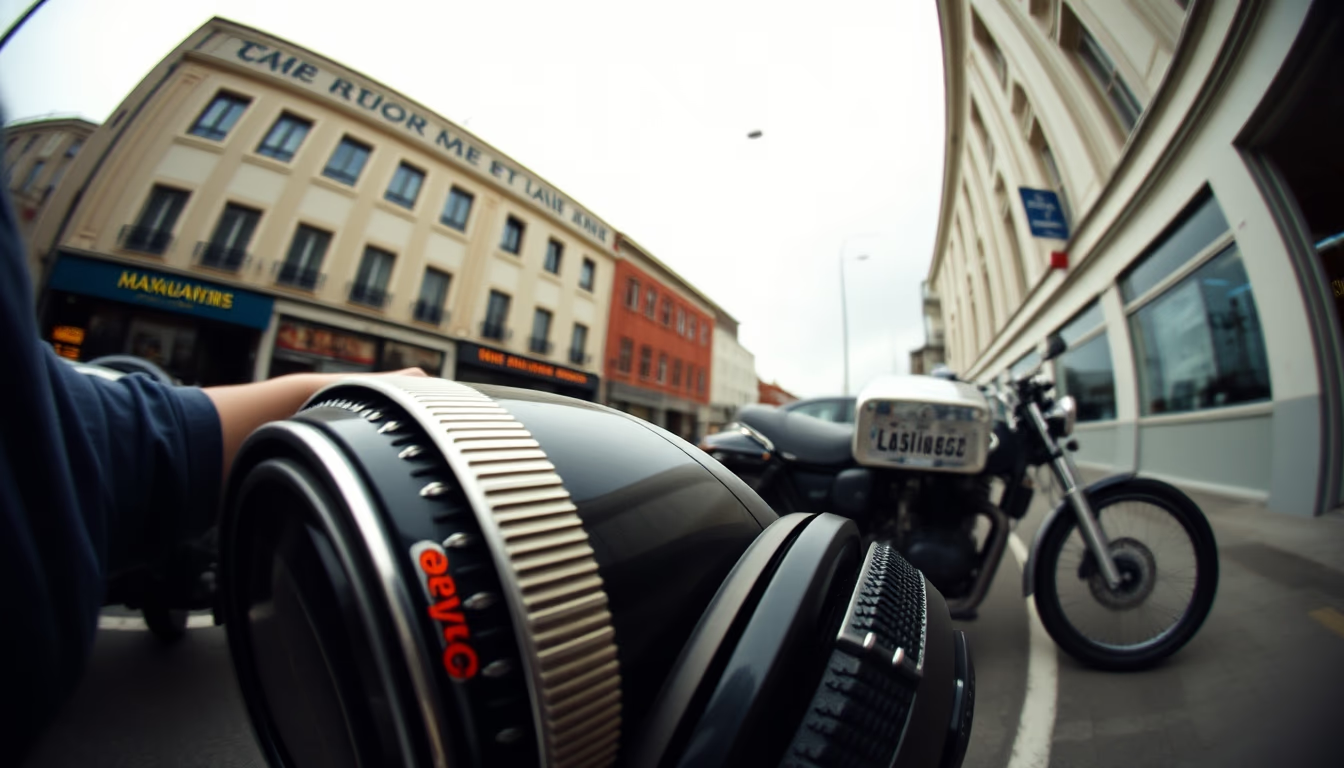
The lens associated with the image is described as "fish-eye wide-angle," but the Leica M3 was not originally designed for fisheye; adaptations or special lenses are required. However, producing fisheye lenses for the M-mount is rare and usually involves modifications. The camera itself remains a symbol of the peak of German optical engineering and classic analog photography.
Frequently Asked Questions
How does the Leica M3 differ from the M2?
The M3 was released earlier (1954) than the M2 (1957). The M3 viewfinder shows frames only for 50, 90, and 135 mm lenses, while the M2 includes 35, 50, and 90 mm. The M3 has a film advance lever (on later models) and a simpler frame counter; the M2 has a more modern back and automatic reset counter.
Are modern M-mount lenses compatible with the Leica M3?
Yes, modern M-mount lenses (Leica M or compatible like Voigtländer) can be used on the M3, as long as they respect the focal length and lens profile (for digital cameras). For lenses requiring a 28 mm or 35 mm frame, the M3 does not display them automatically; adapters or external viewfinders are needed.
Why is the Leica M3 so expensive?
The M3 is expensive due to its high-quality construction, limited production (224,000 units), historical significance, and desirability among collectors. The precise mechanical design and Leica glass contribute to its legendary status and high market value.
Direct URL
https://pub-c7d6a6ea828543ac903a74a341ccb2e1.r2.dev/imagens/leica-m3-chrome-fish-eye-wide-angle-fresh7.avifHow to credit
Include a visible link back to UtilizAí. Copy one of the snippets below:
<a href="https://xn--utiliza-eza.com/en/midia/imagens/leica-m3-chrome-fish-eye-wide-angle-fresh7">Leica m3 chrome</a> by <a href="https://xn--utiliza-eza.com">UtilizAí</a>, licensed under <a href="https://creativecommons.org/licenses/by/4.0/">CC BY 4.0</a>.
[Leica m3 chrome](https://xn--utiliza-eza.com/en/midia/imagens/leica-m3-chrome-fish-eye-wide-angle-fresh7) by [UtilizAí](https://xn--utiliza-eza.com), CC BY 4.0
License: CC-BY-4.0