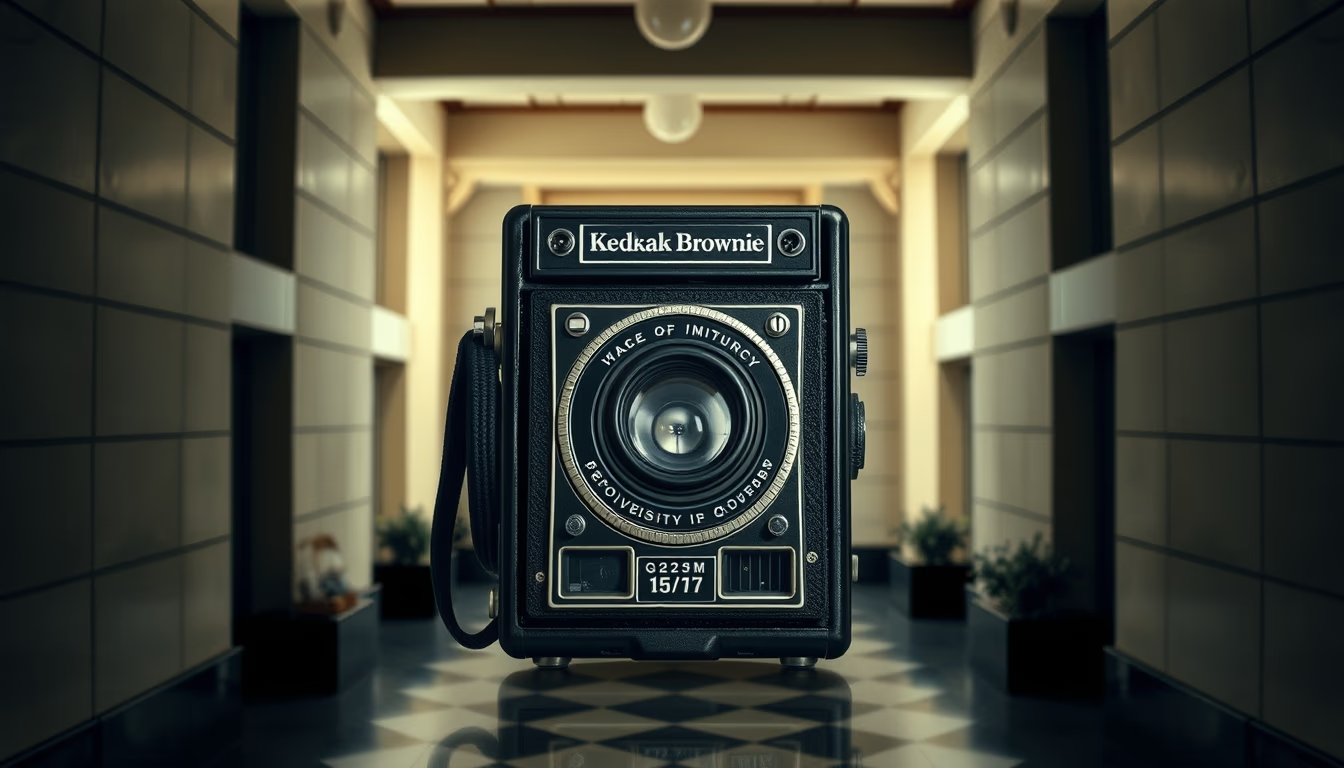
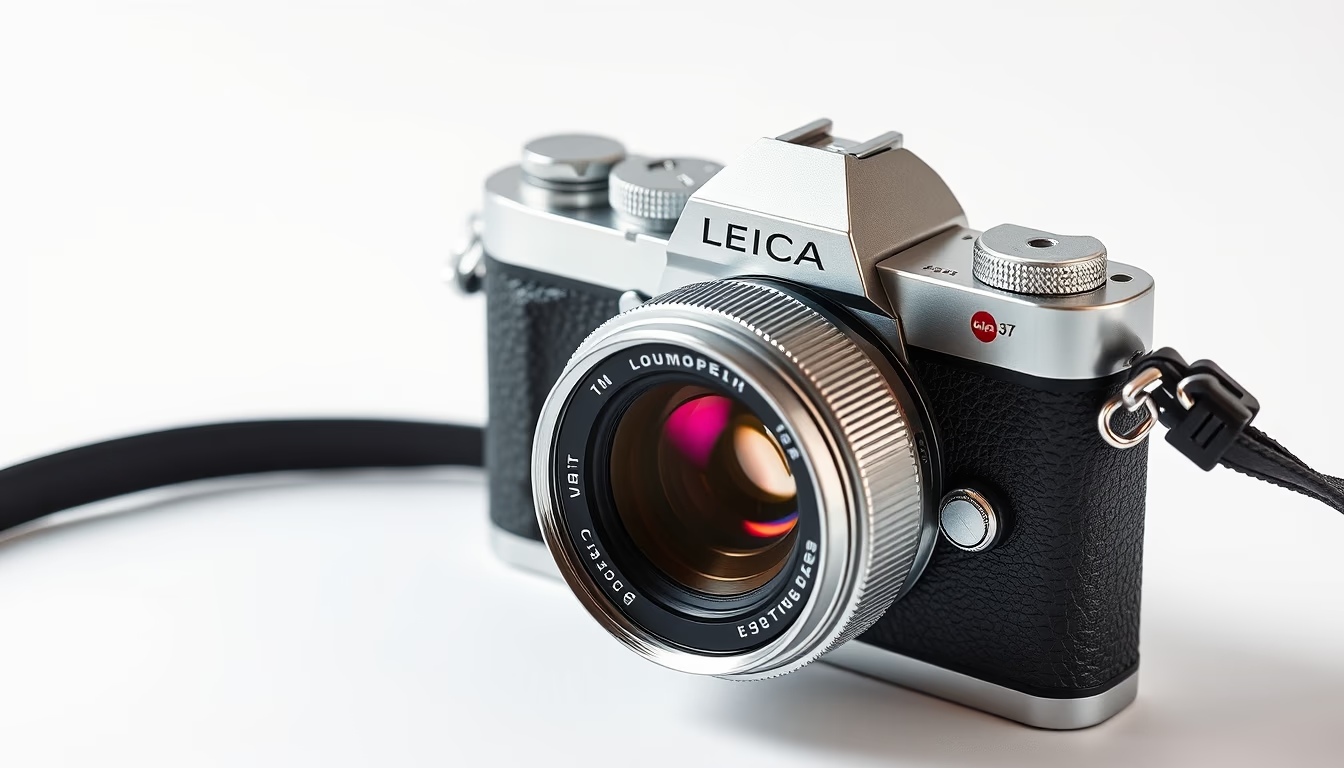
Leica m3 chrome
1344×768 · AVIF · CC BY 4.0
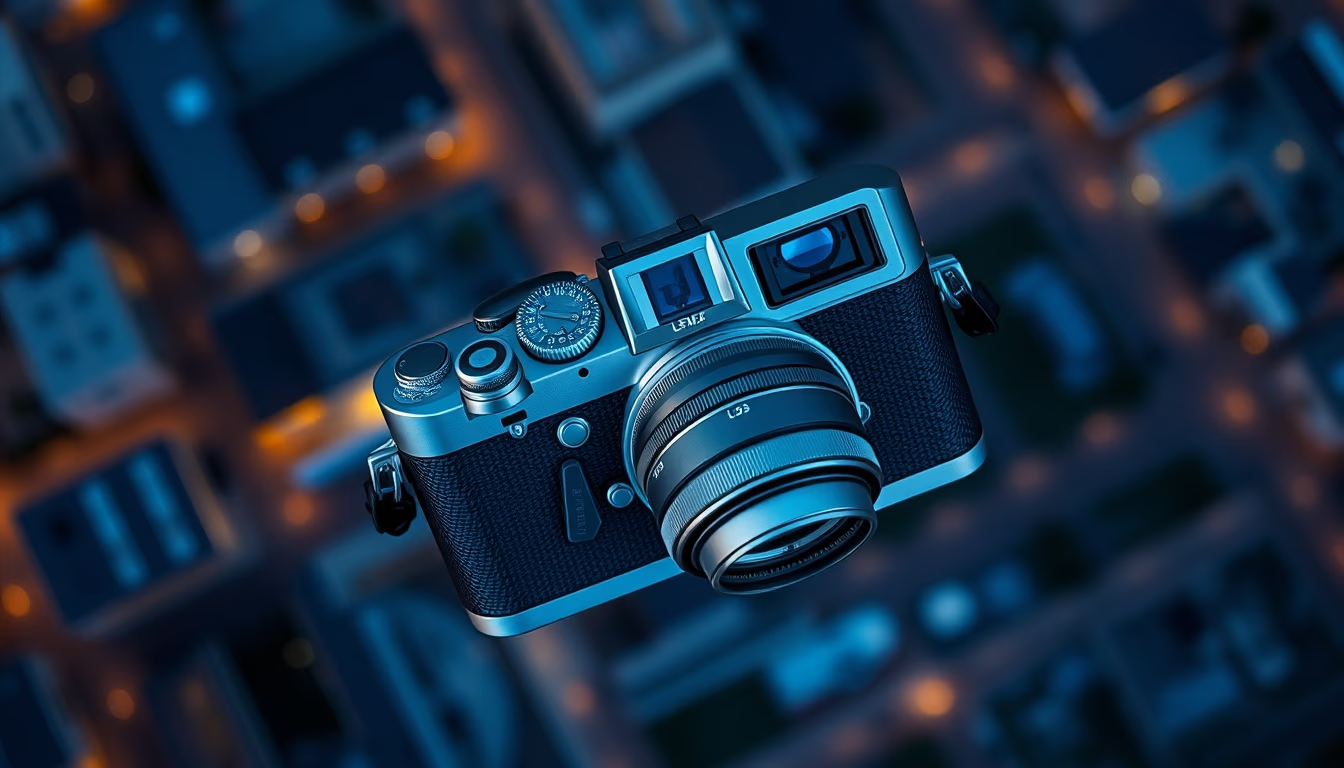
The Leica M3 is a legendary rangefinder camera, launched in 1954, that revolutionized photography with its high-precision viewfinder and M lens mount.
About this subject
The Leica M3, unveiled in 1954 at Photokina, was a watershed moment in photographic history. It was the first camera to feature the Leica M lens mount, a standard still in use today, ensuring compatibility with decades of Leica and third-party lenses. The M3 stood out for its combined viewfinder and rangefinder, which provided a bright, magnified image with automatic parallax correction. Unlike interchangeable-lens cameras of the era, the M3 had no reflex mirror, making it quieter and more compact.
Production of the Leica M3 continued until 1966, with approximately 226,000 units manufactured. Chrome versions are especially prized by collectors, particularly early-production models with engraved logos and lower serial numbers. The camera was used by iconic photographers such as Henri Cartier-Bresson and Robert Capa, who valued its discretion and precision. The focal-plane shutter, with speeds from 1 to 1/1000 second, and the rangefinder focusing system were considered cutting-edge.
The M3 deeply influenced the design of later cameras, including the Leica M2 and M4, as well as models from other brands like the Nikon S and Canon 7. Its fully mechanical construction requires no batteries, and the film loading system with a special spool is beloved by purists. Today, the M3 remains a functional photographic tool and a highly sought-after collector's item, with well-preserved examples fetching high prices at auction.
Interestingly, the chrome version was standard, while black paint models were rarer and originally intended for professionals. The M3 was also the first Leica to offer a viewfinder with framelines for different focal lengths, a feature that simplified photography with interchangeable lenses. Its durability is legendary: many units still operate perfectly after 60 years, a testament to high-quality German engineering.
Frequently Asked Questions
What is the difference between the Leica M3 and M2?
The M3 has a 0.91x magnification viewfinder with framelines for 50, 90, and 135 mm lenses, while the M2 has 0.72x magnification and framelines for 35, 50, and 90 mm. The M3 also has a different film advance system and no automatic frame counter like the M2.
Does the Leica M3 need batteries to work?
No, the M3 is fully mechanical. All functions, including shutter and film advance, operate without batteries. This makes it reliable in extreme conditions.
Why is the Leica M3 so expensive on the used market?
Due to its legendary build quality, optical precision, and historical significance. The M3 is considered one of the best rangefinder cameras ever made, and its limited production (about 226,000 units) makes it a valued collector's item.
Direct URL
https://pub-c7d6a6ea828543ac903a74a341ccb2e1.r2.dev/imagens/leica-m3-chrome-aerial-drone-shot-fresh13.avifHow to credit
Include a visible link back to UtilizAí. Copy one of the snippets below:
<a href="https://xn--utiliza-eza.com/en/midia/imagens/leica-m3-chrome-aerial-drone-shot-fresh13">Leica m3 chrome</a> by <a href="https://xn--utiliza-eza.com">UtilizAí</a>, licensed under <a href="https://creativecommons.org/licenses/by/4.0/">CC BY 4.0</a>.
[Leica m3 chrome](https://xn--utiliza-eza.com/en/midia/imagens/leica-m3-chrome-aerial-drone-shot-fresh13) by [UtilizAí](https://xn--utiliza-eza.com), CC BY 4.0
License: CC-BY-4.0