Led street light pole
1344×768 · AVIF · CC BY 4.0
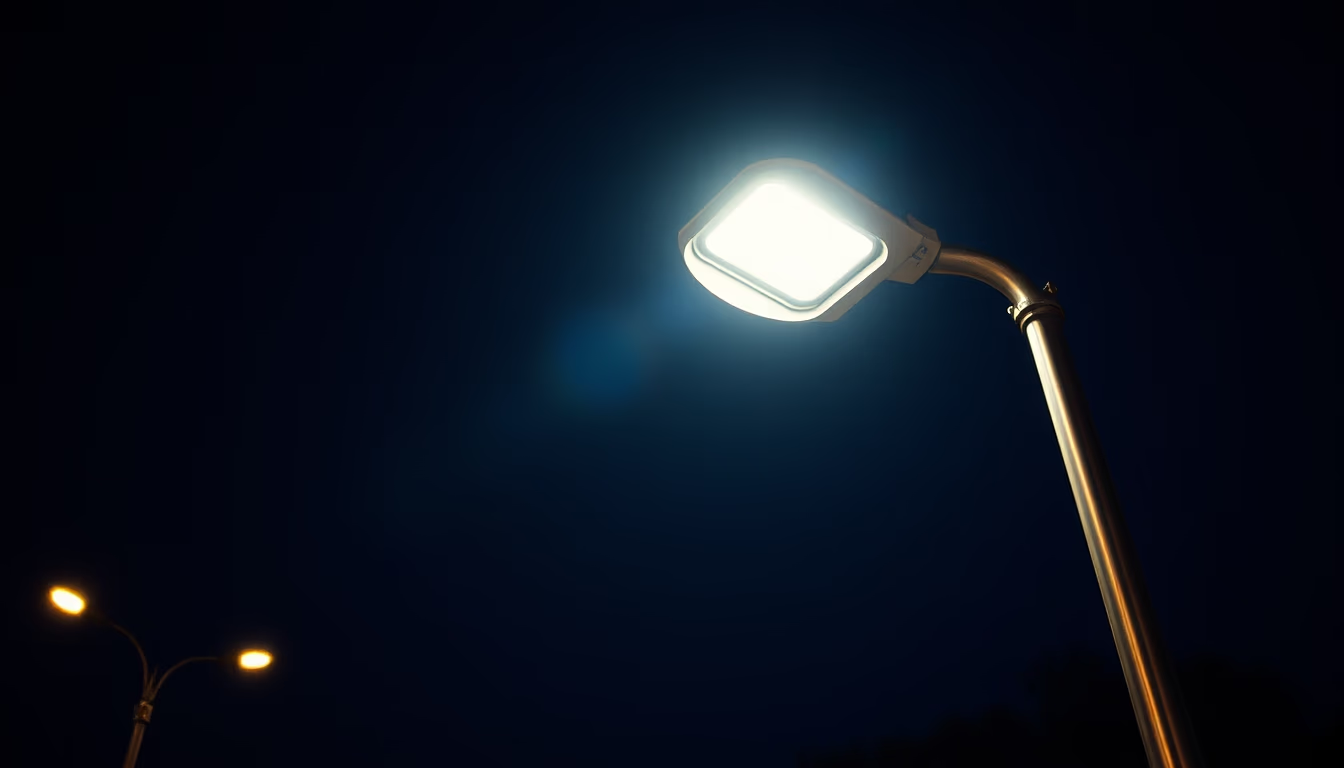
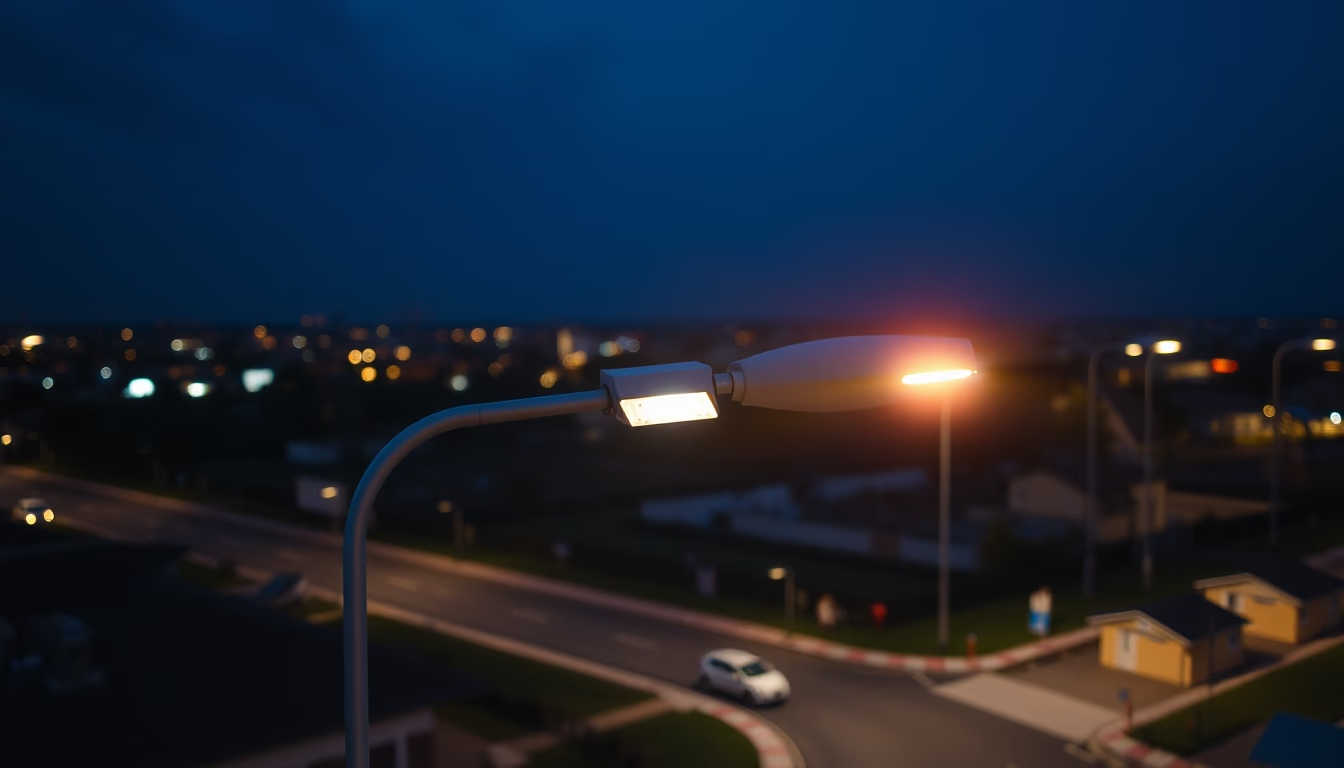
LED street light poles transform urban public lighting, cutting costs and energy consumption by up to 50%.
About this subject
LED street light poles represent a major evolution in public lighting, replacing older technologies like high-pressure sodium or mercury vapor lamps. LED technology offers superior energy efficiency, durability, and light quality, with a lifespan exceeding 50,000 hours, compared to about 20,000 hours for traditional lamps. This shift reduces electricity consumption by approximately 50%, generating savings for municipal budgets and lowering carbon emissions.
In the context of smart cities, LED poles are often integrated with telemanagement systems that allow remote dimming, adjusting brightness based on pedestrian and vehicle traffic, and incorporating sensors for environmental monitoring, security cameras, or Wi-Fi hotspots. Cities such as São Paulo, Curitiba, and Belo Horizonte have implemented large-scale retrofit projects, replacing thousands of fixtures and modernizing urban infrastructure.
Globally, the adoption of LED in public lighting is accelerating: according to the International Energy Agency, by 2030 about 90% of public lighting worldwide could be LED. China, the United States, and Germany lead this transition. Beyond savings, the white, directional light of LEDs improves nighttime visibility, enhancing road safety and citizens' sense of security.
An interesting aspect is that LED color temperature can range from warm (yellowish) to cool (bluish) tones. Many cities opt for neutral tones (4000K) for a good balance of visual comfort and efficiency. However, recent studies warn that excessive blue light can affect the circadian rhythm of humans and animals, leading to the development of LEDs with adjustable spectra to minimize environmental impacts.
Frequently Asked Questions
How much energy do LED street lights save compared to traditional lamps?
On average, replacing high-pressure sodium lamps with LEDs reduces energy consumption by 50% to 60%, depending on wattage and model. The longer lifespan also lowers maintenance costs.
Can LED poles be integrated with smart sensors?
Yes, many modern models allow attaching light, motion, air quality sensors, cameras, and Wi-Fi hotspots, turning poles into data hubs for smart cities.
Does LED light affect human health or the environment?
White light with high blue content can disrupt sleep and nocturnal wildlife. Therefore, some cities use warmer temperature LEDs or dimming systems during specific hours.
Direct URL
https://pub-c7d6a6ea828543ac903a74a341ccb2e1.r2.dev/imagens/led-street-light-pole-lo-fi-disposable-camera-p1.avifHow to credit
Include a visible link back to UtilizAí. Copy one of the snippets below:
<a href="https://xn--utiliza-eza.com/en/midia/imagens/led-street-light-pole-lo-fi-disposable-camera-p1">Led street light pole</a> by <a href="https://xn--utiliza-eza.com">UtilizAí</a>, licensed under <a href="https://creativecommons.org/licenses/by/4.0/">CC BY 4.0</a>.
[Led street light pole](https://xn--utiliza-eza.com/en/midia/imagens/led-street-light-pole-lo-fi-disposable-camera-p1) by [UtilizAí](https://xn--utiliza-eza.com), CC BY 4.0
License: CC-BY-4.0