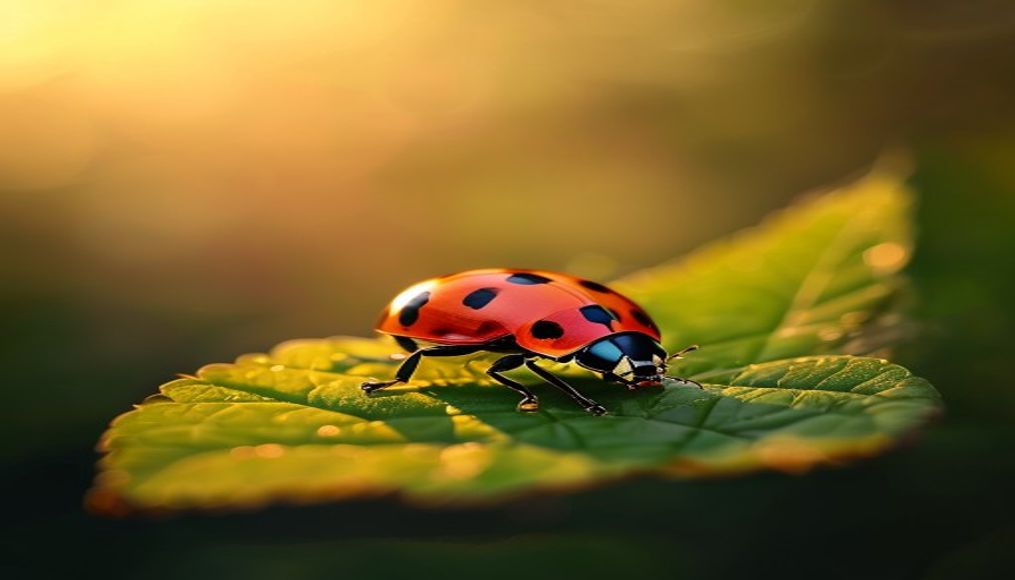
Ladybug on leaf
1344×768 · AVIF · CC BY 4.0
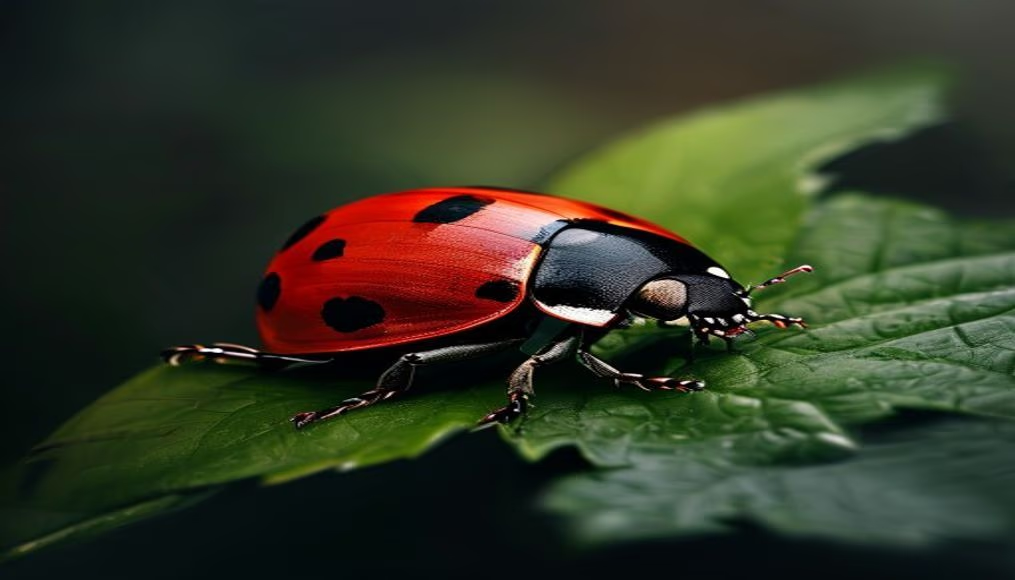
Ladybugs are beetles from the family Coccinellidae, known for their red coloration with black spots and their crucial role in biological pest control in agriculture.
About this subject
Ladybugs, also known as ladybird beetles or coccinellids, belong to the order Coleoptera and encompass over 6,000 species worldwide. In North America, the convergent lady beetle (Hippodamia convergens) and the seven-spotted lady beetle (Coccinella septempunctata) are among the most common. These beetles are voracious predators, primarily feeding on aphids, scale insects, and mites. A single ladybug can consume up to 5,000 aphids during its lifetime, making them invaluable allies in integrated pest management and reducing reliance on chemical pesticides.
The bright red coloration with black spots is a classic example of aposematism, a warning signal to predators that the insect is toxic. When threatened, ladybugs secrete a yellowish fluid from their leg joints containing alkaloids such as coccinelline, which tastes bitter and repels predators like birds, lizards, and ants. These compounds are sequestered from their diet and can cause allergic reactions in humans if they come into contact with eyes or mucous membranes.
Culturally, ladybugs are widely regarded as symbols of good luck. The name "ladybug" originates from medieval Europe, where farmers prayed to the Virgin Mary (Our Lady) for pest control; the beetles' red spots were said to represent her cloak. In many traditions, killing a ladybug is believed to bring misfortune, and if one lands on you, it is customary to make a wish. In Japan, they are associated with love and happiness, while in Sweden, they are thought to foretell a good harvest.
Ladybugs undergo complete metamorphosis through four life stages: egg, larva, pupa, and adult. The larvae, which resemble tiny alligators, are just as predatory as adults and molt four times before pupating. The entire cycle lasts 30 to 60 days, depending on temperature and prey availability. In temperate regions, many species enter diapause during winter, forming large aggregations under rocks, leaf litter, or tree bark to survive the cold.
Frequently Asked Questions
Why are ladybugs considered symbols of good luck?
This belief originates from medieval European folklore, where ladybugs were associated with the Virgin Mary and divine protection. Finding a ladybug was seen as a blessing, and making a wish upon its flight became a popular custom.
What do ladybugs eat besides aphids?
Besides aphids, ladybugs feed on scale insects, mites, insect eggs, and small larvae. Some species also consume pollen and nectar when prey is scarce.
How many black spots does a ladybug have?
The number of spots varies by species. The most well-known species, Coccinella septempunctata, has seven spots, but other species have 2, 5, 10, or even no spots. Spots help identify the species but do not indicate the insect's age.
Direct URL
https://pub-c7d6a6ea828543ac903a74a341ccb2e1.r2.dev/imagens/ladybug-on-leaf-fine-art-photography-p1.avifHow to credit
Include a visible link back to UtilizAí. Copy one of the snippets below:
<a href="https://xn--utiliza-eza.com/en/midia/imagens/ladybug-on-leaf-fine-art-photography-p1">Ladybug on leaf</a> by <a href="https://xn--utiliza-eza.com">UtilizAí</a>, licensed under <a href="https://creativecommons.org/licenses/by/4.0/">CC BY 4.0</a>.
[Ladybug on leaf](https://xn--utiliza-eza.com/en/midia/imagens/ladybug-on-leaf-fine-art-photography-p1) by [UtilizAí](https://xn--utiliza-eza.com), CC BY 4.0
License: CC-BY-4.0