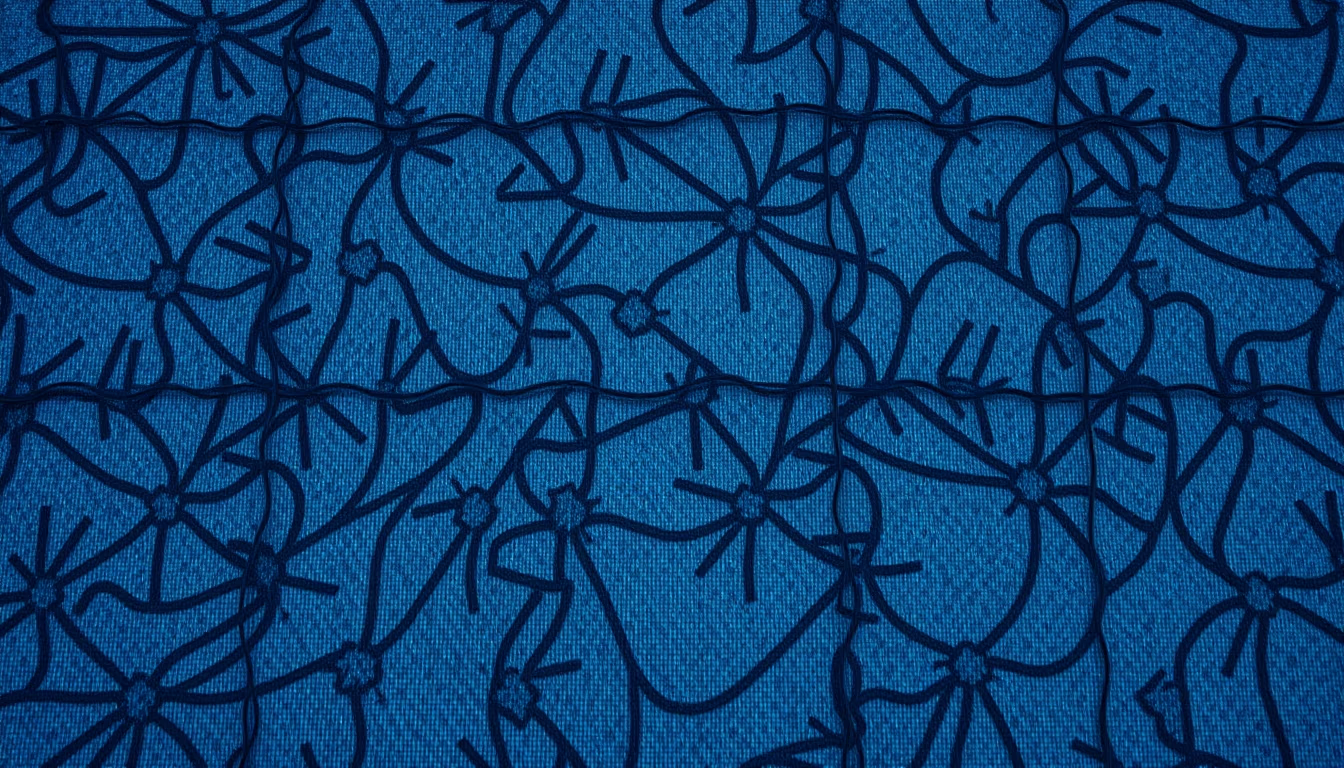
Lacework antique tatting
1344×768 · AVIF · CC BY 4.0

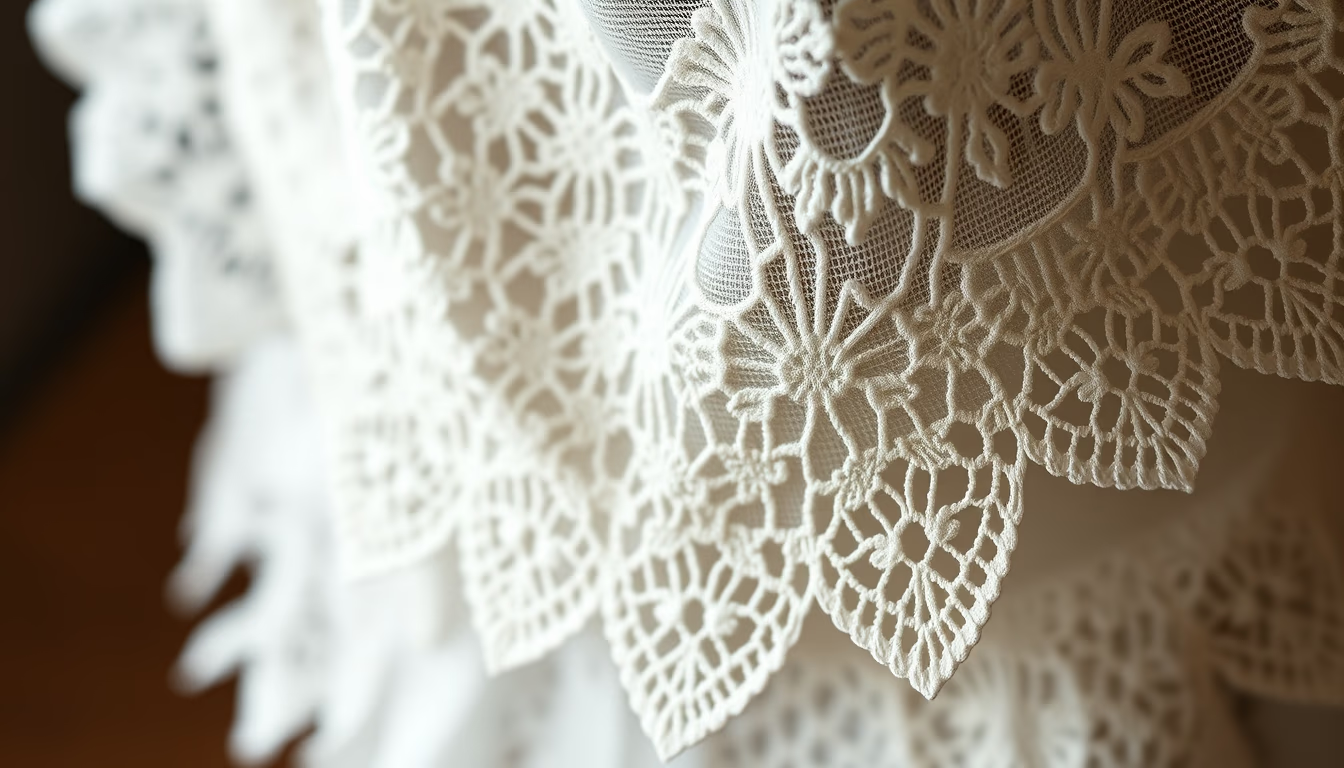
Antique tatting lacework is a textile craft technique that uses a shuttle to create decorative, gathered stitches, popular in the 19th and early 20th centuries.
About this subject
Tatting is a technique of lace-making that uses a small shuttle to create a series of knots and loops, forming intricate patterns. Unlike needle lace or crochet, tatting produces a denser, more durable fabric, often used for collars, cuffs, doilies, and home decorations. The technique emerged in the 19th century in Europe, particularly in England and France, as a portable and faster alternative to traditional bobbin lace. Antique tatting pieces, typically made with fine linen or cotton thread, are highly collectible and reflect the manual skill of Victorian-era women.
These laceworks were often preserved in family albums or as part of dowries, passed down through generations. Tatting also spread globally, including to Brazil, where European immigrants adapted the patterns to local motifs. A notable fact is that tatting was one of the first textile techniques to be mechanized in the 20th century, yet handcrafted pieces over a hundred years old remain prized among collectors and museums. Proper conservation involves gentle washing and storage in acid-free paper to prevent yellowing and damage.
Today, tatting is experiencing a revival among artisans and DIY enthusiasts seeking to preserve traditional crafts. Online tutorials and embroidery groups help keep this art alive, combining geometry and delicacy. Antique tatting lacework stands as a testament to human creativity and the pursuit of beauty in everyday objects.
Frequently Asked Questions
What is the difference between tatting and bobbin lace?
Tatting uses a single shuttle to form knots and loops, while bobbin lace involves multiple threads wound on bobbins on a pillow. Tatting is more portable and produces a firmer fabric, whereas bobbin lace is more flexible and allows for intricate designs.
How can I identify an antique tatting piece?
Antique tatting pieces are usually made with fine cotton or linen threads, with regular and consistent stitches. They often have a yellowish tone due to age and are commonly found as collars, doilies, or tablecloths. The presence of small rings and picots (decorative picots) is characteristic.
Is tatting difficult to learn?
Tatting requires practice to coordinate the shuttle and form the knots correctly, but many people can learn the basics within hours using tutorials. It is considered moderately difficult, easier than bobbin lace but requiring patience to master complex patterns.
Direct URL
https://pub-c7d6a6ea828543ac903a74a341ccb2e1.r2.dev/imagens/lacework-antique-tatting-studio-editorial-portrait-fresh14.avifHow to credit
Include a visible link back to UtilizAí. Copy one of the snippets below:
<a href="https://xn--utiliza-eza.com/en/midia/imagens/lacework-antique-tatting-studio-editorial-portrait-fresh14">Lacework antique tatting</a> by <a href="https://xn--utiliza-eza.com">UtilizAí</a>, licensed under <a href="https://creativecommons.org/licenses/by/4.0/">CC BY 4.0</a>.
[Lacework antique tatting](https://xn--utiliza-eza.com/en/midia/imagens/lacework-antique-tatting-studio-editorial-portrait-fresh14) by [UtilizAí](https://xn--utiliza-eza.com), CC BY 4.0
License: CC-BY-4.0