Lacework antique tatting
1344×768 · AVIF · CC BY 4.0

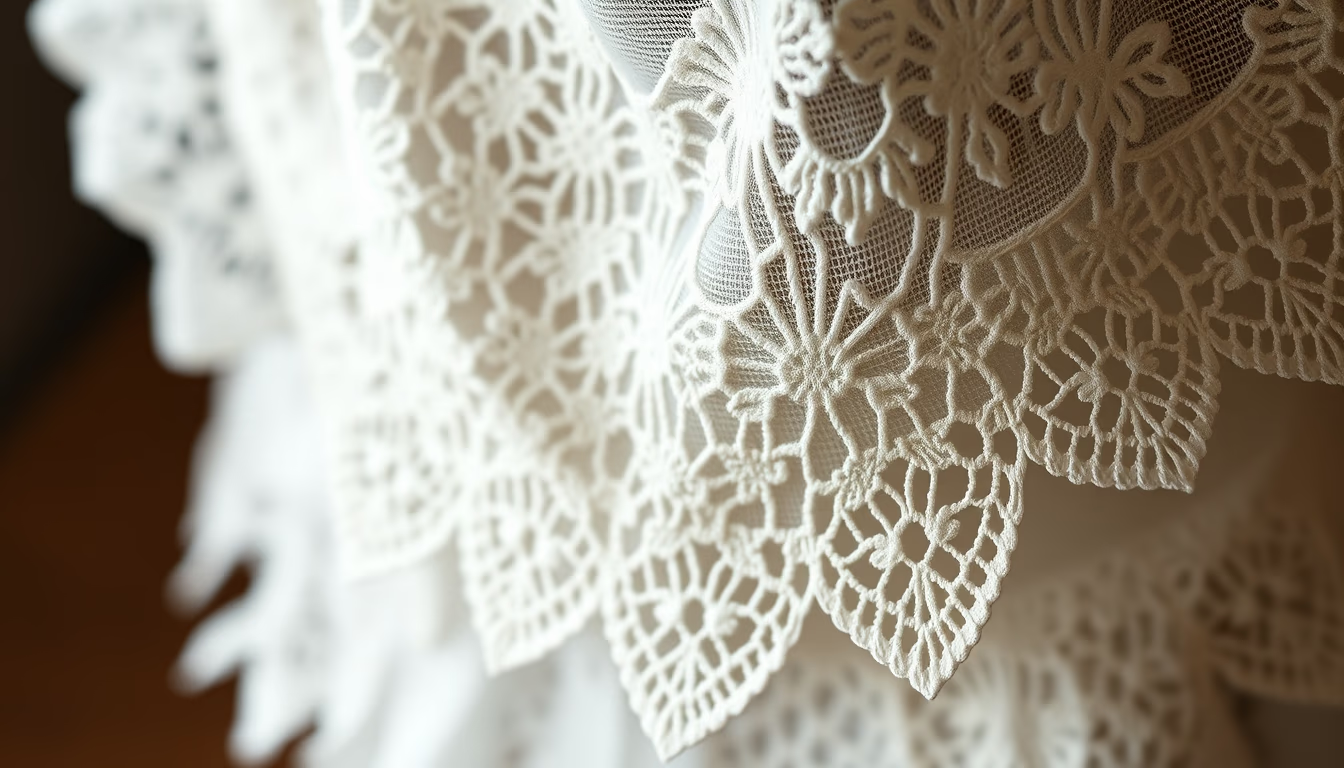
Antique tatting lacework captivates with its delicate, handcrafted precision, combining knots and loops to create unique decorative pieces since the 19th century.
About this subject
Tatting is a lace-making technique that uses a shuttle (navette) to form knots and loops, resulting in lightweight, detailed pieces. It originated in Europe, mainly in France and England, in the early 19th century, and quickly became a popular pastime among aristocratic and upper-middle-class women. Unlike bobbin lace, which requires a pillow and multiple threads, tatting is portable and could be done anywhere, allowing women to create trimmings for clothing, handkerchiefs, towels, and even jewelry.
Culturally, tatting represented refinement and patience in the Victorian era. Patterns were often exchanged through ladies' magazines and personal notebooks. Many antique pieces feature floral or geometric motifs, showcasing the craftswoman's skill. Completing a piece could take months, depending on complexity, making it a respected textile art form.
Interestingly, the term 'tatting' derives from the French 'tatter', meaning to make lace. Variations include needle tatting and shuttle tatting, the latter being the most traditional. Antique tatting is highly prized by collectors, who seek rare patterns and fine threads. The technique also influenced other lace forms, such as French frivolité.
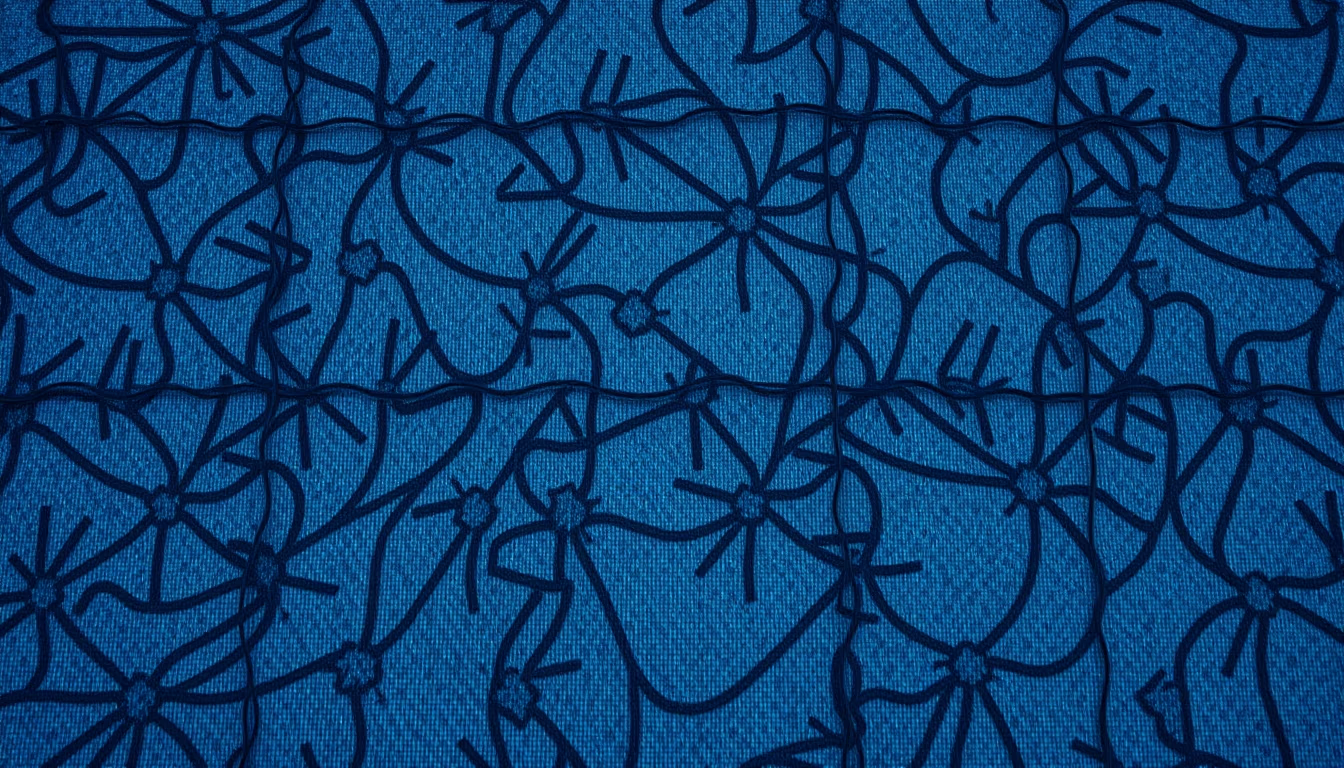
Typical materials include fine linen or cotton, often dyed with natural colorants like indigo or cochineal. Proper thread tension and repeated double knots create a firm yet flexible texture. Today, tatting is preserved by enthusiasts and lace associations, keeping this centuries-old tradition alive.
Frequently Asked Questions
How can I identify antique tatting?
Look for firm, regular knots, fine thread, and symmetrical patterns. Unlike bobbin lace, tatting has no fringe. The shuttle leaves characteristic marks on the knots, and natural wear indicates age.
What is the difference between tatting and crochet?
Tatting uses only knots and loops with a shuttle, resulting in more consistent and less elastic stitches. Crochet uses a hooked needle and allows for a wider variety of stitches. Tatting is more structured and less flexible.
Where can I find antique tatting pieces?
At thrift stores, antique shops, flea markets, and online auctions like eBay or Etsy. Check authenticity by examining the knot technique, symmetry, and natural wear.
Direct URL
https://pub-c7d6a6ea828543ac903a74a341ccb2e1.r2.dev/imagens/lacework-antique-tatting-rembrandt-lighting-dramatic-shadows-fresh11.avifHow to credit
Include a visible link back to UtilizAí. Copy one of the snippets below:
<a href="https://xn--utiliza-eza.com/en/midia/imagens/lacework-antique-tatting-rembrandt-lighting-dramatic-shadows-fresh11">Lacework antique tatting</a> by <a href="https://xn--utiliza-eza.com">UtilizAí</a>, licensed under <a href="https://creativecommons.org/licenses/by/4.0/">CC BY 4.0</a>.
[Lacework antique tatting](https://xn--utiliza-eza.com/en/midia/imagens/lacework-antique-tatting-rembrandt-lighting-dramatic-shadows-fresh11) by [UtilizAí](https://xn--utiliza-eza.com), CC BY 4.0
License: CC-BY-4.0